
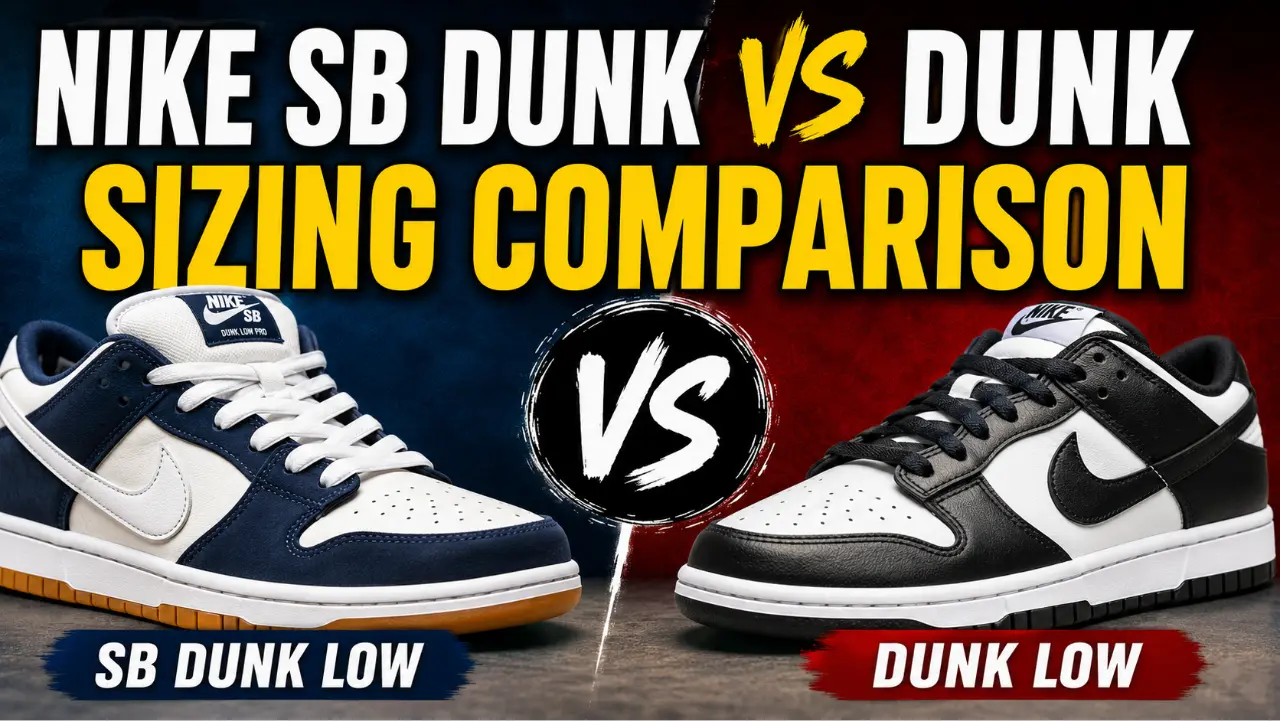
If you’re trying to decide between the Nike SB Dunk and the regular Nike Dunk, you’re probably wondering whether you can buy the same size in both.
The short answer is no, not for me.
I wear a US 9 in the regular Dunk Low, but I always buy a US 9.5 in the Nike SB Dunk Low.
At first glance, they look almost identical. The outsole, shape, and overall silhouette are very similar. But once you put them on, they feel surprisingly different.
The biggest reason is the extra padding…
The SB Dunk Low has a much thicker tongue, more cushioning around the collar, and a more packed interior.
None of that changes the length of the shoe, though, but it does reduce the amount of usable space inside, which makes it feel noticeably snugger than a regular Dunk.
Over the years, I’ve worn plenty of both versions, including several SB collaborations, and my sizing has stayed consistent.
In this guide, I’ll compare how they fit, look at the toe box, width, heel lockdown, and overall comfort, and explain which size I’d recommend based on your foot shape.
See my Nike Dunk vs Air Jordan 1 sizing comparison if you want a more supportive fit, or my Nike Dunk vs Air Force 1 sizing guide to see which shoe gives you more room.

Nike SB Dunk vs Regular Dunk Sizing

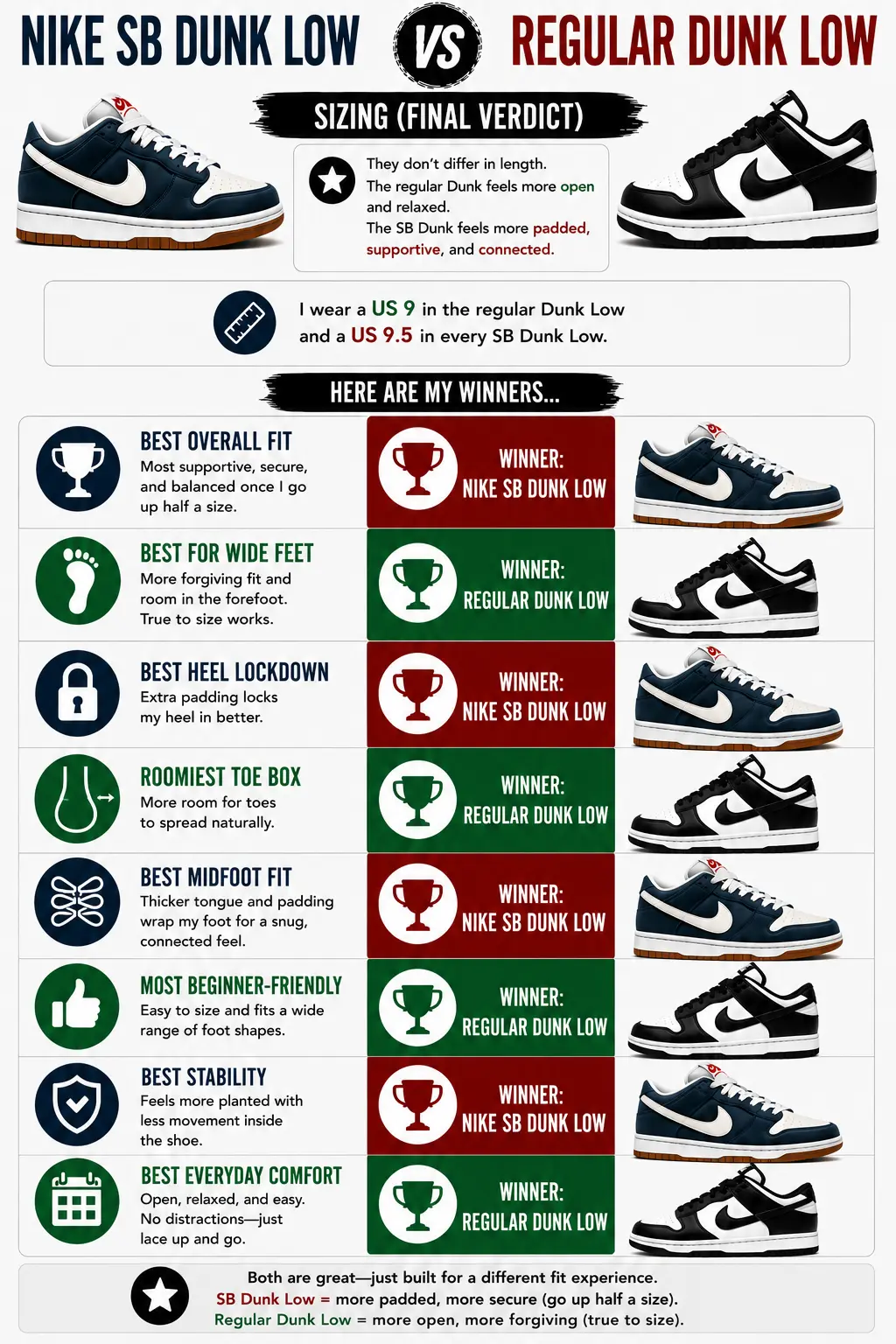
TL;DR: Here’s a one-page infographic with everything you need to know about Nike Dunk vs SB Dunk sizing.
Why I Wear Different Sizes
My Sizing Profile
Now, use my sizing profile to compare your foot shape and fit preferences to mine so you can better judge which recommendations are most relevant to you.
My Sizing Profile
- Brannock Size: US 9 (9D to 9E)
- Foot Shape: Slightly wide forefoot
- Preferred Fit: Secure and snug rather than loose
- Typical Nike Size: US 9
- Nike Dunk: US 9 (True to size)
- Air SB Dunk: US 9;5 (1/2 size up)
I usually prefer a close, one-to-one fit with just enough room for my toes to move comfortably. In the regular Nike Dunk Low, my true size (US 9) gives me exactly that.
Now, in a regular Nike Dunk Low, I always wear a US 9. The fit feels balanced from the first wear, and I never feel the need for more room.
With the Nike SB Dunk Low, I always buy a US 9.5, and that’s the size I’ve stuck with across every SB Dunk I’ve owned.
The reason isn’t that the SB is longer or shorter. It’s that the inside of the shoe feels much more packed.
The thicker tongue is the first thing you notice, but it’s not the only difference. There’s also more padding around the collar, and the whole shoe wraps around your foot more closely than a regular Dunk.
I’ve tried SB Dunks in my true size before. They weren’t painfully tight, but I could feel extra pressure around the forefoot, especially near my pinky toe.
After wearing them for a while, that snugness became more noticeable than comfortable.
I went half a size up, and that fixed that for me. I still get the secure feel that makes SB Dunks unique, but I also have enough room to wear them all day without thinking about my feet.
If you have narrow feet and enjoy a close, locked-in fit, your true size may work just fine. But if your feet are normal to slightly wide like mine, I’d recommend going up half a size. It has been the right choice every time I’ve bought an SB Dunk Low.
See my Nike Dunk sizing and fit guide for how the Low, High, SB, and special-edition models fit.
If you found what you needed here, add Size Chart Guru as a Preferred Source on Google to discover more sizing guides.
Which Shoe Runs Smaller?
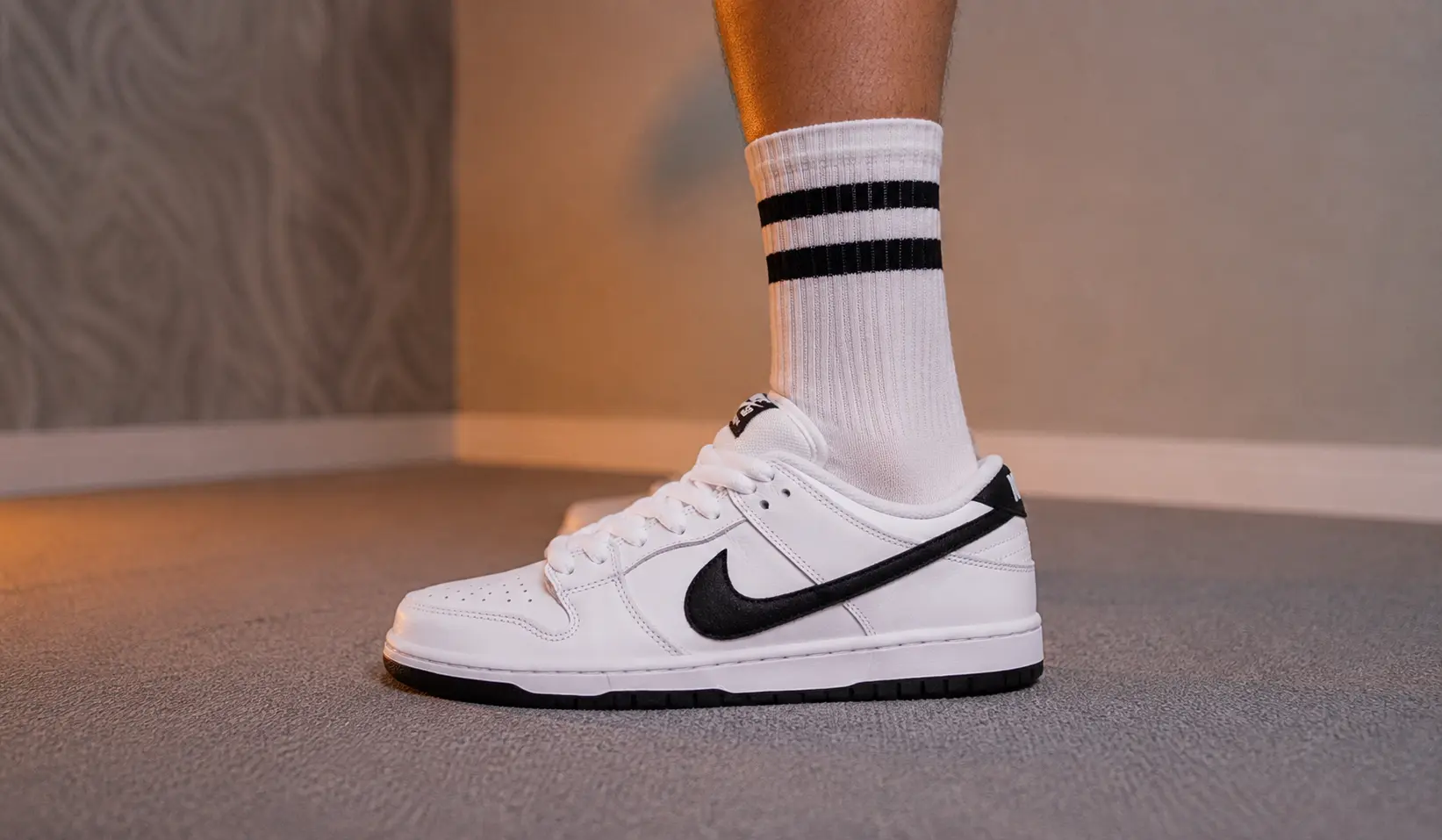
If you’re wondering which shoe runs smaller, the answer is the Nike SB Dunk Low.
That doesn’t mean it’s actually built on a smaller last. In fact, when you put the two shoes side by side, their outsoles are almost identical. The length is nearly the same.
The difference is what happens inside the shoe.
A regular Dunk Low has more open space around your foot. As soon as I put mine on, everything feels relaxed. My toes have room to move, and nothing presses down on the top of my foot.
The SB Dunk Low feels different from the first step. The thicker tongue takes up space, the extra padding around the collar hugs your foot more closely, and the inside simply feels fuller.
That’s why I don’t think of the SB as being shorter. It just has less usable space inside.
For me, the length difference is so small that I barely notice it. What I do notice is how much tighter the SB feels around my foot. That’s the reason I wear a US 9 in the regular Dunk Low and a US 9.5 in every SB Dunk Low.
If you’re deciding between the two, I wouldn’t focus on the outsole measurements. I’d focus on how much room you actually have once your foot is inside the shoe. That’s where the real difference is.
See my Nike Dunk vs Adidas Samba sizing comparison to see how differently the two fit on foot.
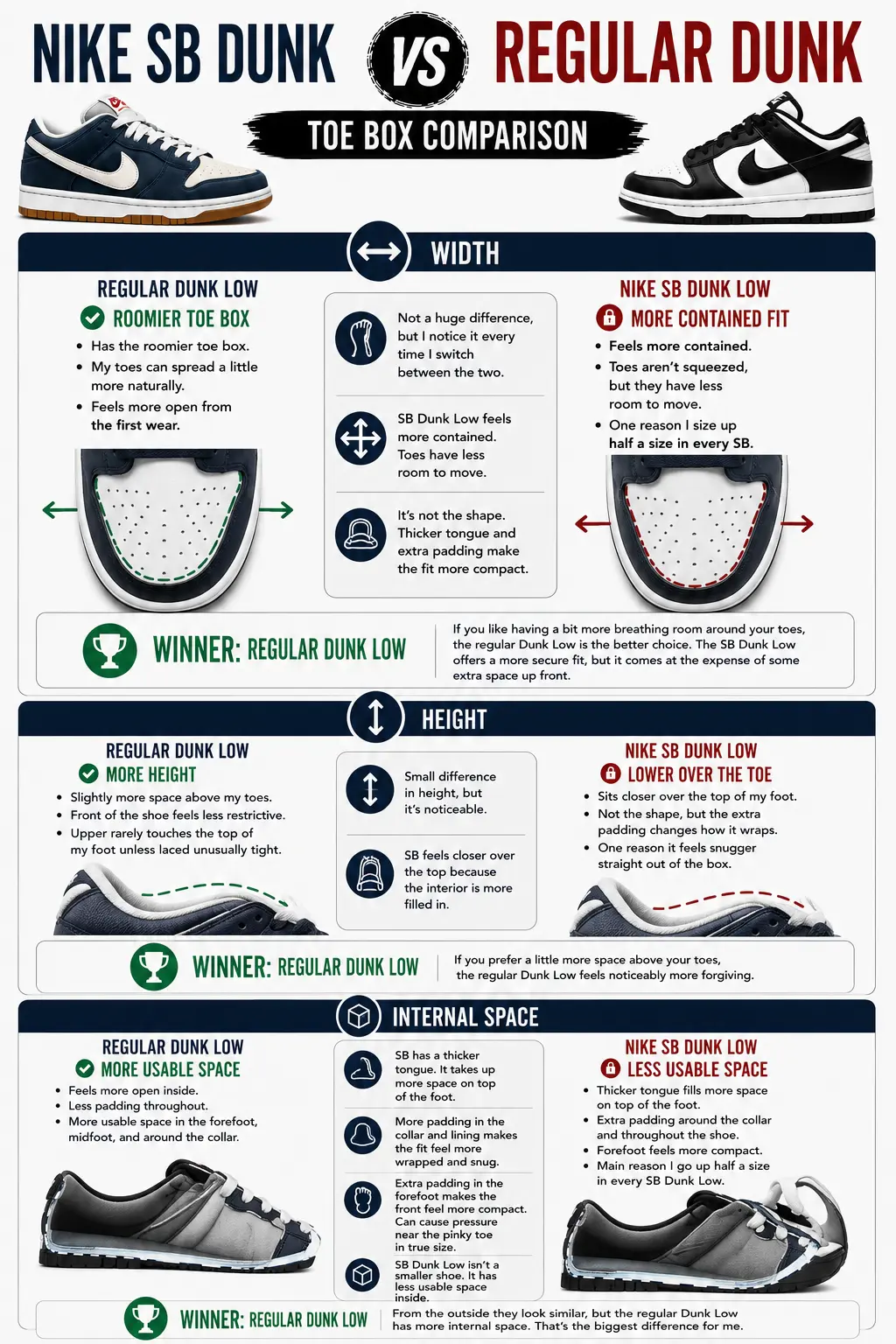
Toe Box Comparison
See my Air Jordan 1 High vs Mid vs Low sizing comparison to see which version feels roomiest and whether you should change sizes.
Width
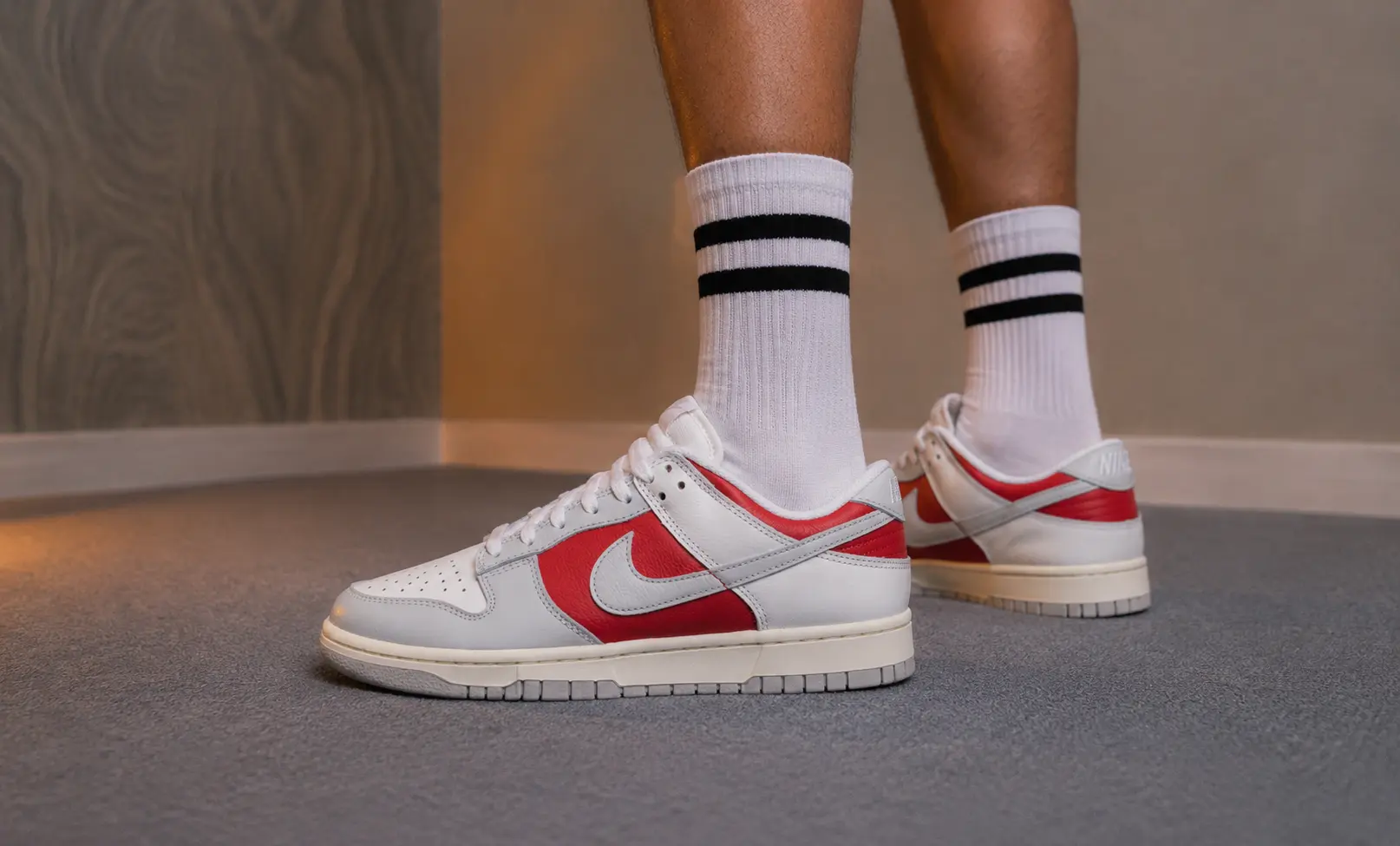
The regular Dunk Low has the roomier toe box.
It’s not a huge difference, but I notice it every time I switch between the two. My toes can spread a little more naturally, and the front of the shoe feels more open from the first wear.
The SB Dunk Low feels more contained. My toes aren’t squeezed together, but they definitely have less room to move. That’s one of the reasons I size up half a size in every SB Dunk Low.
Interestingly, I don’t think the shape of the toe box is what changes. The difference comes from everything around it.
The thicker tongue and extra padding throughout the shoe make the whole fit feel more compact. Even though the toe box looks almost identical from the outside, it doesn’t feel the same once your foot is inside.
Winner: Regular Nike Dunk Low
If you like having a bit more breathing room around your toes, the regular Dunk Low is the better choice. The SB Dunk Low offers a more secure fit, but it comes at the expense of some extra space up front.
See my New Balance 550 vs Air Force 1 sizing comparison to see how these two classic sneakers compare on foot.
Height
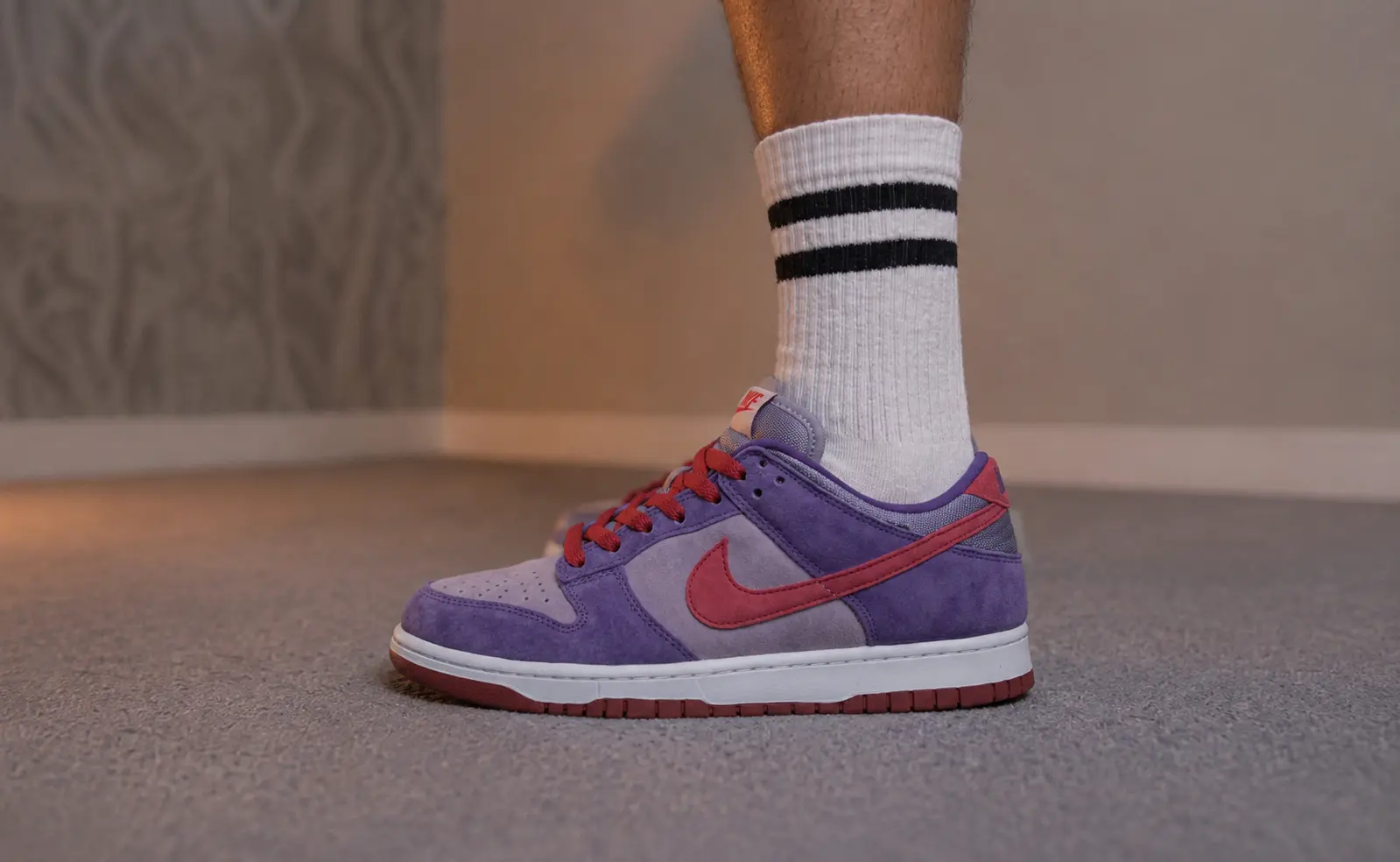
The regular Dunk Low also has a slight advantage when it comes to toe box height.
There’s a bit more space above my toes, so the front of the shoe feels less restrictive. I don’t really notice the upper touching the top of my foot unless I lace the shoe unusually tight.
The SB Dunk Low sits closer over the top of my foot. It’s not because the toe box is shaped differently, but because the whole interior feels more filled in. That extra padding changes the way the shoe wraps around your foot.
It’s a small difference, but it’s one of the reasons the SB feels snugger straight out of the box.
Winner: Regular Nike Dunk Low
If you prefer a little more space above your toes, the regular Dunk Low feels noticeably more forgiving.
See my Nike Mind 001 and 002 sizing guide to see how the fit differs, especially around the toe box.
Internal Space
For me, this is the biggest difference between the two shoes.
From the outside, the regular Dunk Low and the SB Dunk Low look almost the same. Once you put them on, though, they feel completely different.
The thicker tongue gets most of the attention, and for good reason. It fills more of the space over your foot, so the shoe immediately feels snugger when you lace it up.
But that’s only part of the story.
The padded lining and extra cushioning around the collar also make a difference. Instead of feeling open like a regular Dunk, the SB wraps around your foot much more closely.
I even notice it around the forefoot. The extra padding makes the front of the shoe feel more compact, which is where I start to feel pressure near my pinky toe if I wear my true size.
That’s why I don’t think of the SB Dunk Low as a smaller shoe. I think of it as a shoe with less usable space inside.
For me, that’s the difference that matters most, and it’s the main reason I go up half a size in every SB Dunk Low I buy.
See my Nike LeBron sizing and fit guide to see which models run true to size and which ones need a little extra room.
Midfoot Fit
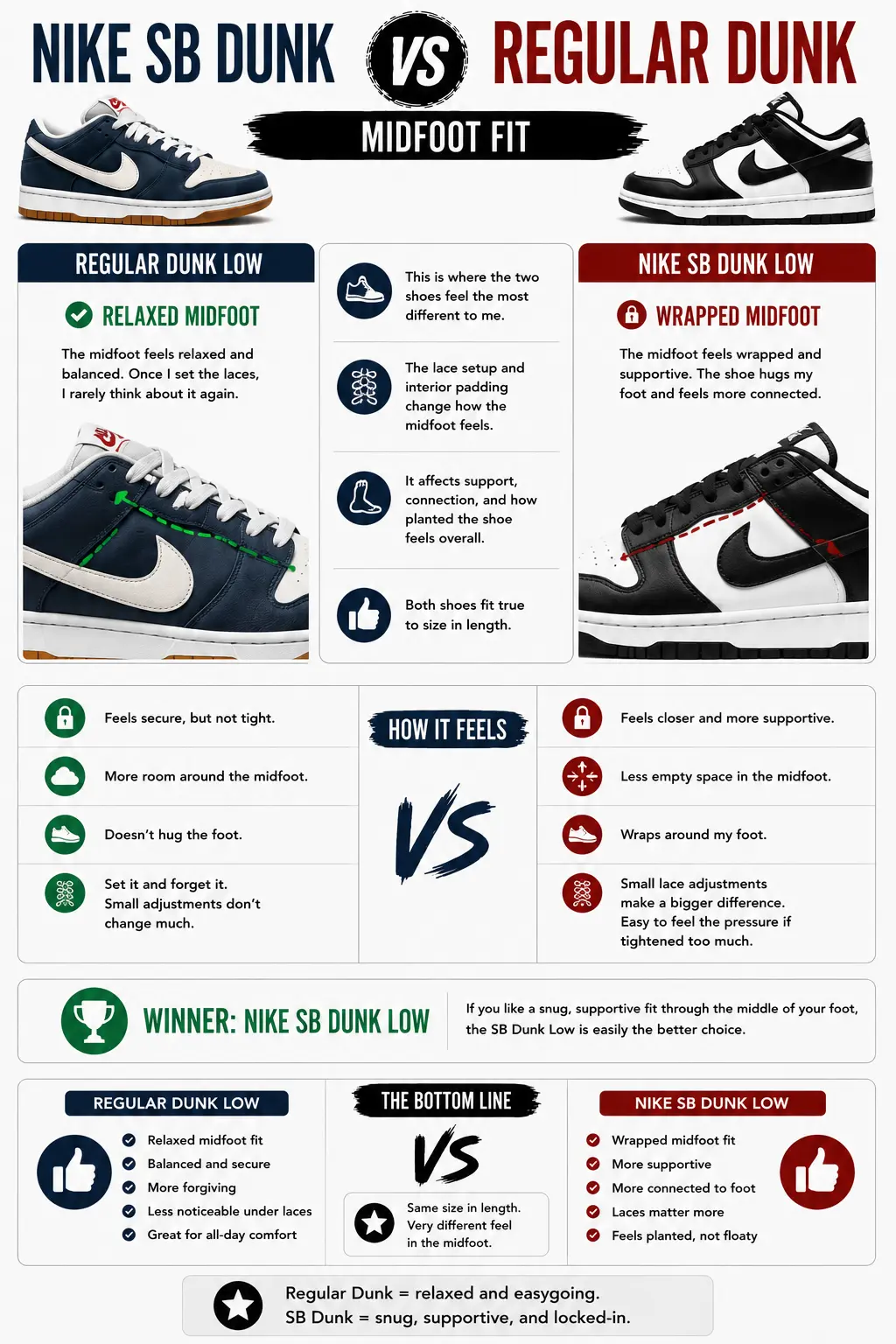
This is where the two shoes feel the most different to me.
The regular Nike Dunk Low has a relaxed midfoot. Once I find the right lace tension, I rarely think about it again. The shoe feels secure, but it never feels like it’s hugging my foot.
The SB Dunk Low is much more wrapped around the midfoot.
The thicker tongue fills a lot of the space under the laces, so I notice the fit as soon as I put the shoe on. It feels closer, more supportive, and more connected to my foot.
I also notice the laces more. Small adjustments make a bigger difference because there’s less empty space inside the shoe. If I tighten them too much, I can feel the pressure almost immediately.
That’s not a bad thing. In fact, it’s one of the reasons skaters love SB Dunks. The shoe feels planted on your foot instead of around it.
Winner: Nike SB Dunk Low
If you like a snug, supportive fit through the middle of your foot, the SB Dunk Low is easily the better choice.
See my Nike Vapormax sizing guide to see how they fit, or compare them with more models in my Nike sneaker sizing guide.
Heel Lockdown
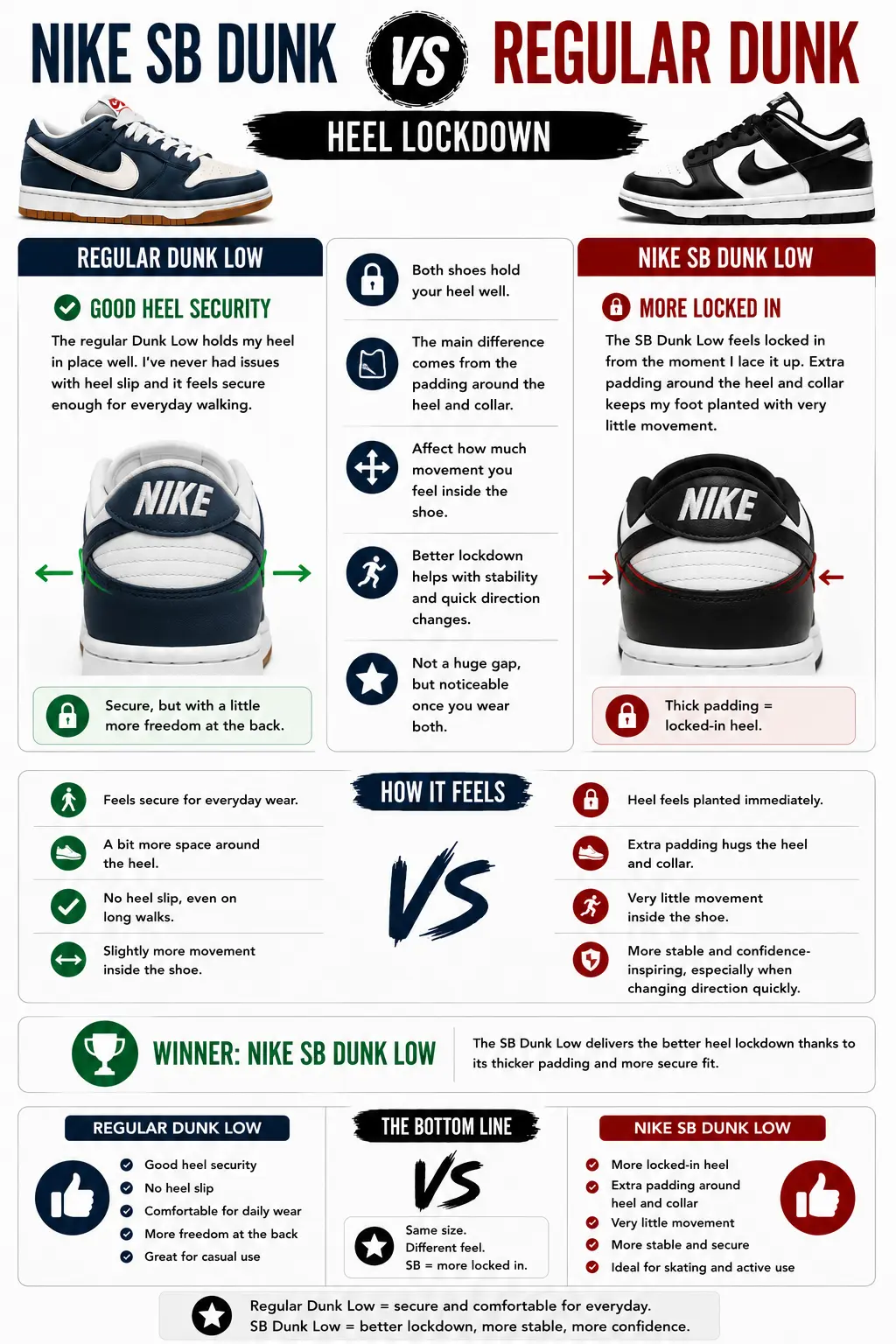
The regular Nike Dunk Low does a good job of holding my heel in place.
I’ve never had issues with heel slip, and it feels secure enough for everyday walking. Still, there’s a little more freedom at the back of the shoe compared to the SB.
The SB Dunk Low feels more locked in from the moment I lace it up.
The extra padding around the heel and collar keeps my foot planted, so there’s very little movement inside the shoe. That gives it a more stable, confidence-inspiring feel, especially when changing direction quickly.
It’s not a dramatic difference, but after wearing both, it’s something I notice every time I switch between them.
Winner: Nike SB Dunk Low
The regular Dunk Low offers plenty of heel security for casual wear, but the SB Dunk Low delivers the better lockdown thanks to its thicker padding and more secure fit.
Related:
See my Nike Vomero sizing and fit guide to see how the different Vomero models fit before choosing your next pair.
How They Feel On Foot
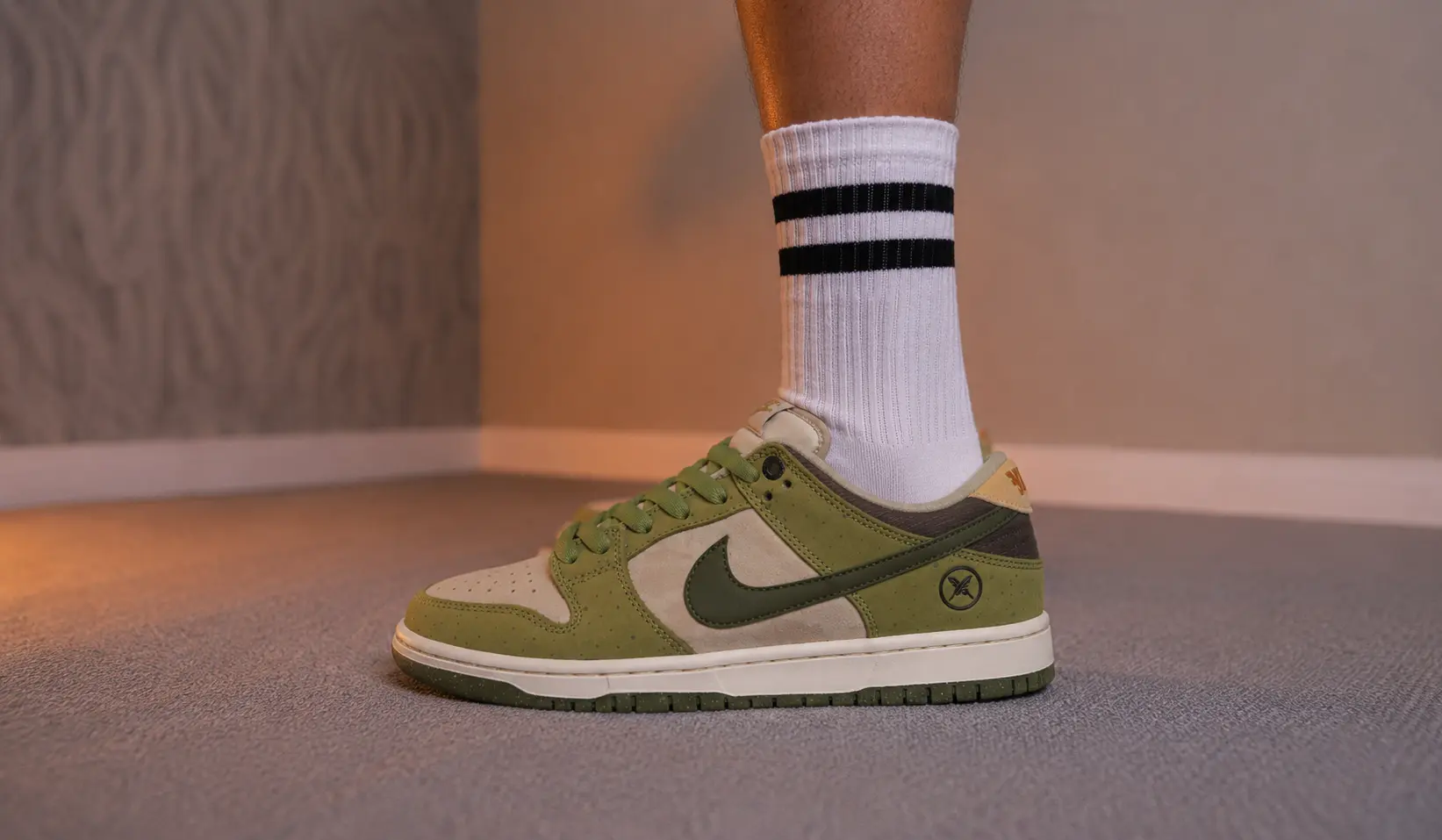
The sizing differences are easy to explain on paper, but they become much clearer once you actually wear both shoes.
The regular Nike Dunk Low has a relaxed personality.
When I put it on, I don’t really think about the fit. My foot settles into the shoe naturally, there’s a bit of breathing room around my toes, and everything just feels easy. You can just throw it on without giving it much thought.
The SB Dunk Low feels more planted from the first step. My foot sits deeper inside the shoe, and the extra padding makes everything feel more connected.
Instead of moving around inside the sneaker, my foot stays exactly where it should.
I also notice that the SB feels denser. Not necessarily heavier, but more substantial. The thicker tongue, padded collar, and Zoom Air insole all contribute to that feeling.
Neither one is better in every situation.
If you’re looking for an easy, casual sneaker to wear all day, you can reach for the regular Dunk Low.
But if you want a shoe that feels more secure and supportive, the SB Dunk is the one I choose. It hugs my foot more closely, and that extra stability is something I notice every time I wear it.
See my Nike Air Max sizing guide to see the biggest fit differences across the most popular Air Max models.
Which Is Better for Wide Feet?
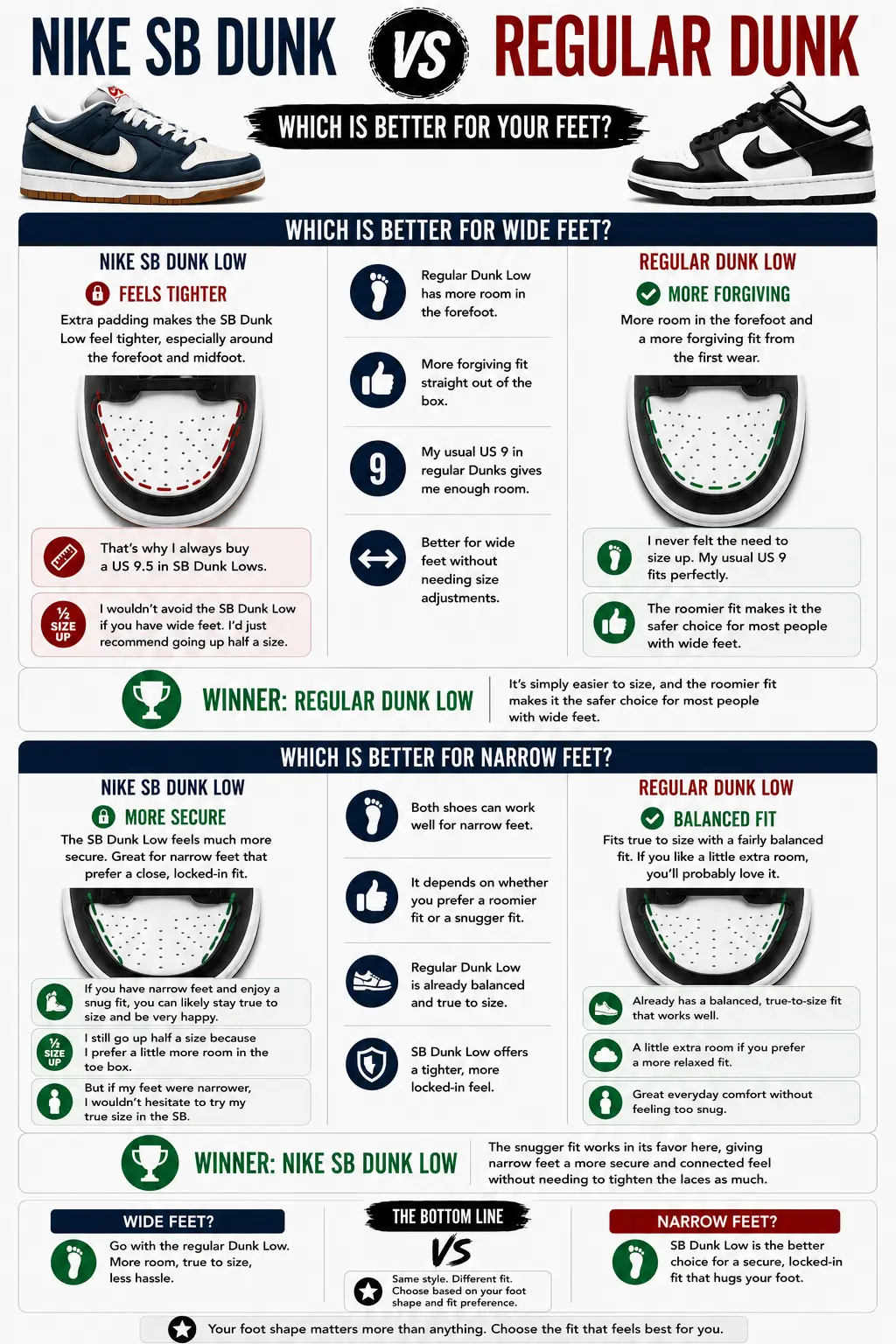
If you have wide feet, I’d choose the regular Nike Dunk Low.
It has a more forgiving fit straight out of the box, and I never felt the need to size up. My usual US 9 gives me enough room in the forefoot.
With its extra padding, the SB Dunk Low feels noticeably tighter, especially around the forefoot and midfoot. That’s why I always buy a US 9.5.
So I wouldn’t avoid the SB Dunk Low if you have wide feet. I’d just recommend going up half a size.
Winner: Regular Nike Dunk Low
It’s simply easier to size, and the roomier fit makes it the safer choice for most people with wide feet.
See my Air Jordan sizing and fit guide to see how every major Air Jordan model fits.
Which Is Better for Narrow Feet?
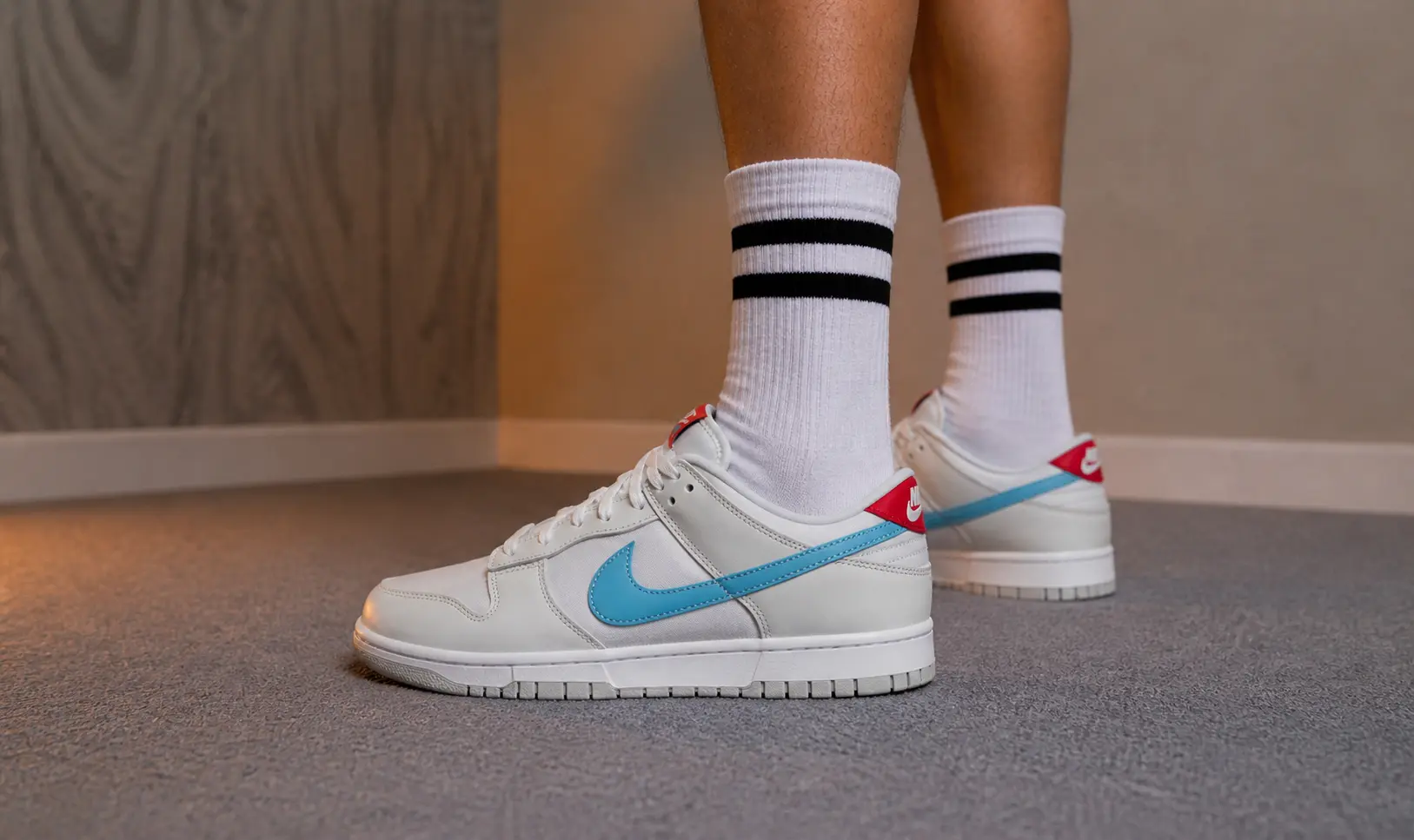
If you have narrow feet, both shoes can work well, but I’d lean toward the SB Dunk Low.
The regular Dunk Low fits true to size and already has a fairly balanced fit. If you prefer a little extra room, you’ll probably love it.
The SB Dunk Low feels much more secure. If you have narrow feet and enjoy a close, locked-in fit, there’s a good chance you can stay true to size and be perfectly happy.
Personally, I still go up half a size because I prefer having a bit more room in the toe box. But if my feet were narrower, I wouldn’t hesitate to try my true size in the SB.
Winner: Nike SB Dunk Low
The snugger fit works in its favor here, giving narrow feet a more secure and connected feel without needing to tighten the laces as much.
See my Nike Kobe sizing and fit guide to help you choose the right size before you buy.
Do Every SB Dunk Fit the Same?
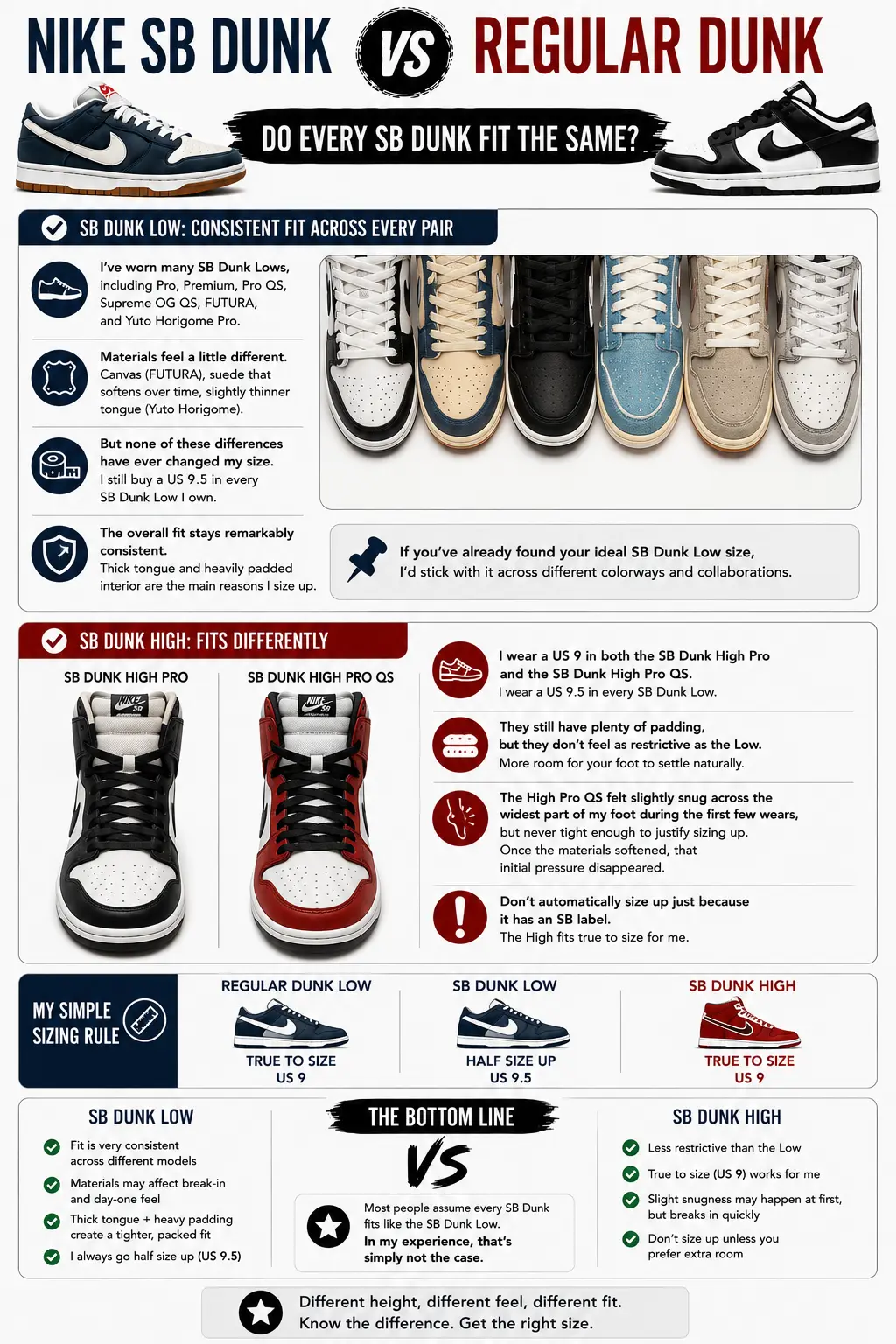
I’ve worn quite a few SB Dunk Lows over the years, including the SB Dunk Low Pro, SB Dunk Low Premium, SB Dunk Low Pro QS, the Supreme x SB Dunk Low OG QS, the FUTURA x SB Dunk Low, and the Yuto Horigome x SB Dunk Low Pro.
Some pairs definitely feel a little different when you first put them on.
The FUTURA, for example, uses canvas instead of leather, while suede pairs tend to soften up a bit more after they’ve been worn. The Yuto Horigome also has a slightly thinner tongue than some other SBs.
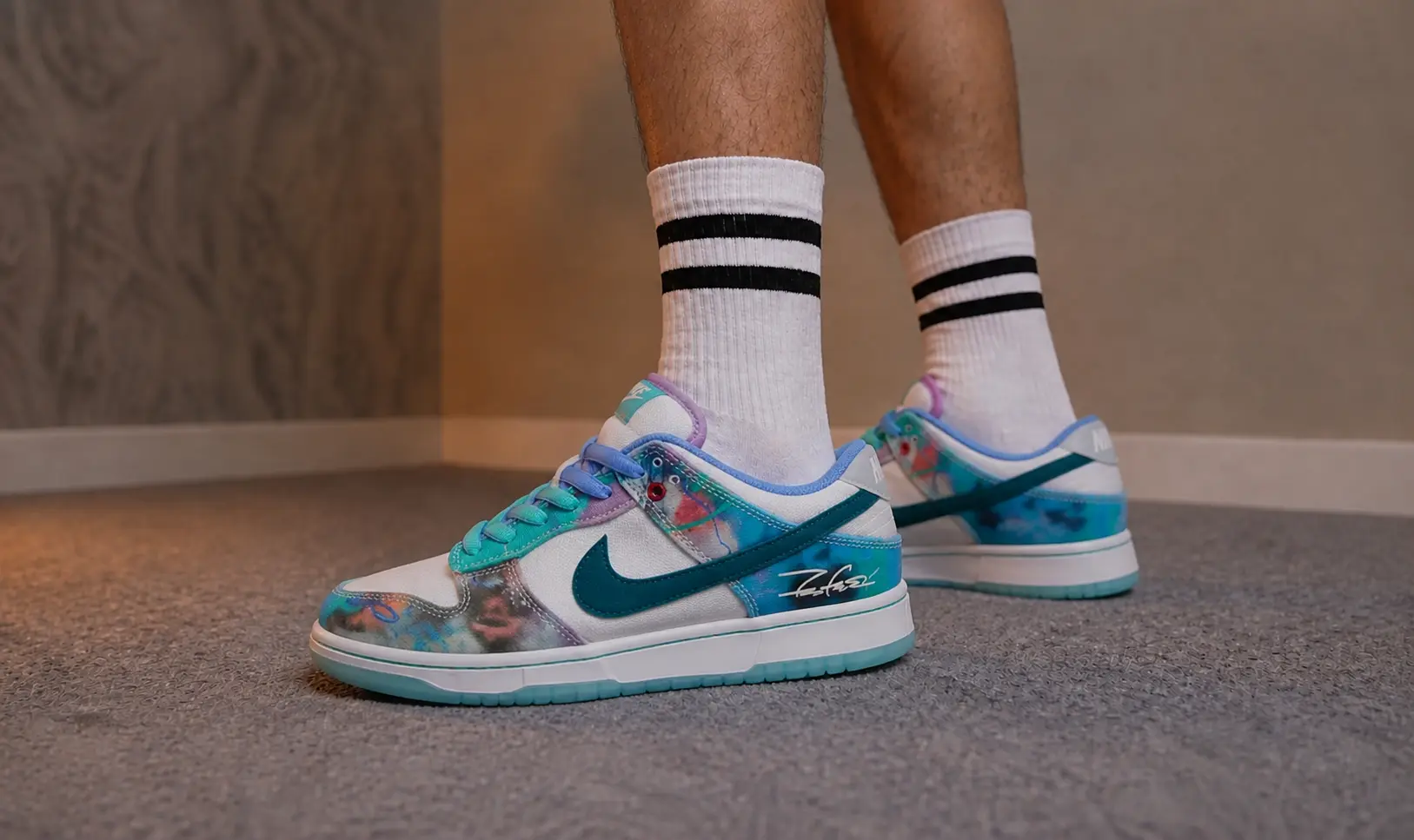
But none of those differences have ever been enough to make me change my size.
I still buy a US 9.5 in every SB Dunk Low I own.
The materials may change how quickly the shoe breaks in or how structured it feels on day one, but the overall fit stays remarkably consistent.
The thick tongue and heavily padded interior are still the defining characteristics, and they’re the main reasons I size up.
If you’ve already found your ideal SB Dunk Low size, I’d stick with it across different colorways and collaborations.
SB Dunk High Fits Differently
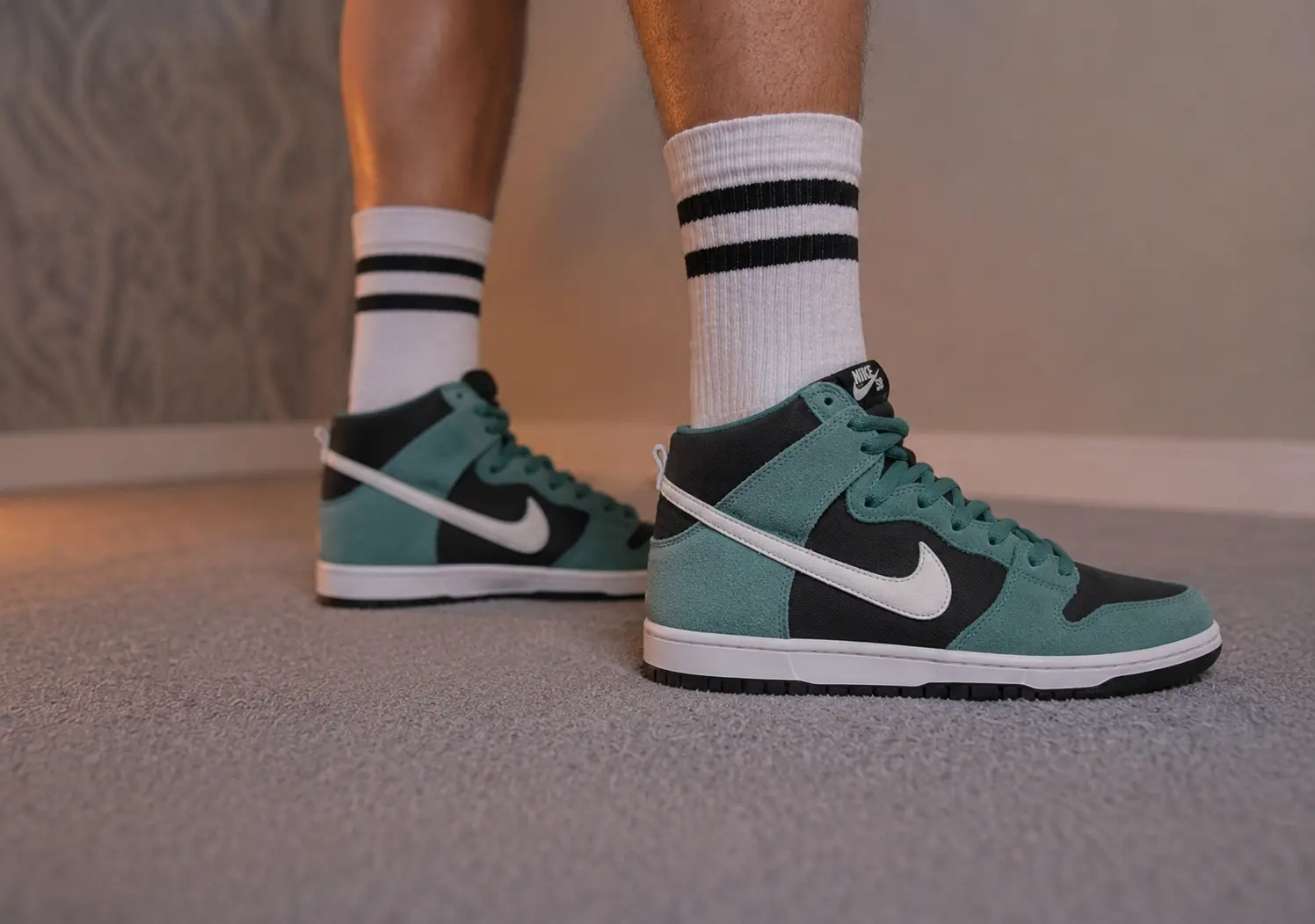
One thing that surprised me is that this sizing advice doesn’t carry over to the SB Dunk High.
I wear a US 9.5 in every SB Dunk Low, but I wear a US 9 in both the SB Dunk High Pro and the SB Dunk High Pro QS.
They still have plenty of padding, but they don’t feel as restrictive as the Low. There’s a little more room for your foot to settle naturally, so my true size feels comfortable right away.
The High Pro QS felt slightly snug across the widest part of my foot during the first few wears, but it never felt tight enough to justify sizing up. Once the materials softened, that initial pressure disappeared.
That’s why I wouldn’t automatically size up just because the shoe has an SB label.
For me, the sizing rule is simple:
- Regular Dunk Low: True to size.
- SB Dunk Low: Half size up.
- SB Dunk High: True to size.
It’s a small detail, but it can save you from getting the wrong size. Most people assume every SB fits like the SB Dunk Low, and in my experience, that’s simply not the case.
See my Adidas Samba vs Gazelle vs Campus vs Spezial sizing comparison to see which feels roomier, which fits more snugly, and whether you should stay true to size or adjust by half a size.
Who Should Buy the Regular Dunk Low?
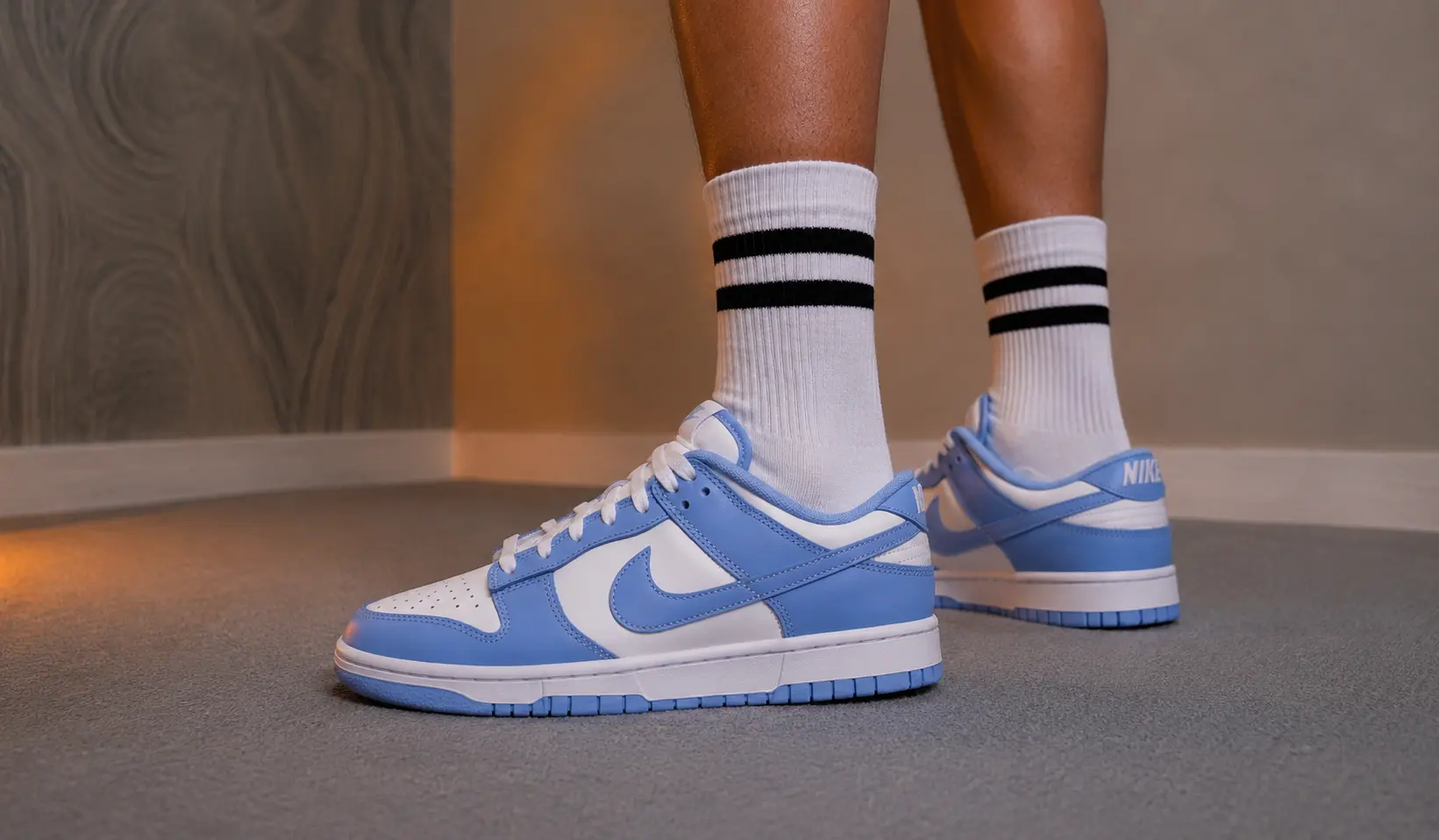
I’d recommend the regular Nike Dunk Low if you want a sneaker that’s easy to wear every day.
The fit is more relaxed from the moment you put it on. There’s a little more room around your foot, the toe box feels more open, and you don’t have to think much about sizing if your feet are normal or slightly wide.
It’s also the better choice if you don’t like thick tongues. The slimmer tongue gives the shoe a cleaner, less bulky feel, and I hardly notice it’s there once I’ve laced the shoe up.
If comfort and versatility are your priorities, the regular Dunk Low is hard to beat.
Who Should Buy the SB Dunk Low?
The SB Dunk Low is for people who like their sneakers to feel more connected to their feet.
The extra padding gives it a secure, supportive feel that the regular Dunk simply doesn’t have. My foot stays planted inside the shoe, and there’s very little movement once it’s laced up.
That makes it a great choice for skating, where stability and lockdown really matter. Even if you never step on a skateboard, you may still prefer that more secure feel.
I also think it’s the better option if you naturally enjoy a snug fit. Just remember that, for most people with normal or wider feet, going up half a size helps you keep that secure feel without making the shoe feel too tight.
Nike SB Dunk Low vs Regular Dunk Low Sizing (Final Verdict)
Again, the Nike SB Dunk Low and the regular Nike Dunk Low don’t differ because of length. They differ because of the amount of space you have once your foot is inside the shoe.
The regular Dunk feels more open and relaxed. The SB Dunk feels more padded, more supportive, and more connected to your foot.
That’s why I wear a US 9 in the regular Dunk Low and a US 9.5 in every SB Dunk Low.
Here are my winners…
🏆 Best Overall Fit: Nike SB Dunk Low
If I could only choose one based purely on fit, I’d pick the Nike SB Dunk Low.
I love how secure it feels. The padding gives the shoe a more supportive feel, and my foot stays planted yet stable. Once I go up half a size, it strikes the perfect balance between comfort and lockdown.
🏆 Best for Wide Feet: Regular Nike Dunk Low
The regular Dunk Low gets the edge here.
It simply gives my feet a little more space to breathe. I never feel squeezed through the forefoot, and I don’t have to think about going up half a size. If your feet are on the wider side, it’s the easier shoe to recommend.
🏆 Best Heel Lockdown: Nike SB Dunk Low
This one wasn’t particularly close.
The extra padding around the heel keeps my foot locked in, and I notice much less movement inside the shoe compared to a regular Dunk.
🏆 Roomiest Toe Box: Regular Nike Dunk Low
The difference isn’t dramatic, but it’s definitely there.
My toes have a bit more room to spread naturally, and the front of the shoe feels less confined than the SB.
🏆 Best Midfoot Fit: Nike SB Dunk Low
This is where the SB really separates itself.
The thicker tongue and padded interior wrap around my foot beautifully. It feels secure without needing to crank the laces down, and that’s something I appreciate every time I wear them.
🏆 Most Beginner-Friendly Fit: Regular Nike Dunk Low
If you’ve never owned either shoe before, I’d start with the regular Dunk Low.
Buying your usual size is about as straightforward as it gets. It suits a wide range of foot shapes, so there’s very little guesswork involved. You can put them on and immediately know if the fit is right.
🏆 Best Stability: Nike SB Dunk Low
The SB simply feels more planted.
Whether I’m walking around the city or spending the whole day on my feet, I notice how little my foot moves inside the shoe. That extra support gives it a more stable feel than the regular Dunk.
🏆 Best Everyday Comfort: Regular Nike Dunk Low
Some days I don’t want to think about my shoes. I just want to lace them up and head out.
That’s exactly why I keep coming back to the regular Dunk Low, and nothing about the fit demands your attention. It’s simply an easy sneaker to wear from morning until night.
Nike SB Dunk vs Dunk Sizing FAQs
Do Dunks and SB Dunks fit the same?
Not quite. The outsole is almost identical, but the fit isn’t.
The regular Nike Dunk Low has a roomier interior and feels more relaxed from the moment you put it on. The SB Dunk Low has a thicker tongue, more padding around the collar, and less usable space inside the shoe. That’s why I wear a US 9 in the regular Dunk and a US 9.5 in every SB Dunk Low.
Do Nike SB Dunks run small?
I’d say they feel small rather than actually being smaller.
The extra padding makes the shoe feel noticeably tighter, especially around the forefoot and midfoot. If you have normal or wide feet, I’d recommend going up half a size. If your feet are narrow and you enjoy a snug fit, your true size may still work well.
How should you size Nike SB Dunks?
For me, the answer is simple.
I wear a US 9 in regular Dunks and a US 9.5 in SB Dunk Lows. That half-size increase gives me the secure feel I like without putting pressure on my toes.
Should I size up or down for Nike Dunks?
For the regular Nike Dunk Low, I’d stay true to size.
The fit already has a little breathing room, and sizing down usually makes the forefoot feel tighter than I’d like. I only recommend sizing up if you have particularly wide feet and prefer a relaxed fit.
Do Dunks and SB Dunks get bigger over time?
They soften, but they don’t really get bigger.
Leather becomes more flexible, and the upper starts to follow the shape of your foot. If a shoe feels painfully tight on day one, don’t expect break-in alone to solve the problem.
Why do some people think Dunks run big?
Most people notice the extra space inside the regular Dunk Low.
The toe box feels more open than many other Nike lifestyle sneakers, so the shoe can seem slightly roomy even though the length is true to size.
Are SB Dunks narrow?
They’re not especially narrow, but they do feel narrower because of the padding.
The thick tongue and heavily padded lining reduce the amount of usable space inside the shoe. That’s why many people describe them as tight even though the outsole dimensions are very similar to a regular Dunk.
How do Dunks and SB Dunks fit compared to the Air Force 1?
The Air Force 1 is the roomiest of the three.
I wear an 8.5 in the Air Force 1, a US 9 in the regular Dunk, and a US 9.5 in the SB Dunk Low. If you’re coming from Air Force 1s, don’t assume the same size will work in either Dunk.
Why are SB Dunks so tight?
The padding is the biggest reason.
The thicker tongue, padded collar, and extra cushioning all take up space inside the shoe. That’s what gives the SB its secure, locked-in feel, but it’s also why many people prefer going up half a size.
How do you stretch Dunks and SB Dunks?
The easiest method is simply wearing them around the house with thick socks for a few hours at a time.
A shoe stretcher can also help if you need a little extra room around the forefoot. Just don’t expect dramatic changes. You can make them more comfortable, but you won’t gain half a size.
Do SB Dunk Highs fit differently than SB Dunk Lows?
Yes, and it surprised me.
I wear a US 9.5 in every SB Dunk Low, but I stay true to size (US 9) in both the SB Dunk High Pro and SB Dunk High Pro QS. The High still feels padded, but it doesn’t wrap around my foot as tightly as the Low.
Does the thicker tongue change the sizing in SB Dunks?
Absolutely.
It’s the main reason I size up. The tongue fills a lot of the space over the top of your foot, making the shoe feel much more compact than a regular Dunk even though the outsole is almost the same.
Do SB Dunk collaborations fit differently?
Only slightly.
I’ve worn the SB Dunk Low Pro, Premium, Pro QS, Supreme, FUTURA, and Yuto Horigome editions. The materials change how the shoe feels during the first few wears, but none of them have made me change my size.
I still buy a US 9.5 in every SB Dunk Low.
Final Thoughts
Before I started wearing both pairs regularly, I assumed the Nike SB Dunk vs Dunk sizing discussion was mostly hype.
After all, they share the same DNA and look almost identical from the outside.
Once I started switching between them, though, the difference became obvious.
The regular Dunk is the pair I reach for when I want something effortless. I know exactly how it’s going to fit, I don’t have to think about the laces, and it disappears on my feet after a few minutes.
The SB Dunk Low gives me a completely different experience. It asks for a little more attention when choosing the right size, but once I found that half-size-up sweet spot, it became one of the most satisfying sneakers I own.
The fit feels deliberate. Every part of the shoe seems to hold your foot exactly where it should be.
That’s why I don’t think it’s helpful to ask, “Which one is better?”
A better question is, “Which one matches the way I like my sneakers to feel?”
If you prefer a relaxed fit with a little extra breathing room, the regular Dunk Low is probably the right choice.
If you enjoy a more secure, padded feel and don’t mind going up half a size, the SB Dunk Low is hard to beat.
Hopefully this Nike Dunk vs SB Dunk sizing guide has helped you decide which model fits your feet and your preferences.
If you’ve owned both, I’d love to hear whether your experience matches mine. Leave a comment below and let me know which pair you prefer and what size worked best for you.