
To help you find your boot size, Frank’s Boots size chart uses two measurements: foot length and foot width, or the circumference around the ball of your foot.
I’ve also turned the chart into a calculator, so you don’t have to scroll through all 135 sizing combinations.
Just select your measurements, and you’ll see the recommended size and width for both the standard lasts and the 1977 last.
If you’re also wondering how Frank’s Boots fit compared to other brands, check out my Frank’s Boots sizing guide for a closer look at the fit, lasts, and sizing differences.

Frank’s Boots Size Calculator
If you prefer to look up your measurements yourself, the full chart is below, with sizes and widths for both the standard lasts and the 1977 last.
Frank’s Boots Size Chart
| Foot Length | Foot Width | Standard Lasts | 1977 Last |
|---|---|---|---|
| 9″ | 9 3/4″
10″
10 1/4″
10 1/2″
|
5F+ | 4.5F+ |
| 9 1/8″ | 9 3/4″
10″
10 1/4″
10 1/2″
|
5F+ | 4.5F+ |
| 9 3/16″ | 9 3/4″
10″
10 1/4″
10 1/2″
|
5.5F+ | 5F+ |
| 9 5/16″ | 9 7/8″
10 1/8″
10 3/8″
10 5/8″
|
5.5F+ | 5F+ |
| 9 3/8″ | 9 7/8″
10 1/8″
10 3/8″
10 5/8″
|
6F+ | 5.5F+ |
| 9 1/12″ | 9 7/8″
10 1/8″
10 3/8″
10 5/8″
|
6F+ | 5.5F+ |
| 9 9/16″ | 9 7/8″
10 1/8″
10 3/8″
10 5/8″
|
6.5F+ | 6F+ |
| 9 11/16″ | 9 7/8″
10 1/8″
10 3/8″
10 5/8″
|
6.5F+ | 6F+ |
| 9 3/4″ | 10″
10 1/4″
10 1/2″
10 3/4″
|
7F+ | 6.5F+ |
| 9 7/8″ | 10″
10 1/4″
10 1/2″
10 3/4″
|
7F+ | 6.5F+ |
| 9 15/16″ | 10″
10 1/4″
10 1/2″
10 3/4″
|
7.5F+ | 7F+ |
| 10 1/16″ | 10″
10 1/4″
10 1/2″
10 3/4″
|
7.5F+ | 7F+ |
| 10 1/8″ | 10″ | 8EE | 7.5EE |
| 10 1/8″ | 10 1/4″ | 8F | 7.5F |
| 10 1/8″ | 10 1/2″
10 3/4″
|
8F+ | 7.5F+ |
| 10 1/4″ | 10″ | 8EE | 7.5EE |
| 10 1/4″ | 10 1/4″ | 8F | 7.5F |
| 10 1/4″ | 10 1/2″
10 3/4″
|
8F+ | 7.5F+ |
| 10 5/16″ | 10 1/8″ | 8.5EE | 8EE |
| 10 5/16″ | 10 3/8″ | 8.5F | 8F |
| 10 5/16″ | 10 5/8″
10 7/8″
|
8.5F+ | 8F+ |
| 10 7/16″ | 10 1/8″ | 8.5EE | 8EE |
| 10 7/16″ | 10 3/8″ | 8.5F | 8F |
| 10 7/16″ | 10 5/8″
10 7/8″
|
8.5F+ | 8F+ |
| 10 1/2″ | 10 1/8″ | 9EE | 8.5EE |
| 10 1/2″ | 10 3/8″ | 9F | 8.5F |
| 10 1/2″ | 10 5/8″
10 7/8″
|
9F+ | 8.5F+ |
| 10 5/8″ | 10 1/8″ | 9EE | 8.5EE |
| 10 5/8″ | 10 3/8″ | 9F | 8.5F |
| 10 5/8″ | 10 5/8″
10 7/8″
|
9F+ | 8.5F+ |
| 10 11/16″ | 10 1/8″ | 9.5E | 9E |
| 10 11/16″ | 10 3/8″ | 9.5EE | 9EE |
| 10 11/16″ | 10 5/8″ | 9.5F | 9F |
| 10 11/16″ | 10 7/8″ | 9.5F+ | 9F+ |
| 10 13/16″ | 10 1/4″ | 9.5EE | 9EE |
| 10 13/16″ | 10 1/2″ | 9.5F | 9F |
| 10 13/16″ | 10 3/4″
11″
|
9.5F+ | 9F+ |
| 10 7/8″ | 10 1/4″ | 10E | 9.5E |
| 10 7/8″ | 10 1/2″ | 10EE | 9.5EE |
| 10 7/8″ | 10 3/4″ | 10F | 9.5F |
| 10 7/8″ | 11″ | 10F+ | 9.5F+ |
| 11″ | 10 1/4″ | 10E | 9.5E |
| 11″ | 10 1/2″ | 10EE | 9.5EE |
| 11″ | 10 3/4″ | 10F | 9.5F |
| 11″ | 11″ | 10F+ | 9.5F+ |
| 11 1/8″ | 10 1/4″ | 10.5E | 10E |
| 11 1/8″ | 10 1/2″ | 10.5EE | 10EE |
| 11 1/8″ | 10 3/4″ | 10.5F | 10F |
| 11 1/8″ | 11″ | 10.5F+ | 10F+ |
| 11 1/4″ | 10 1/4″ | 10.5E | 10E |
| 11 1/4″ | 10 1/2″ | 10.5EE | 10EE |
| 11 1/4″ | 10 3/4″ | 10.5F | 10F |
| 11 1/4″ | 11″ | 10.5F+ | 10F+ |
| 11 5/16″ | 10 3/8″ | 11E | 10.5E |
| 11 5/16″ | 10 5/8″ | 11EE | 10.5EE |
| 11 5/16″ | 10 7/8″ | 11F | 10.5F |
| 11 5/16″ | 11 1/8″ | 11F+ | 10.5F+ |
| 11 7/16″ | 10 3/8″ | 11E | 10.5E |
| 11 7/16″ | 10 5/8″ | 11EE | 10.5EE |
| 11 7/16″ | 10 7/8″ | 11F | 10.5F |
| 11 7/16″ | 11 1/8″ | 11F+ | 10.5F+ |
| 11 1/2″ | 10 3/8″ | 11.5D | 11D |
| 11 1/2″ | 10 5/8″ | 11.5E | 11E |
| 11 1/2″ | 10 7/8″ | 11.5EE | 11EE |
| 11 1/2″ | 11 1/8″ | 11.5F | 11F |
| 11 5/8″ | 10 3/8″ | 11.5D | 11D |
| 11 5/8″ | 10 5/8″ | 11.5E | 11E |
| 11 5/8″ | 10 7/8″ | 11.5EE | 11EE |
| 11 5/8″ | 11 1/8″ | 11.5F | 11F |
| 11 11/16″ | 10 3/8″ | 12D | 11.5D |
| 11 11/16″ | 10 5/8″ | 12E | 11.5E |
| 11 11/16″ | 10 7/8″ | 12EE | 11.5EE |
| 11 11/16″ | 11 1/8″ | 12F | 11.5F |
| 11 13/16″ | 10 1/2″ | 12D | 11.5D |
| 11 13/16″ | 10 3/4″ | 12E | 11.5E |
| 11 13/16″ | 11″ | 12EE | 11.5EE |
| 11 13/16″ | 11 1/4″ | 12F | 11.5F |
| 11 7/8″ | 10 1/2″ | 12.5D | 12D |
| 11 7/8″ | 10 3/4″ | 12.5E | 12E |
| 11 7/8″ | 11″ | 12.5EE | 12EE |
| 11 7/8″ | 11 1/4″ | 12.5F | 12F |
| 12″ | 10 1/2″ | 12.5D | 12D |
| 12″ | 10 3/4″ | 12.5E | 12E |
| 12″ | 11″ | 12.5EE | 12EE |
| 12″ | 11 1/4″ | 12.5F | 12F |
| 12 3/16″ | 10 1/2″ | 13D | 12.5D |
| 12 3/16″ | 10 3/4″ | 13D | 12.5D |
| 12 3/16″ | 11″ | 13E | 12.5E |
| 12 3/16″ | 11 1/4″ | 13EE | 12.5EE |
| 12 5/16″ | 10 5/8″ | 13D | 12.5D |
| 12 5/16″ | 10 7/8″ | 13E | 12.5E |
| 12 5/16″ | 11 1/8″ | 13EE | 12.5EE |
| 12 5/16″ | 11 3/8″ | 13F | 12.5F |
What Do the Width Letters Mean?
Frank’s Boots uses width letters like D, E, EE, F, and F+. D is the narrowest of these options, while F+ is the widest.
If you’re not familiar with shoe width letters, I’ve explained how they work in my guide to shoe width sizes.
What We Found After Analyzing 135 Frank’s Boots Sizing Combinations
We went through 135 individual measurement combinations from Frank’s Boots sizing calculator, and a few patterns stood out.
The biggest finding is that the 1977 last consistently comes out half a size smaller. If the calculator recommends a 9EE for the standard lasts (4811/55/5812/5332/5163), it recommends an 8.5EE for the 1977 last. We found no exceptions in the recorded results.
The width letter also stays the same between the two last groups. Whether the recommendation is D, E, EE, F, or F+, only the numerical size changes.
Your foot length matters too, which is why Frank’s calculator asks for both measurements.
Why Foot Length and Ball Circumference Both Matter
Frank’s Boots doesn’t determine your width from ball circumference alone. Your foot length matters too.
If you’re unsure how boot widths compare or whether you need a wider fit, my boot width guide goes into more detail.
| Foot Length | Ball Circumference | Standard Lasts 4811/55/5812/5332/5163 |
1977 Last |
|---|---|---|---|
| 10 1/8″ | 10 1/2″ | 8F+ | 7.5F+ |
| 10 13/16″ | 10 1/2″ | 9.5F | 9F |
| 10 7/8″ | 10 1/2″ | 10EE | 9.5EE |
| 11 1/8″ | 10 1/2″ | 10.5EE | 10EE |
| 11 13/16″ | 10 1/2″ | 12D | 11.5D |
Everyone in this table has the same 10 1/2-inch measurement around the ball of the foot, yet Frank’s recommends different widths.
Look at the first and last rows. The shorter foot gets an F+, while the longer foot gets a D. Quite a difference for the same circumference.
That’s why I’d never use ball circumference alone to figure out my Frank’s Boots width.
This also brings up a common sizing question: should you go up in length or choose a wider size? I’ve explained the difference in my sneaker width chart and sizing guide.
What If My Measurement Isn’t Listed?
Frank’s asks for your ball-of-foot circumference. That’s the measurement around your forefoot, near the base of your toes, not the width straight across it.
Now, what if you measure 10 3/8 inches and that number isn’t in the calculator?
I’d check it once more. If it’s still 10 3/8, I’d ask Frank’s whether to go with 10 1/4 or 10 1/2. I wouldn’t want to guess on a pair of boots that costs this much.
Why Do Different Measurements Sometimes Give the Same Boot Size?
Here’s something I noticed while going through Frank’s size results.
At a foot length of 9 inches, ball circumferences of 9 3/4, 10, 10 1/4, and 10 1/2 inches all return a size 5F+.
That’s four different measurements, but the recommendation doesn’t change.
This also means you can’t assume every extra quarter inch around your foot moves you up one width. The calculator doesn’t work that way.
It doesn’t mean those feet are exactly the same size. It just means Frank’s calculator gives them the same result.
I’d pay particular attention to this if my measurement were at the upper end of that range. The calculator has already reached F+, so it isn’t showing a wider option for those measurements.
How to Measure Your Feet for Frank’s Boots
You’ll need a pen, some paper, a flexible measuring tape, and someone to help you. Put on the socks you plan to wear with your boots.
If you need a little more help getting accurate measurements, I’ve also put together a step-by-step guide to measuring your feet at home.
Measuring Foot Length
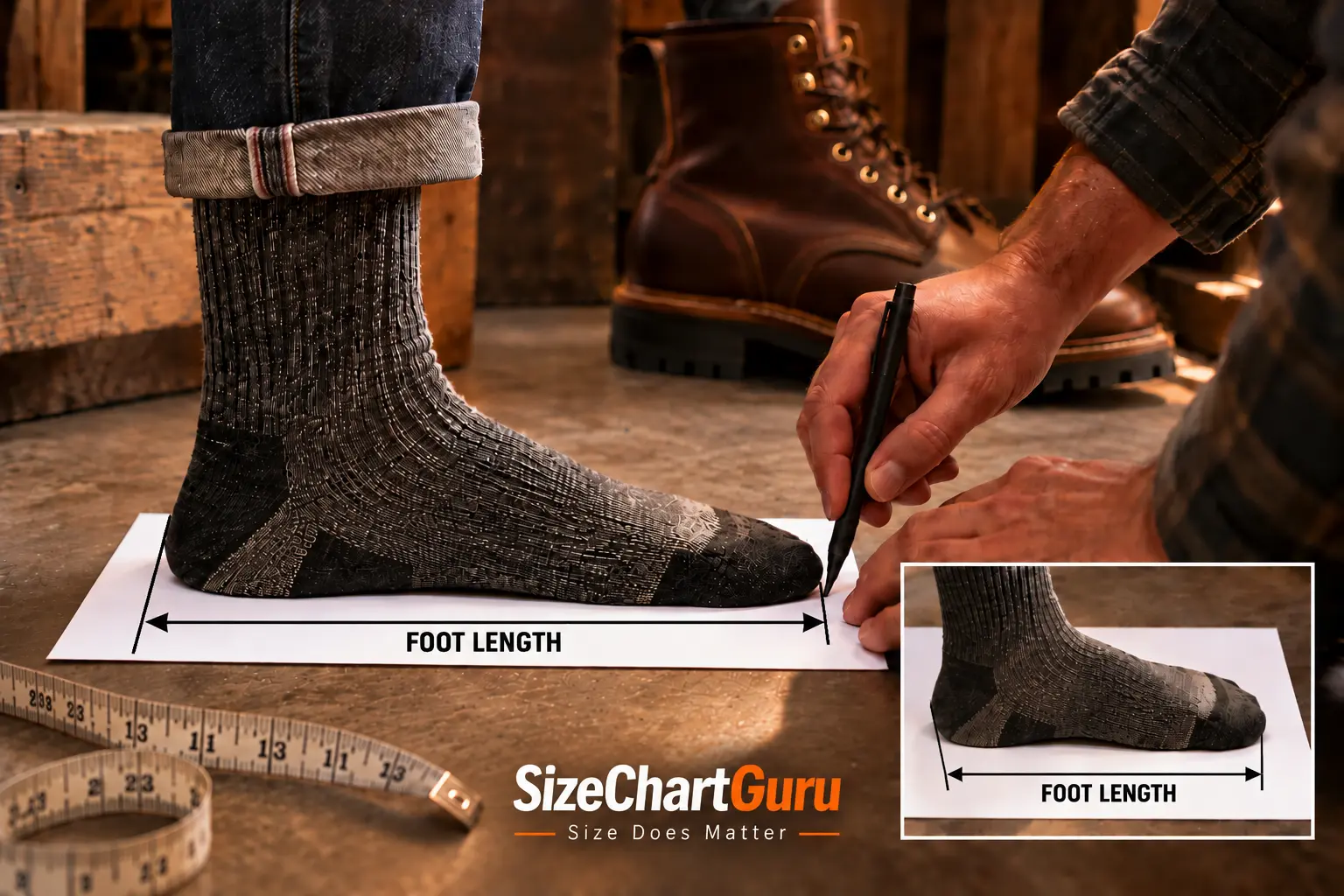
Sit down with your knees bent at about 90 degrees and place one foot flat on a sheet of paper.
Have someone mark the back of your heel and the tip of your longest toe. Measure between the two marks. That’s your foot length.
Repeat with the other foot. Mine aren’t necessarily going to measure exactly the same, and yours might not either.
Measuring Around the Ball of Your Foot
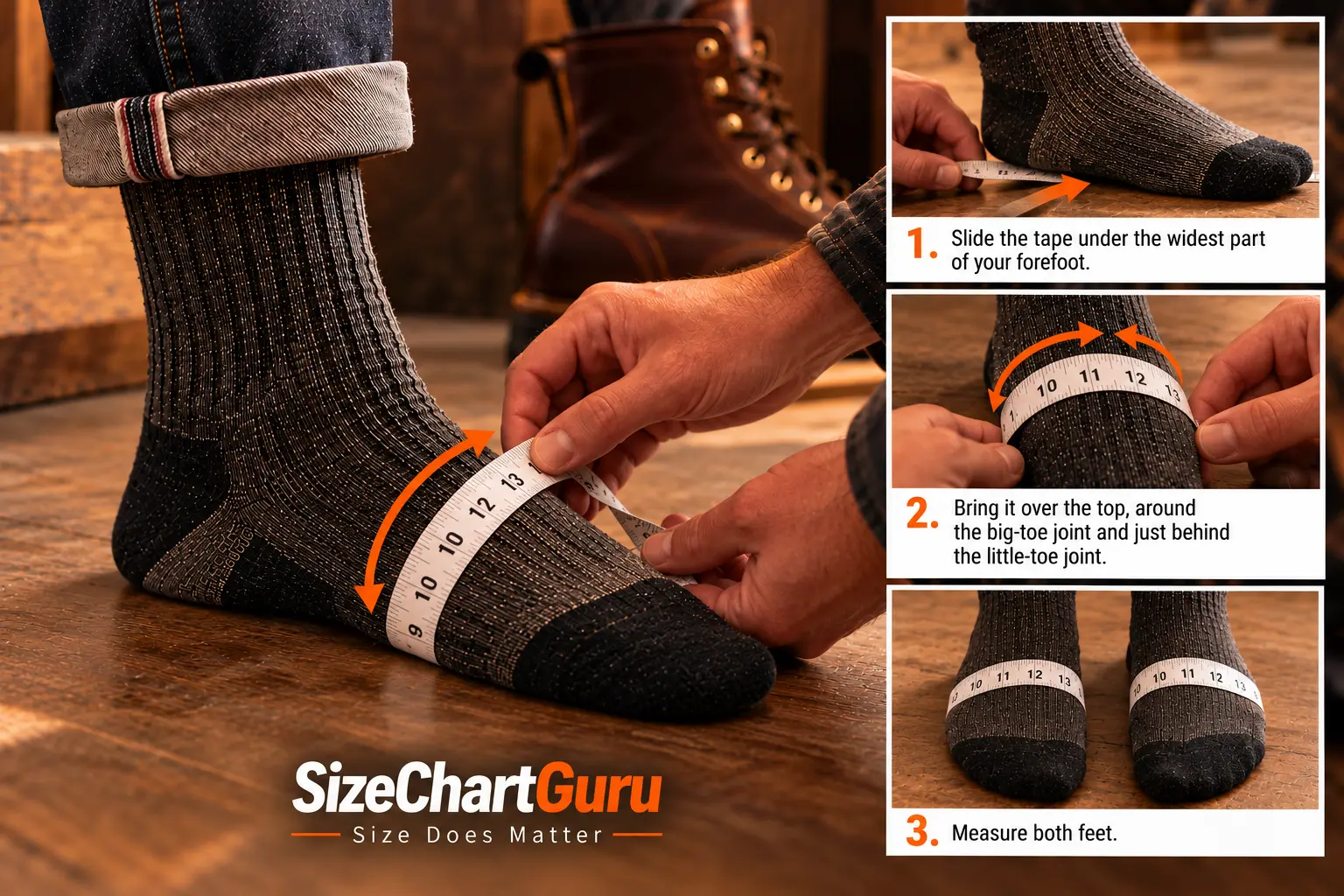
For this one, you’re measuring around your foot, not straight across it.
Keep your foot on the floor while someone slides the tape underneath the widest part of your forefoot. Bring it over the top, around the big-toe joint and just behind the little-toe joint.
Don’t pull the tape so tight that it digs into your foot.
Measure both feet.
Which Foot Should You Use?
I’d enter the measurements for each foot separately, especially if one is noticeably longer or wider.
If the calculator gives you two different recommendations, ask Frank’s which size would work better for both feet.
You can then use the two dropdowns above to check your size.
If you’re ordering custom boots or want Frank’s to assess your measurements directly, you can also follow their official fit sheet instructions.
Final Thoughts
One thing that stood out to me while going through Frank’s Boots size chart was how much the recommended width can change depending on foot length. Two people can have the same measurement around the ball of their feet and still need completely different widths.
That’s why I’d pay just as much attention to the width recommendation as the boot size itself.
If you want to double-check your measurements before ordering, you can also use Frank’s Boots’ official sizing tool.
If you’ve ordered Frank’s Boots before, I’m curious: did their recommended size work for you, or did you end up making an adjustment?
Let me know in the comments.