
Trying to figure out what your Chinese shoe size would be in the US? I’ve put together a Chinese shoe size to US calculator and conversion charts for men, women, and kids to help you find the equivalent.
Chinese shoe sizes can look quite different depending on where you’re shopping. You might come across 240, 245, or 250 on one pair and 38, 39, or 40 on another.
I’ve included both sizing formats in the charts below, along with foot-length measurements where available. Just keep in mind that the same Chinese size won’t always have the same US equivalent across brands.
For reference, 250 mm = 25.0 cm.
Chinese to US Shoe Size Calculator
Chinese Shoe Size to US
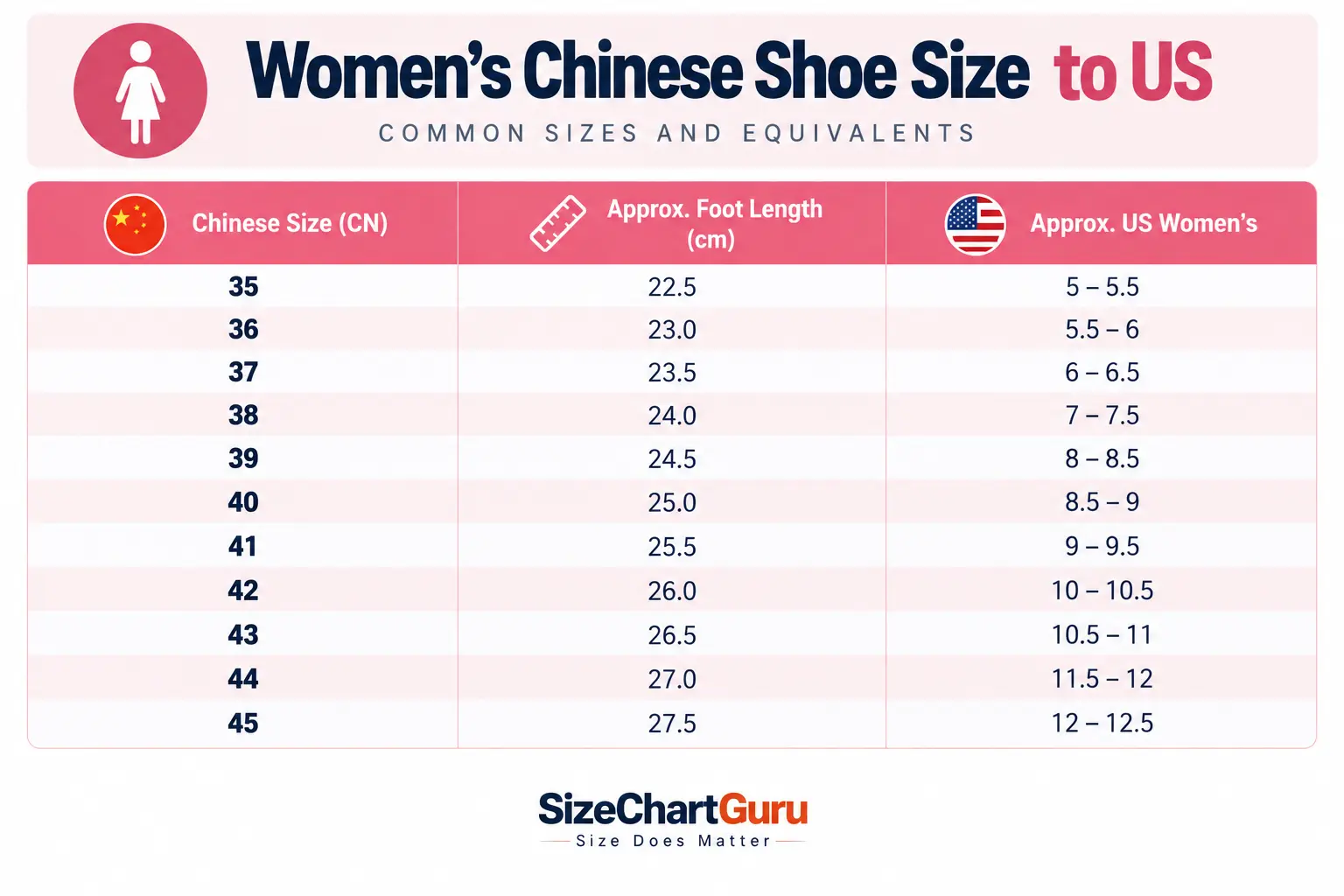
Women’s Chinese Shoe Size to US
| Chinese Size | Approx. Foot Length | Approx. US Women’s |
|---|---|---|
| 35 | 22.5 cm | 5–5.5 |
| 36 | 23.0 cm | 5.5–6 |
| 37 | 23.5 cm | 6–6.5 |
| 38 | 24.0 cm | 7–7.5 |
| 39 | 24.5 cm | 8–8.5 |
| 40 | 25.0 cm | 8.5–9 |
| 41 | 25.5 cm | 9–9.5 |
| 42 | 26.0 cm | 10–10.5 |
| 43 | 26.5 cm | 10.5–11 |
| 44 | 27.0 cm | 11.5–12 |
| 45 | 27.5 cm | 12–12.5 |

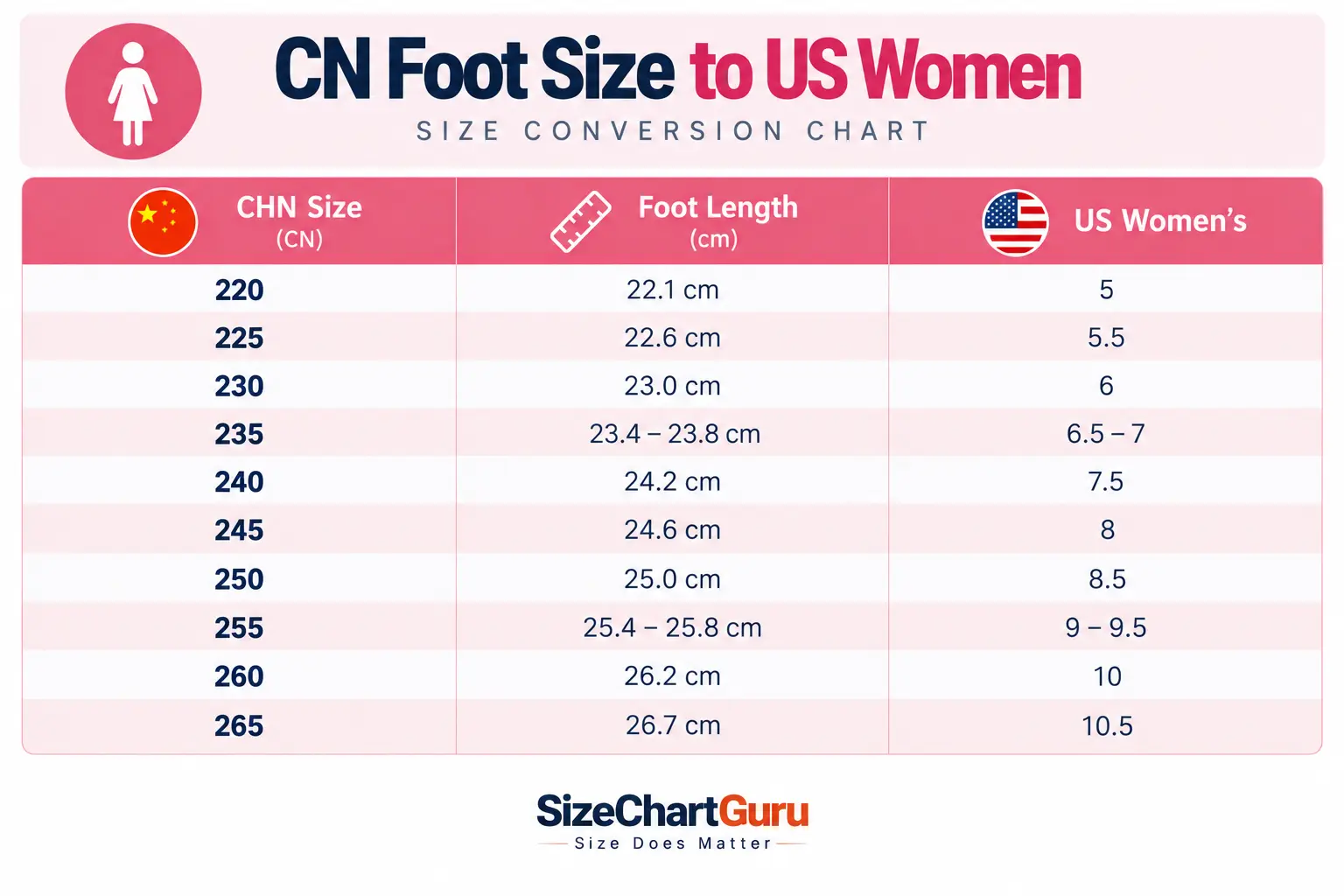
| CHN Size | Foot Length | US Women’s |
|---|---|---|
| 220 | 22.1 cm | 5 |
| 225 | 22.6 cm | 5.5 |
| 230 | 23.0 cm | 6 |
| 235 | 23.4–23.8 cm | 6.5–7 |
| 240 | 24.2 cm | 7.5 |
| 245 | 24.6 cm | 8 |
| 250 | 25.0 cm | 8.5 |
| 255 | 25.4–25.8 cm | 9–9.5 |
| 260 | 26.2 cm | 10 |
| 265 | 26.7 cm | 10.5 |
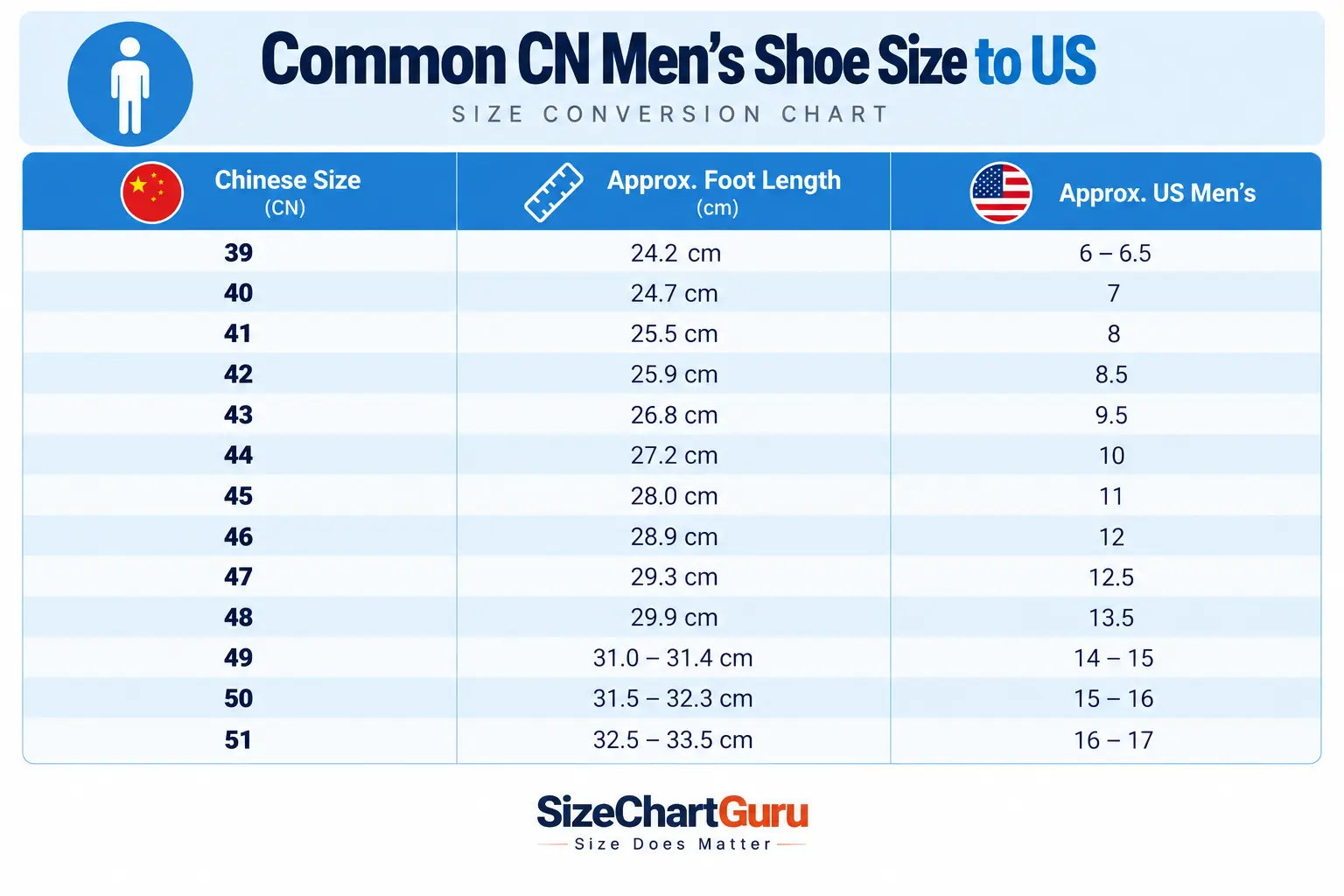
Men’s Chinese Shoe Size to US
| Chinese Size | Approx. Foot Length | Approx. US Men’s |
|---|---|---|
| 39 | 24.2 cm | 6–6.5 |
| 40 | 24.7 cm | 7 |
| 41 | 25.5 cm | 8 |
| 42 | 25.9 cm | 8.5 |
| 43 | 26.8 cm | 9.5 |
| 44 | 27.2 cm | 10 |
| 45 | 28.0 cm | 11 |
| 46 | 28.9 cm | 12 |
| 47 | 29.3 cm | 12.5 |
| 48 | 29.9 cm | 13.5 |
| 49 | 31.0–31.4 cm | 14–15 |
| 50 | 31.5–32.3 cm | 15–16 |
| 51 | 32.5–33.5 cm | 16–17 |
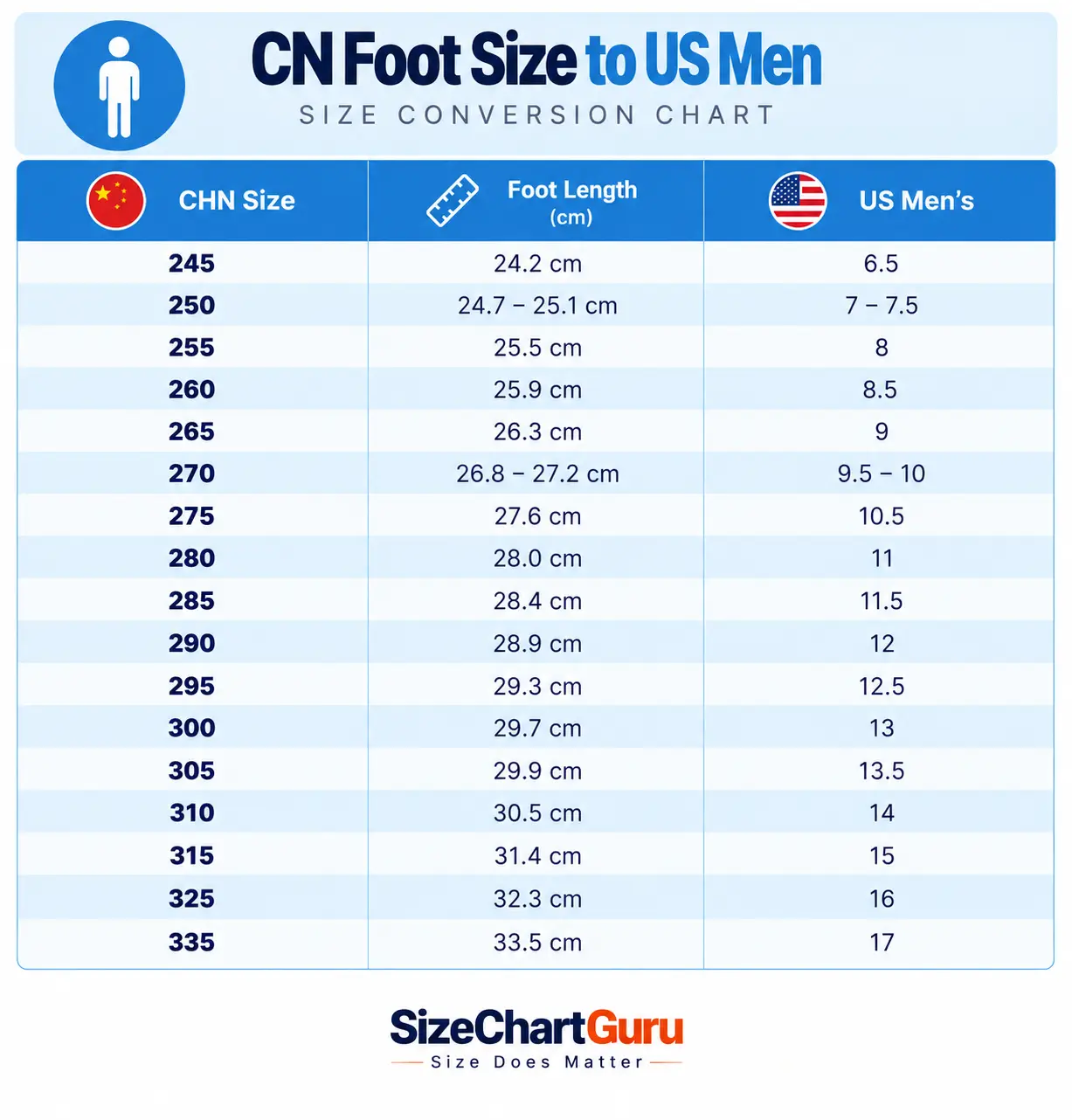
Chinese Foot Size to US Men
| CHN Size | Foot Length | US Men’s |
|---|---|---|
| 245 | 24.2 cm | 6.5 |
| 250 | 24.7–25.1 cm | 7–7.5 |
| 255 | 25.5 cm | 8 |
| 260 | 25.9 cm | 8.5 |
| 265 | 26.3 cm | 9 |
| 270 | 26.8–27.2 cm | 9.5–10 |
| 275 | 27.6 cm | 10.5 |
| 280 | 28.0 cm | 11 |
| 285 | 28.4 cm | 11.5 |
| 290 | 28.9 cm | 12 |
| 295 | 29.3 cm | 12.5 |
| 300 | 29.7 cm | 13 |
| 305 | 29.9 cm | 13.5 |
| 310 | 30.5 cm | 14 |
| 315 | 31.4 cm | 15 |
| 325 | 32.3 cm | 16 |
| 335 | 33.5 cm | 17 |
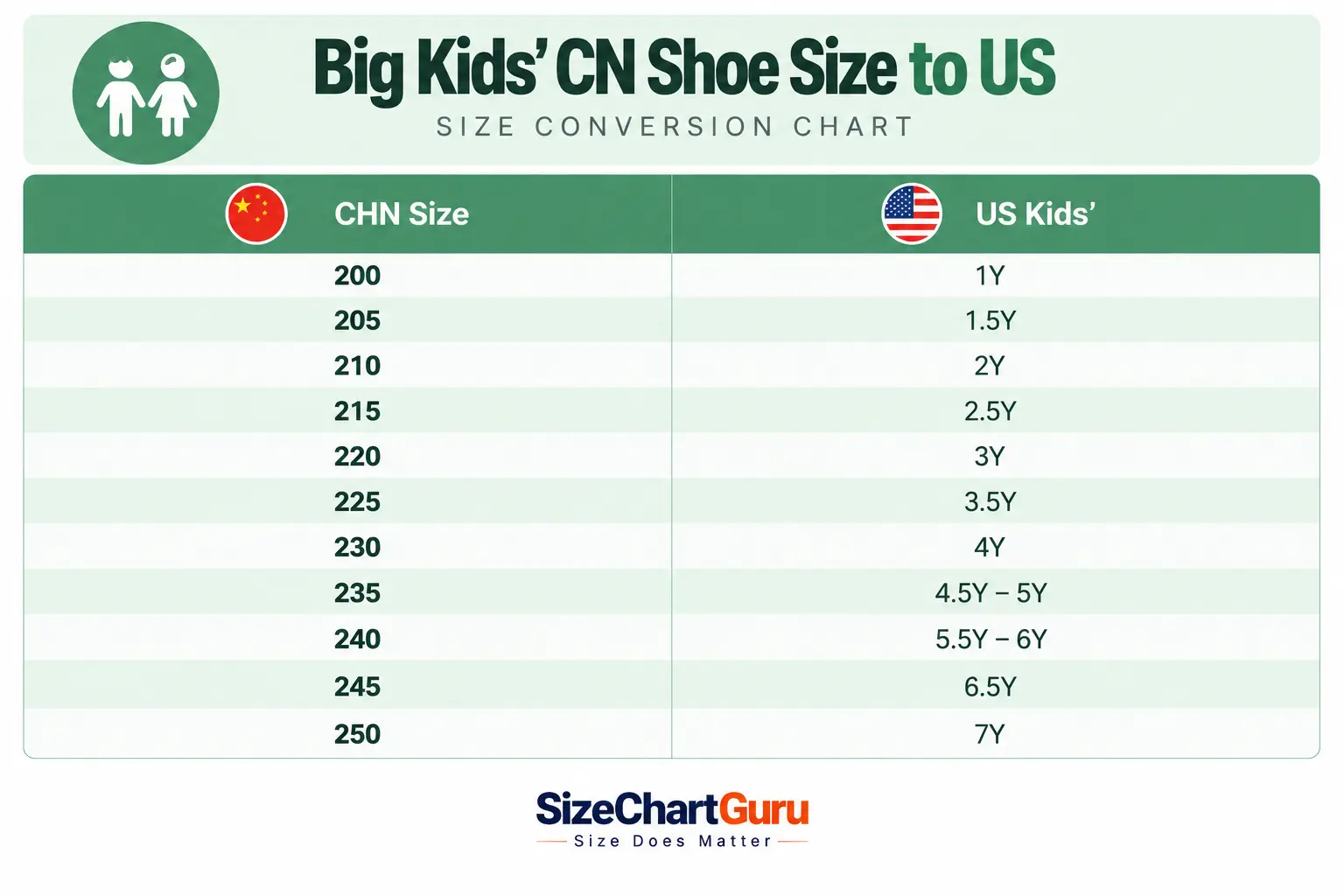
Big Kids’ Chinese Shoe Size to US
| CHN Size | US Kids’ |
|---|---|
| 200 | 1Y |
| 205 | 1.5Y |
| 210 | 2Y |
| 215 | 2.5Y |
| 220 | 3Y |
| 225 | 3.5Y |
| 230 | 4Y |
| 235 | 4.5Y–5Y |
| 240 | 5.5Y–6Y |
| 245 | 6.5Y |
| 250 | 7Y |
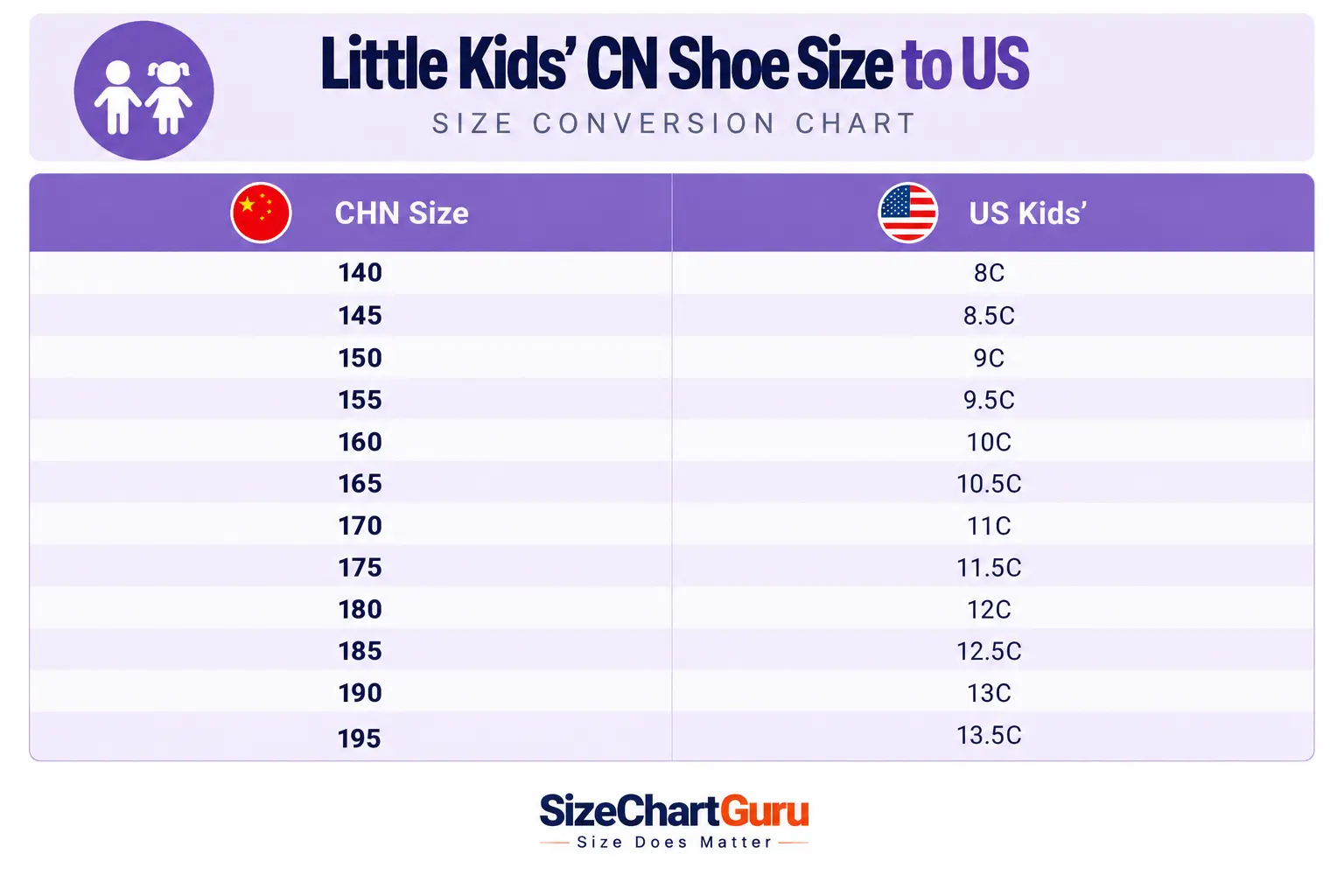
Little Kids’ Chinese Shoe Size to US
| CHN Size | US Kids’ |
|---|---|
| 140 | 8C |
| 145 | 8.5C |
| 150 | 9C |
| 155 | 9.5C |
| 160 | 10C |
| 165 | 10.5C |
| 170 | 11C |
| 175 | 11.5C |
| 180 | 12C |
| 185 | 12.5C |
| 190 | 13C |
| 195 | 13.5C |
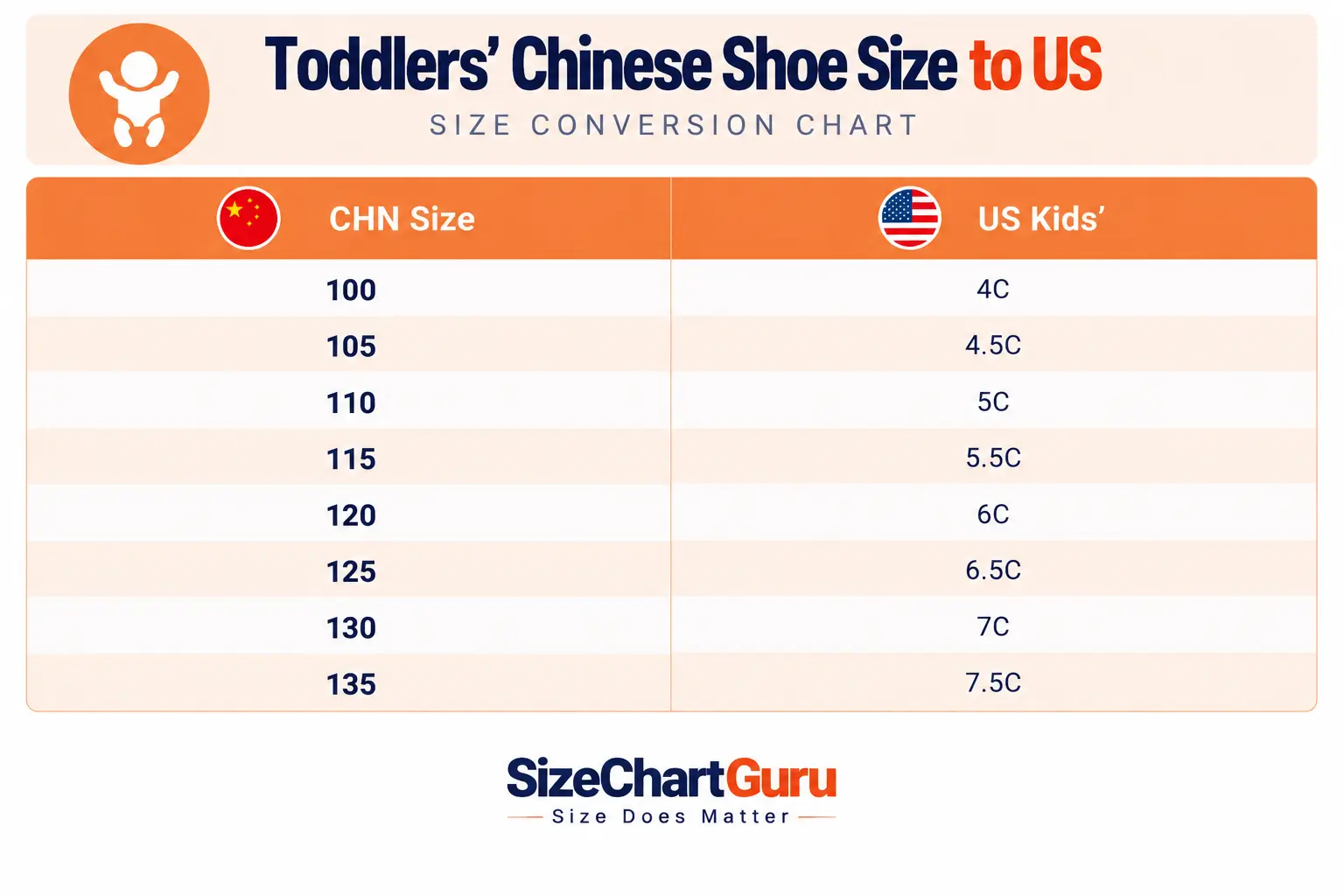
Toddlers’ Chinese Shoe Size to US
| CHN Size | US Kids’ |
|---|---|
| 100 | 4C |
| 105 | 4.5C |
| 110 | 5C |
| 115 | 5.5C |
| 120 | 6C |
| 125 | 6.5C |
| 130 | 7C |
| 135 | 7.5C |
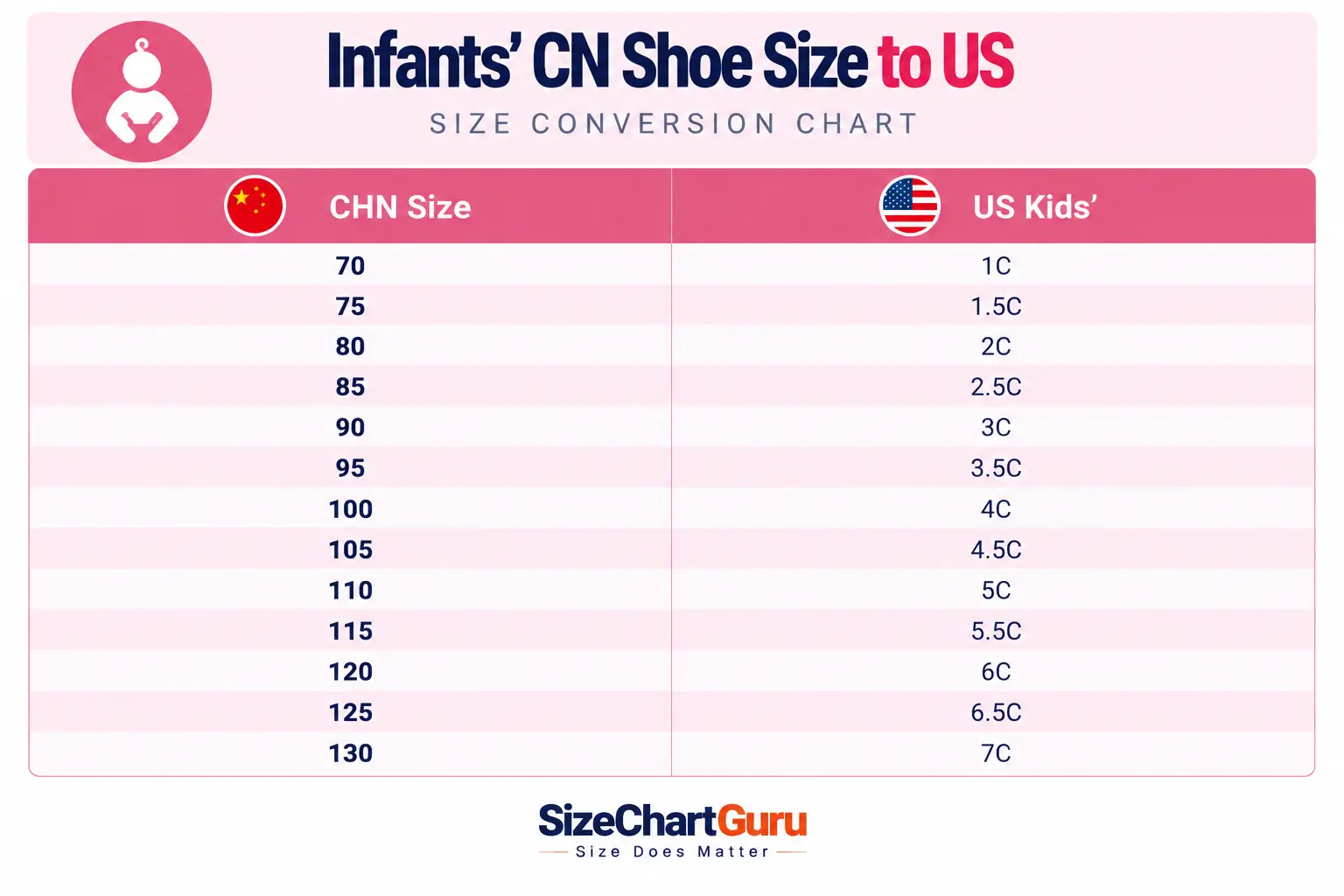
Infants’ Chinese Shoe Size to US
| CHN Size | US Kids’ |
|---|---|
| 70 | 1C |
| 75 | 1.5C |
| 80 | 2C |
| 85 | 2.5C |
| 90 | 3C |
| 95 | 3.5C |
| 100 | 4C |
| 105 | 4.5C |
| 110 | 5C |
| 115 | 5.5C |
| 120 | 6C |
| 125 | 6.5C |
| 130 | 7C |
What Does a Chinese Shoe Size Actually Mean?
I initially thought the numbers 240, 245, and 250 would make Chinese shoe sizing easier to figure out. They’re based on millimeters, after all. A 245 represents 24.5 cm on the sizing scale. China even has a national standard for shoe sizing, GB/T 43293-2022.
Then I started comparing the actual charts.
In the men’s chart above, CHN 245 is listed with a foot length of 24.2 cm. I expected to see 24.5 cm, so that difference stood out to me.
It’s a good example of why I wouldn’t rely on the CHN number alone when ordering shoes. If a brand gives me a separate foot-length measurement, that’s what I’d compare with my own feet.
One last thing I want to mention: CHN 245 doesn’t tell you how long the shoe is on the inside. It’s a size designation related to foot length, not a measurement of the space available for your toes.
Why Do Some Chinese Shoes Use Sizes Like 39, 40 and 41?
Not every shoe sold in China uses the millimeter-based sizing system. I’ve come across plenty of charts with 39, 40, and 41, which look much closer to the European sizes most of us are familiar with.
Some Chinese brands and sellers use EU-style numbers, while others have their own size labels.
For example, one seller might list a shoe as CN 40, while another uses 250. I wouldn’t assume they’re the same size just because they appear in similar conversion charts. I’d check the seller’s measurements first, especially when buying from a brand I haven’t tried before.
Is Chinese Shoe Size the Same as European Shoe Size?
Not exactly, although I can see why people mix them up. I’ve come across Chinese shoe charts that use 39, 40, and 41, which are the same numbers you’ll find on European shoes.
European sizing uses something called a Paris point. Each point measures about 6.67 mm, and the size number is based on a length used for the shoe rather than directly stating your foot length.
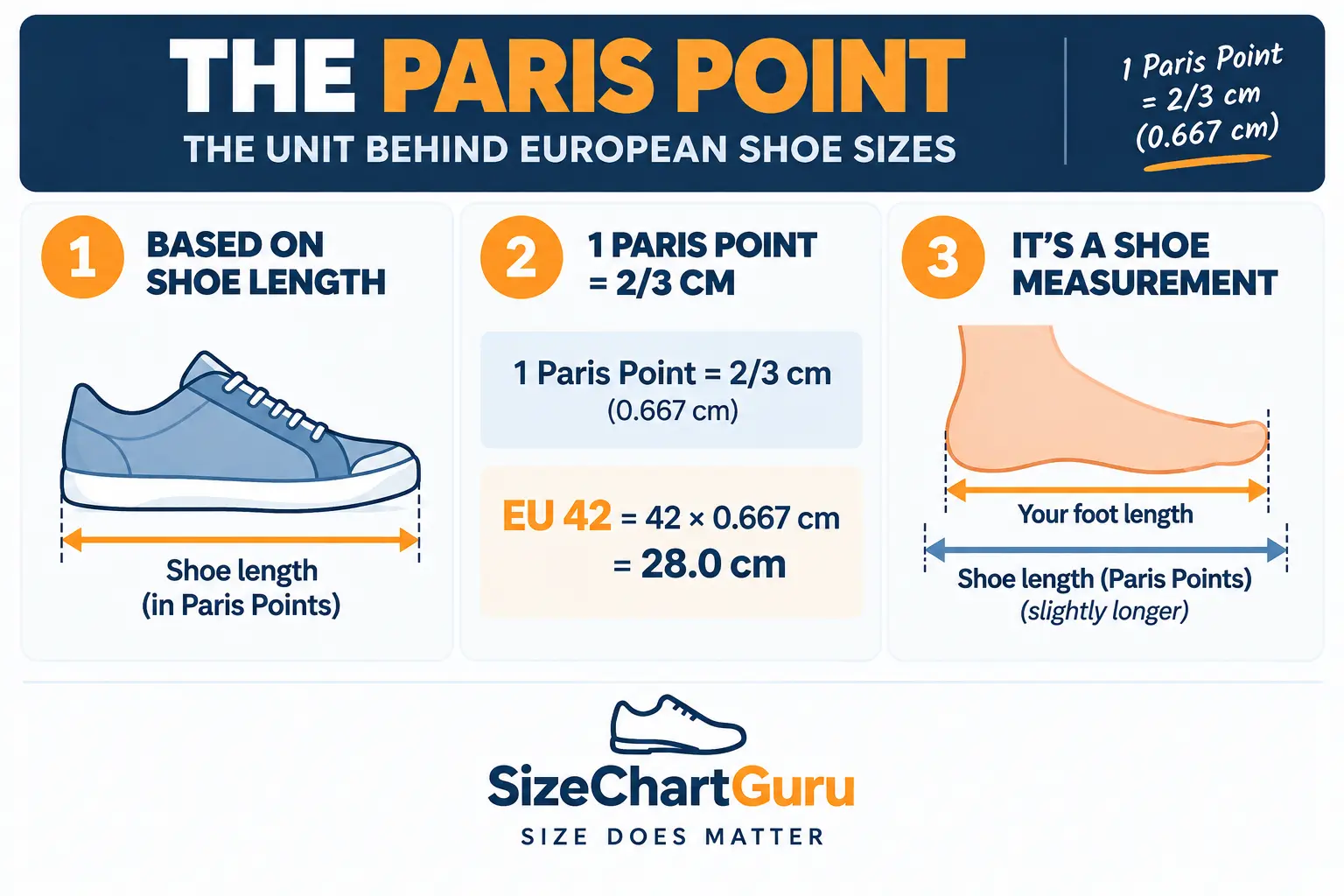
Chinese foot-length sizing is different. It uses numbers like 240, 245, and 250, with 245 representing 24.5 cm on the sizing scale. As I mentioned earlier, the foot length recommended by a manufacturer might be slightly different.
What makes things confusing is that Chinese sellers don’t always stick to those millimeter-based numbers. Some use European sizes, while others label their shoes with similar-looking numbers.
So when I see CN 40 on a product page, I don’t automatically assume it’s an EU 40. I look at how the seller labels the size and whether there’s a foot-length chart to go with it.
If you’re trying to work out your European equivalent, I’ve covered that in my American Shoe Size to European guide.
I’ve also put together an Italian shoe size to US guide with conversion charts for men, women, and kids, including charts from individual Italian brands.
Why Can the Same Chinese Size Have Different US Conversions?
While comparing Chinese shoe size charts, I found that the same CHN size doesn’t always convert to the same US size. One brand might pair it with a US 8, while another lists a US 8.5.
Part of the problem is that brands don’t all use the same conversion charts. And when you add online sellers into the mix, you’ll sometimes find different US equivalents for the exact same Chinese size.
The shoe last matters too…
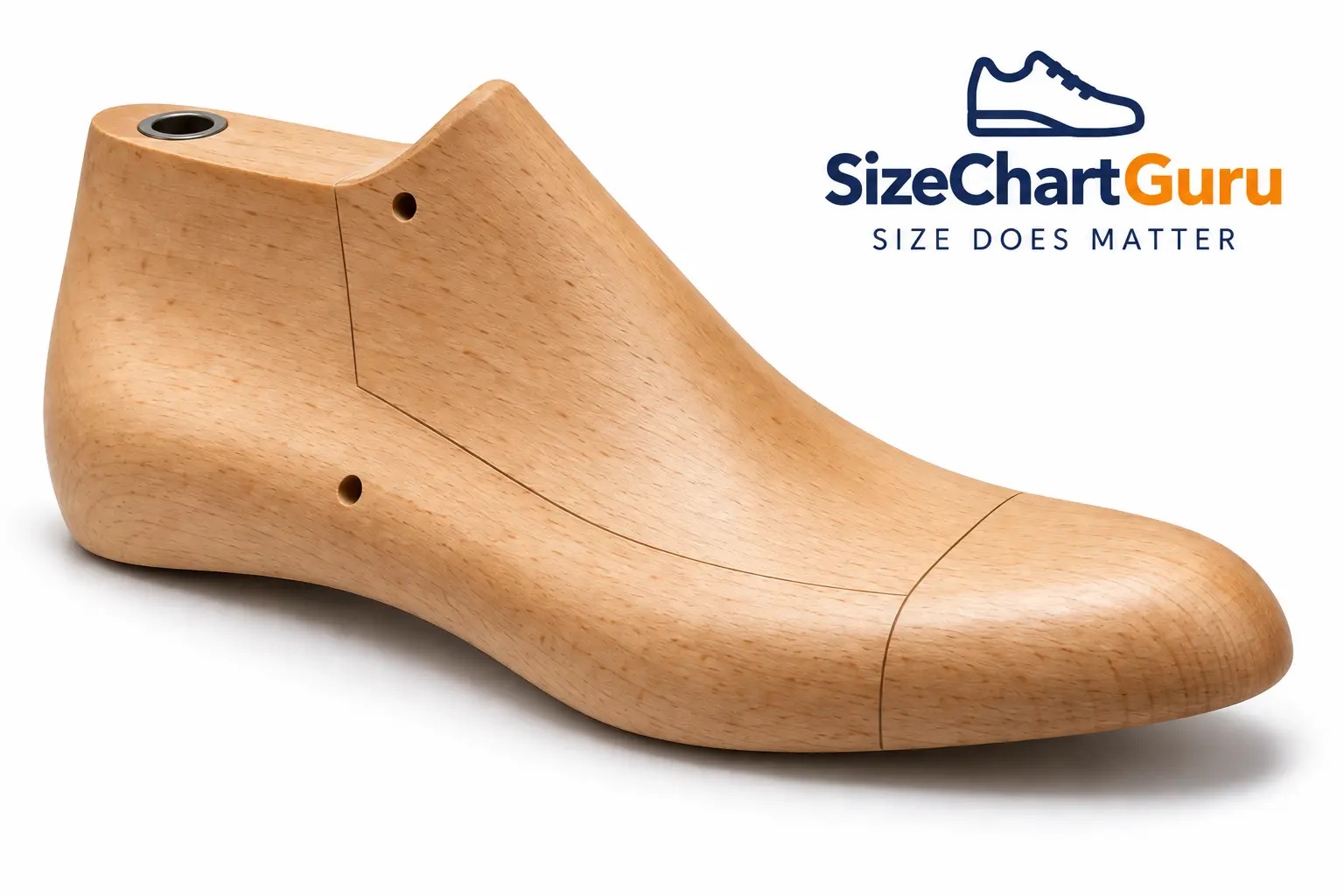
Even if two shoes are designed for the same foot length, they might not feel anything alike. I’ve tried shoes that were technically my size but felt tight across the forefoot, while others in that same size gave my toes plenty of room. A lot of that comes down to the shape of the last and how much space the shoe has inside.
I’ve written more about this in my How Foot Shape Affects Shoe Sizing guide.
There’s also the difference between US men’s and women’s sizing. The two use different scales, so you need to know which one you’re converting to before a US equivalent means much.
I put the conversion charts in this guide together to give you a starting point. But if I’m buying from a specific Chinese brand and it publishes its own measurements, I’d use those rather than rely entirely on a general conversion.
Should I Use the Chinese Size or My Foot Length?
When I’m checking a Chinese shoe size chart, the first thing I look for is a foot-length column. I want to know what size the brand recommends for my actual measurements, not just what US size they’ve put next to a Chinese number.
For a 25.0 cm foot, I’d check which size the manufacturer assigns to that length. That’s especially useful when two sellers give different US conversions for the same Chinese size.
Of course, this only helps if your measurements are accurate. Measure both feet while standing and use the longer measurement. If you’re unsure how to do it, I’ve covered everything in my guide on how to measure your feet at home correctly.
I also wouldn’t add a centimeter or two to my foot length to make room for my toes. If your foot measures 25.0 cm, that’s the measurement you should look for in the chart.
There’s no need to add extra room for your toes, since the manufacturer should already account for that when recommending a size, unless its instructions say otherwise.
How Do I Convert US Shoe Size to Chinese?
Some Chinese shoe charts throw everything into one table: CN/CHN, EU, US, centimeters, and millimeters.
I’ve spent quite a bit of time comparing these charts, and the foot-length measurements are what I find most useful when trying to work out the US equivalent.
CN, CHN, and China Size are labels you’ll find in the Chinese-size column. I pay more attention when there’s a separate mm, cm, or Foot Length column because it shows the manufacturer’s recommended foot length for each size.
250 mm equals 25.0 cm, but I’ve noticed that some brands list a different recommended foot length for CHN 250. So the size number and the foot-length measurement won’t always match exactly.
You’ll probably recognize the numbers in the EU column, especially sizes like 39, 40, and 41. I wouldn’t read those as Chinese sizes, though. They may just be the European equivalents the seller has added to the chart.
And watch out for charts that just say US without specifying men or women. Those are two different sizing scales, so I’d want to know which one I’m looking at before trusting the conversion.
Here’s how I’d actually use a chart with all those columns. I’d take my measured foot length, find where it falls in the manufacturer’s recommendations, and look across that row for the CN/CHN size.
I still like having the EU and US numbers there for comparison, especially when I’m checking a size against shoes I already own. But if the brand gives me a reliable foot-length recommendation, that’s the measurement I’d use to make my final choice.
What Size Should I Choose on AliExpress, Temu, Shein or Taobao?
I’ve noticed that shopping for shoes on AliExpress, Temu, Shein, or Taobao can be tricky because the size shown on the product page doesn’t always tell you enough.
I’d go straight to the size chart for the particular shoe rather than rely on the marketplace’s general sizing. What I want to find is the foot length the seller recommends.
If your foot measures 25.0 cm, find the size the seller recommends for that length. It might be different from your usual CN, EU, or US size, and that’s fine.
And I wouldn’t assume that two shoes from different sellers will fit the same just because they’re listed under the same size. Even on the same marketplace, the sizing can change from one product to another.
How Do I Convert US Shoe Size to Chinese?
The charts below let you look up your US shoe size and see its closest Chinese equivalent. I’ve separated men’s and women’s sizes because a US 8 in men’s shoes isn’t the same as a US 8 in women’s shoes.
I’d also compare the foot-length measurements with the brand’s own chart if one is available. I’ve seen enough differences between size charts to know that the Chinese equivalent isn’t always identical from one brand to another.
US Women’s Size to Chinese Size
| US Women’s | Approx. Chinese Size | Approx. Foot Length |
|---|---|---|
| 5 | 35 | 22.5 cm |
| 5.5 | 35–36 | 22.5–23.0 cm |
| 6 | 36–37 | 23.0–23.5 cm |
| 6.5 | 37 | 23.5 cm |
| 7 | 38 | 24.0 cm |
| 7.5 | 38 | 24.0 cm |
| 8 | 39 | 24.5 cm |
| 8.5 | 39–40 | 24.5–25.0 cm |
| 9 | 40–41 | 25.0–25.5 cm |
| 9.5 | 41 | 25.5 cm |
| 10 | 42 | 26.0 cm |
| 10.5 | 42–43 | 26.0–26.5 cm |
| 11 | 43 | 26.5 cm |
| 11.5 | 44 | 27.0 cm |
| 12 | 44–45 | 27.0–27.5 cm |
| 12.5 | 45 | 27.5 cm |
US Men’s Size to Chinese Size
| US Men’s | Approx. Chinese Size | Approx. Foot Length |
|---|---|---|
| 6 | 39 | 24.2 cm |
| 6.5 | 39 | 24.2 cm |
| 7 | 40 | 24.7 cm |
| 7.5 | 40–41 | 24.7–25.5 cm |
| 8 | 41 | 25.5 cm |
| 8.5 | 42 | 25.9 cm |
| 9 | 42–43 | 25.9–26.8 cm |
| 9.5 | 43 | 26.8 cm |
| 10 | 44 | 27.2 cm |
| 10.5 | 44–45 | 27.2–28.0 cm |
| 11 | 45 | 28.0 cm |
| 11.5 | 45–46 | 28.0–28.9 cm |
| 12 | 46 | 28.9 cm |
| 12.5 | 47 | 29.3 cm |
| 13 | 47–48 | 29.3–29.9 cm |
| 13.5 | 48 | 29.9 cm |
For additional men’s and women’s sizes, CHN foot-size conversions, and kids’ US-to-Chinese sizes, use the calculator above.
Chinese Shoe Size to US FAQ
Is CN Shoe Size the Same as Chinese Shoe Size?
Yes, CN usually stands for China on shoe labels and size charts. You’ll also come across CHN or China Size.
I’ve noticed that sellers aren’t always consistent with these labels. Some use CN alongside millimeter-based sizes, while others show numbers that look more like European sizes. The measurements in the chart will tell you more than the abbreviation alone.
What Is China Size 37 in US Shoes?
China size 37 is roughly a US women’s 6–6.5.
That’s the range I’d start with, but I’d still check the foot length listed by the brand. You might find a slightly different US equivalent on another seller’s chart.
What Is China Size 39 in US Shoes?
For China size 39, the approximate US equivalents are 8–8.5 for women and 6–6.5 for men.
I wouldn’t want to mix those up when ordering. A size 39 might look straightforward on the product page, but the men’s and women’s US equivalents are quite different.
What Is China Size 40 in US Shoes?
China size 40 works out to around US women’s 8.5–9 or US men’s 7.
I’d check how the seller has labeled the shoe before settling on either conversion. The same number can point to very different US sizes depending on which scale you’re using.
What Is China Size 42 in US Shoes?
If it’s a China size 42, that would be around a US 10–10.5 for women or an 8.5 for men.
Those are general conversions, though. The seller’s chart may give you a different foot-length recommendation for that size.
What Is China Size 44 in US Shoes?
With China size 44, the US equivalent is generally 11.5–12 for women and 10 for men.
I’d use that as a starting point rather than an exact match, especially if the brand has its own size chart.
What Is US Size 8 in Chinese Shoes?
A US women’s 8 converts to approximately Chinese size 39.
For men, US 8 is closer to Chinese size 41. Make sure you’re using the right conversion chart, since the two aren’t interchangeable.
What Is US Size 9 in Chinese Shoes?
For women, US 9 generally converts to Chinese size 40–41.
For men, US 9 is approximately Chinese size 42–43. I’d use those numbers to narrow down the options, then check the brand’s measurements.
What Is US Size 11 in Chinese Shoes?
US women’s 11 is roughly Chinese size 43. If you’re converting a men’s US 11, you’re looking at approximately Chinese size 45.
I would still check the manufacturer’s measurements before ordering, particularly if I’ve never tried that brand.
Are Chinese Shoe Sizes Unisex?
Some shoes are sold as unisex, but that doesn’t mean every Chinese size has one universal US equivalent.
You might see the same Chinese size number on men’s and women’s footwear. The US conversion still depends on whether you’re using men’s or women’s sizing.
I’d check the manufacturer’s label rather than assume the same conversion works for both.
Do Chinese Shoes Come in Half Sizes?
Yes, although you won’t always see half sizes written with a .5 like you do in US sizing.
Some brands use intermediate sizes with different labels, and others simply don’t offer as many size options. It depends on the shoe.
If you’re wondering whether going half a size up would actually make much difference, I’ve written a separate guide explaining how big a half shoe size is, including the difference in inches and millimeters.
Why Does My Chinese Shoe Label Show Several Different Sizes?
I’ve seen shoe labels with CN/CHN, US, UK, EU, and foot length all printed together.
That’s pretty common with shoes sold internationally. The label might have a Chinese size, its US, UK, and EU equivalents, and sometimes the recommended foot length.
You’re still looking at one shoe size, just written in several different systems.
Are Chinese Shoe Sizes Smaller Than US Shoe Sizes?
I wouldn’t compare the numbers themselves. A Chinese size 40 and a US size 9, for example, aren’t using the same numbering system.
What matters is the foot length associated with each size. That’s what I’d compare before deciding whether a Chinese shoe is equivalent to my usual US size.
Are Chinese Shoes Narrower Than American Shoes?
I wouldn’t assume a shoe is narrow just because it’s made in China.
I’ve worn shoes in the same labeled size that felt completely different across the forefoot. I’ve had pairs where my toes could spread comfortably and others where I could feel the sides pressing against my feet.
A lot depends on the last, the foot-shaped form the shoe is built around. And if you’ve tried enough shoes, you know how much that matters. I’ve had shoes that were long enough but still squeezed my forefoot. Others felt fine up front but had too much space around my heel. That’s why I pay attention to the last and not just the size number.
What Does 250 Mean on a Chinese Shoe?
If you’ve spotted 250 on a Chinese shoe label, that’s 25.0 cm (250 mm) on the millimeter-based sizing scale.
There’s a small detail worth knowing here. CHN 250 doesn’t always appear next to 25.0 cm in a manufacturer’s foot-length column. I’ve found charts that recommend a slightly different foot measurement for that size.
If the brand gives you both numbers, I’d use its recommended foot length when deciding which size to buy.
Final Thoughts
I’ve looked through quite a few Chinese shoe size charts while putting this guide together, and I can tell you that the numbers aren’t always as straightforward as they seem. Especially when one seller uses 240, 245, or 250 and another has 39, 40, or 41.
If I were ordering a pair, I’d want to know my foot length and see what size the brand recommends for it. I’d also make sure I’m looking at the correct men’s, women’s, or kids’ chart, since that can change the US conversion quite a bit.
Still unsure about your size? Drop a comment with the Chinese/CN size, whether it’s men’s, women’s, or kids’, and the brand and model you’re looking at. I’ll be happy to help you figure it out.