
Wondering how New Balance 991 sizing works before buying a pair?
The short answer is that both the New Balance 991v1 and 991v2 fit true to size for most people, but they have a noticeably snug fit through the forefoot compared to many other popular New Balance models.
Both run slightly long, both feel structured around the ball of the foot, and both become more comfortable after a short break-in period.
For most people with narrow, normal, or slightly wide feet, staying true to size is the best choice. If you have very wide feet, however, the 991 may not be the most accommodating model in New Balance’s lineup.
One thing that’s worth mentioning is that not every 991 collaboration feels exactly the same. While most pairs fit consistently, certain releases can feel slightly roomier or more forgiving depending on the materials used.
And if you want the big-picture answer on whether New Balance run small or big, I covered every major silhouette in one detailed guide.
The quick guide below will help you find the right New Balance 991 size based on your foot shape, width, fit preferences, and whether you’re considering the 991v1 or 991v2.

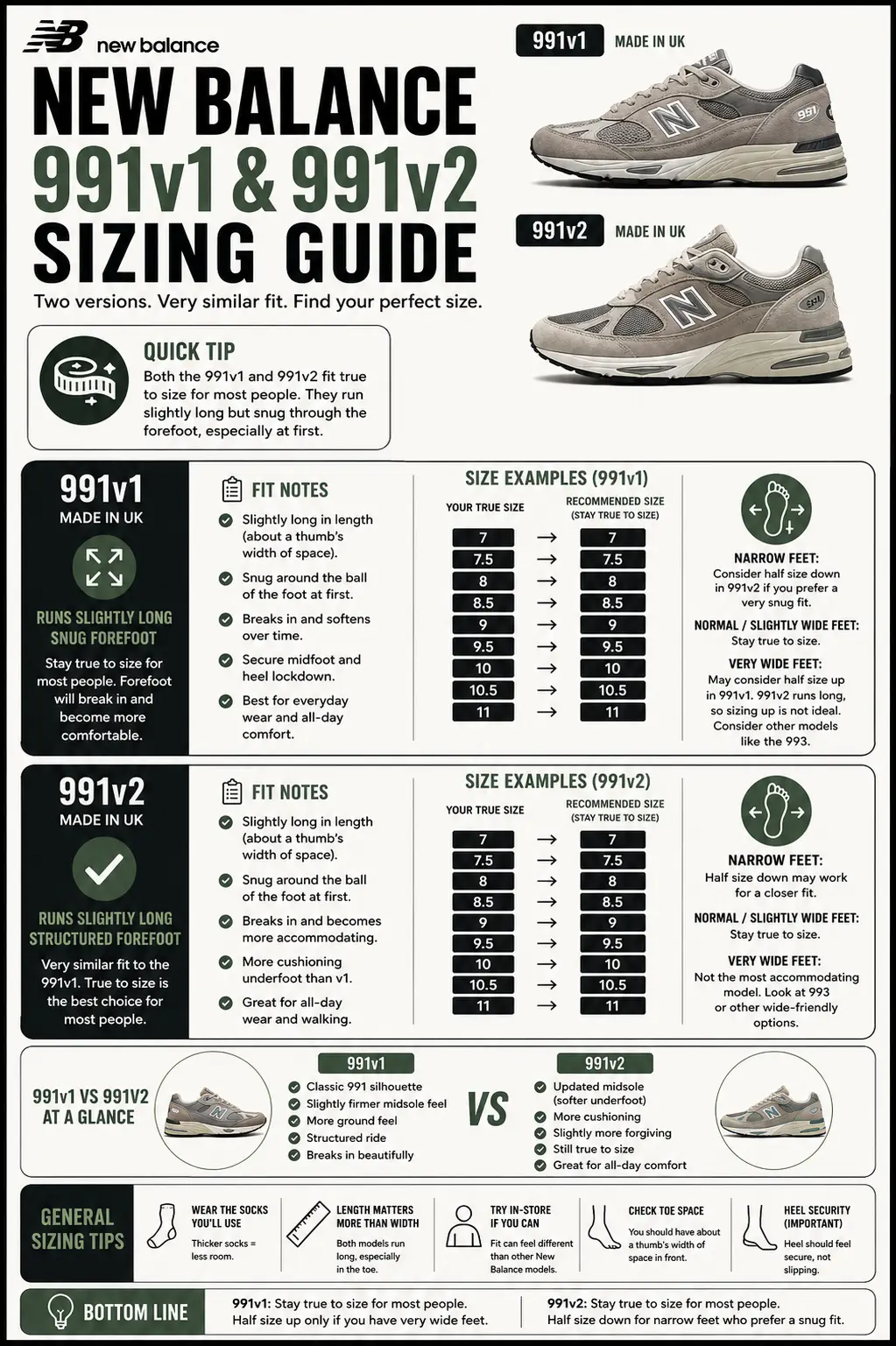
But if you want to understand why each model fits the way it does, how foot shape changes the sizing recommendation, and which versions feel different on foot, keep reading.
Find Your NB 991 Size
- 991v1: Most people should stay true to size. The fit is slightly long but fairly snug through the forefoot, especially during the first few wears.
- 991v2: Most people should also stay true to size. The fit is very similar to the 991v1, with a slightly long length and a structured forefoot that becomes more comfortable over time.
- Normal feet: Stay true to size in both the 991v1 and 991v2.
- Slightly wide feet: True to size should still work well in both versions. Expect some initial pressure around the ball of the foot, particularly in the 991v1.
- Narrow feet: If you prefer a very close fit, you may be able to go down half a size in the 991v2. Some narrow-footed wearers may also prefer half a size down in the 991v1 because both models run slightly long.
- Between sizes: Most people should choose the smaller size, especially if they typically size down in models like the 990, 992, or 993.
- Very wide feet: The 991 isn’t one of New Balance’s most accommodating silhouettes. The 991v1 may work with a half-size increase, but the 991v2 already runs slightly long, so sizing up isn’t always ideal. In many cases, a different model such as the 993 may be a better choice.
- High-volume feet: Consider staying true to size and allowing the forefoot materials to break in naturally. Many 991s feel snug at first but become noticeably more comfortable with wear.
- Thick socks: True to size usually remains the best choice, although very wide-footed wearers who regularly wear thick socks may prefer a half-size increase in the 991v1.
- Comfort-first fit: Stay true to size. Both the 991v1 and 991v2 are designed to feel structured rather than roomy, but they soften and become more accommodating after a short break-in period.
- Break-in concerns: Don’t mistake the initial forefoot pressure for a sizing issue. Both the 991v1 and 991v2 tend to loosen slightly around the ball of the foot as the materials soften with wear.
New Balance 991 Sizing

Here’s everything in a video format:
Before we get into the details, use my New Balance 991 sizing profile to compare your foot shape and fit preferences to mine. The 991v1 and 991v2 fit very similarly, but factors like foot width, toe room preferences, and break-in tolerance can make a big difference in determining your ideal size.
My NB 991 Sizing Profile
- Brannock Size: 9D to 9E
- Foot Shape: Slightly wide forefoot
- Preferred Fit: Secure and comfortable with a little room in front of my toes
- Typical Nike Size: US 9 in most lifestyle models
- LeBron Size: US 9 in both the 991v1 and 991v2
I generally prefer a fit that feels secure through the midfoot without putting pressure on my toes. I don’t mind a structured fit around the ball of the foot, but I also don’t want my toes touching the front of the shoe or feeling cramped during long periods of wear.
That’s one reason I stay true to size in both the 991v1 and 991v2. While both models feel slightly snug through the forefoot at first, the length is right where I want it, and the fit becomes noticeably more comfortable once the materials break in.
New Balance 991v1 Sizing
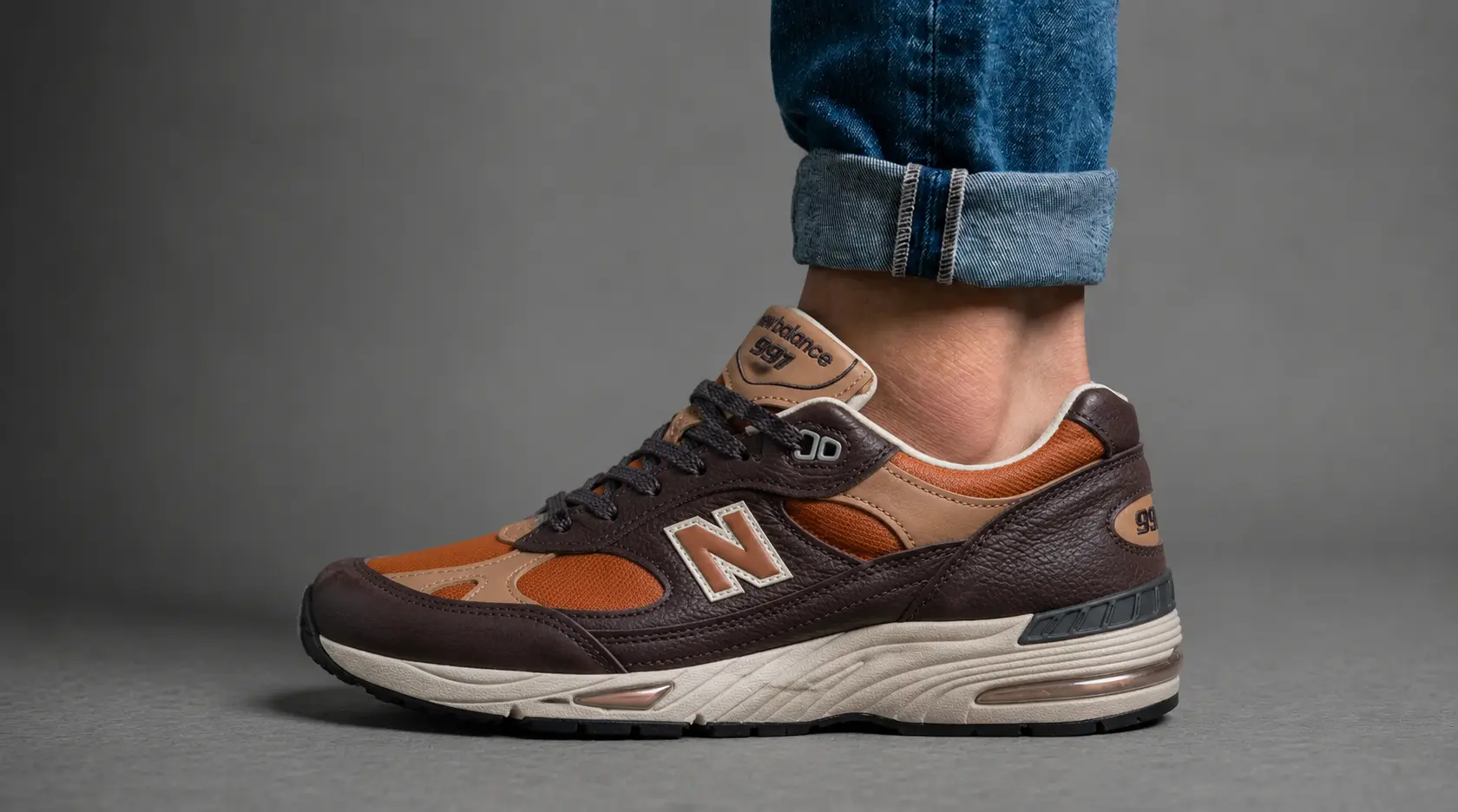
For me, the New Balance 991v1 fits true to size, but it’s definitely one of the snugger Made in UK models I’ve worn through the forefoot.
Prefer video?
My feet measure a true US 9 on a Brannock device, with a width that falls somewhere between a D and E. I went with my normal size 9, and length-wise, the fit felt exactly how I want a sneaker to fit.
By the way, if you’re not sure whether your feet are narrow, normal, wide, or somewhere in between, check out my complete sneaker width chart before choosing your 991 size.
There was enough room in front of my toes to stay comfortable, but not so much that the shoe felt long or sloppy. From a length perspective, I never felt the need to size up or down.
The area that stood out immediately was the ball of the foot.
Across multiple pairs of the 991v1, I’ve consistently noticed a firmer, more structured fit through the forefoot.
It’s not painfully tight, but it can feel a little restrictive during the first few wears, especially if you’re used to roomier New Balance models like the 990v6 or 993.
The good news is that the 991v1 breaks in nicely.
In my experience, the materials soften over time and the pressure around the forefoot gradually eases.
After a few weeks of regular wear, the fit becomes much more comfortable while still maintaining the supportive, premium feel that makes the 991 so popular.
Because of that, I wouldn’t rush to size up unless you genuinely need the extra width.
If this guide made sizing a little easier, you can add Size Chart Guru as a Preferred Source on Google.
Related: If you normally wear the 990 series, you’ll want to see how the New Balance Abzorb 2010 fits so you know whether to stick true to size or go a half size down.
Who Should Stay True to Size?
I’d recommend staying true to size if you have:
- Narrow feet
- Normal-width feet
- Slightly wide feet
- A preference for a secure, structured fit
For most people, the 991v1 is designed to fit this way. The forefoot may feel firm initially, but that doesn’t necessarily mean you need a larger size.
What About Wide Feet?
If you have genuinely wide feet or regularly size up in narrower sneakers, the 991v1 can be a little more challenging.
The shoe isn’t exceptionally narrow, but it also isn’t one of New Balance’s roomiest silhouettes.
For very wide feet, going up half a size may provide a more comfortable fit, particularly if you prefer extra room around the ball of the foot.
Just keep in mind that the length already fits fairly true to size, so sizing up should be viewed as a width adjustment rather than a length adjustment.
If you’re unsure where your feet fall, here’s how to check if you have wide feet before deciding to size up.
How 991 Compares to Other New Balance Models
One thing I’ve noticed over the years is that my sizing stays surprisingly consistent across many New Balance lifestyle models.
I wear a size 9 in models like the Action Bronson x New Balance 1890, 1500, 2002R, 860v2, 1906R, and 9060, while I usually go half a size down to an 8.5 in models like the 990 series, 992, 993, and 550.
The 991v1 falls into the first group for me. My true size 9 provides the best balance of comfort, length, and support, even if the forefoot feels a little snug before the shoe fully breaks in.
Now, do all New Balance 991v1s fit the same?
For the most part, yes.
Most New Balance 991v1 colorways and collaborations fit very similarly, which is one of the reasons the model has such a loyal following.
Once you figure out your size in a standard 991v1, you can usually buy future releases with confidence.
That said, not every pair feels identical.
Small differences in materials, construction, and even factory production can sometimes create subtle fit variations.
JJJJound x New Balance 991
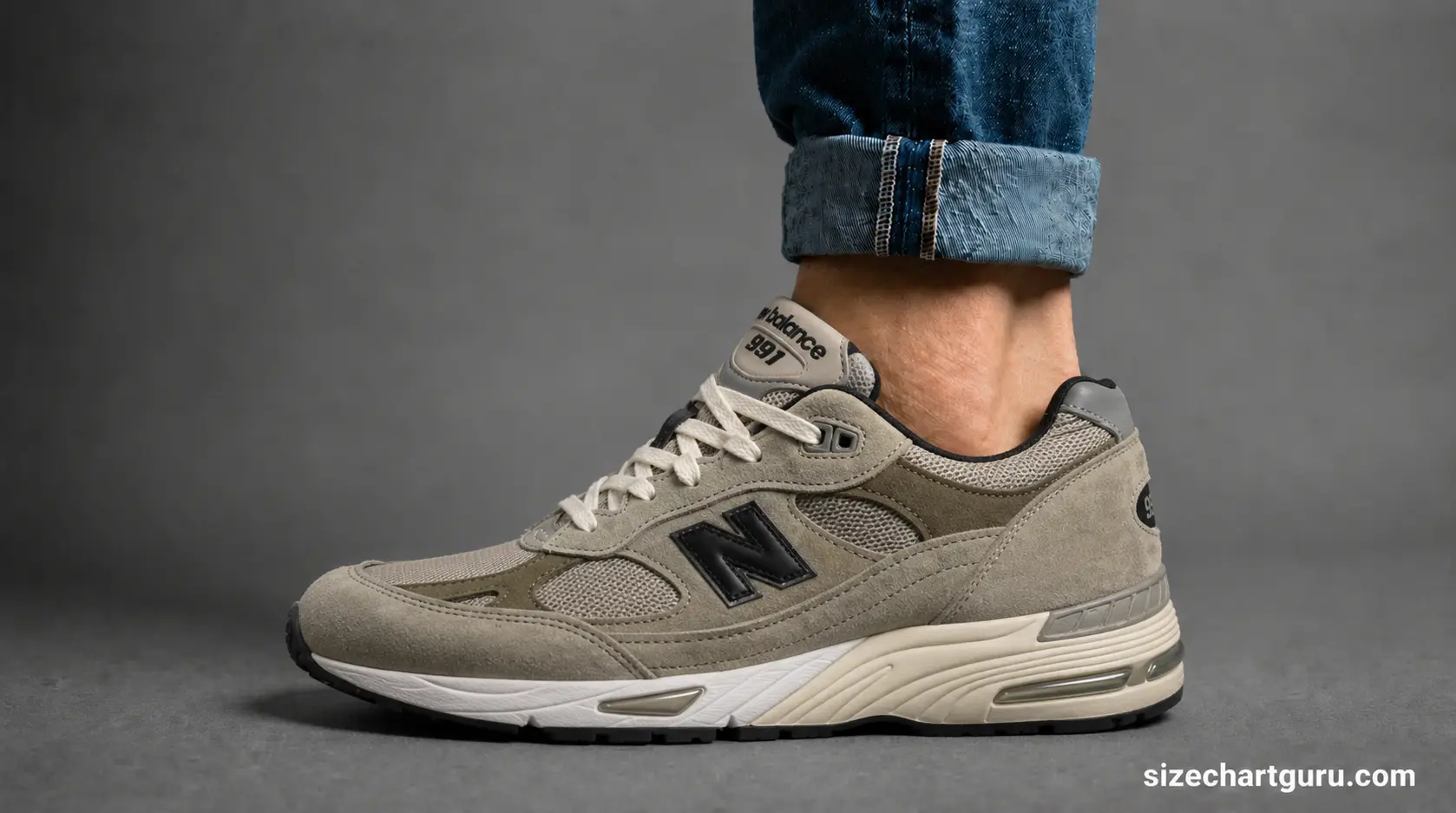
The JJJJound 991 was one of the few pairs that immediately felt a little different to me.
I stayed with my usual size 9, but the fit felt slightly more accommodating than a typical 991v1.
The toe box seemed a touch roomier, and I noticed less pressure around the ball of the foot than I normally do during the first few wears.
It wasn’t enough to change my sizing recommendation, but it was noticeable.
Whether that comes down to material selection or normal manufacturing variation, I’m not entirely sure. Either way, true to size still felt like the correct choice.
Related: If you’re used to the roomier fit of the New Balance 327, the 991 may feel noticeably more structured through the forefoot. My New Balance 327 sizing guide covers those fit differences in detail.
Aimé Leon Dore x New Balance 991
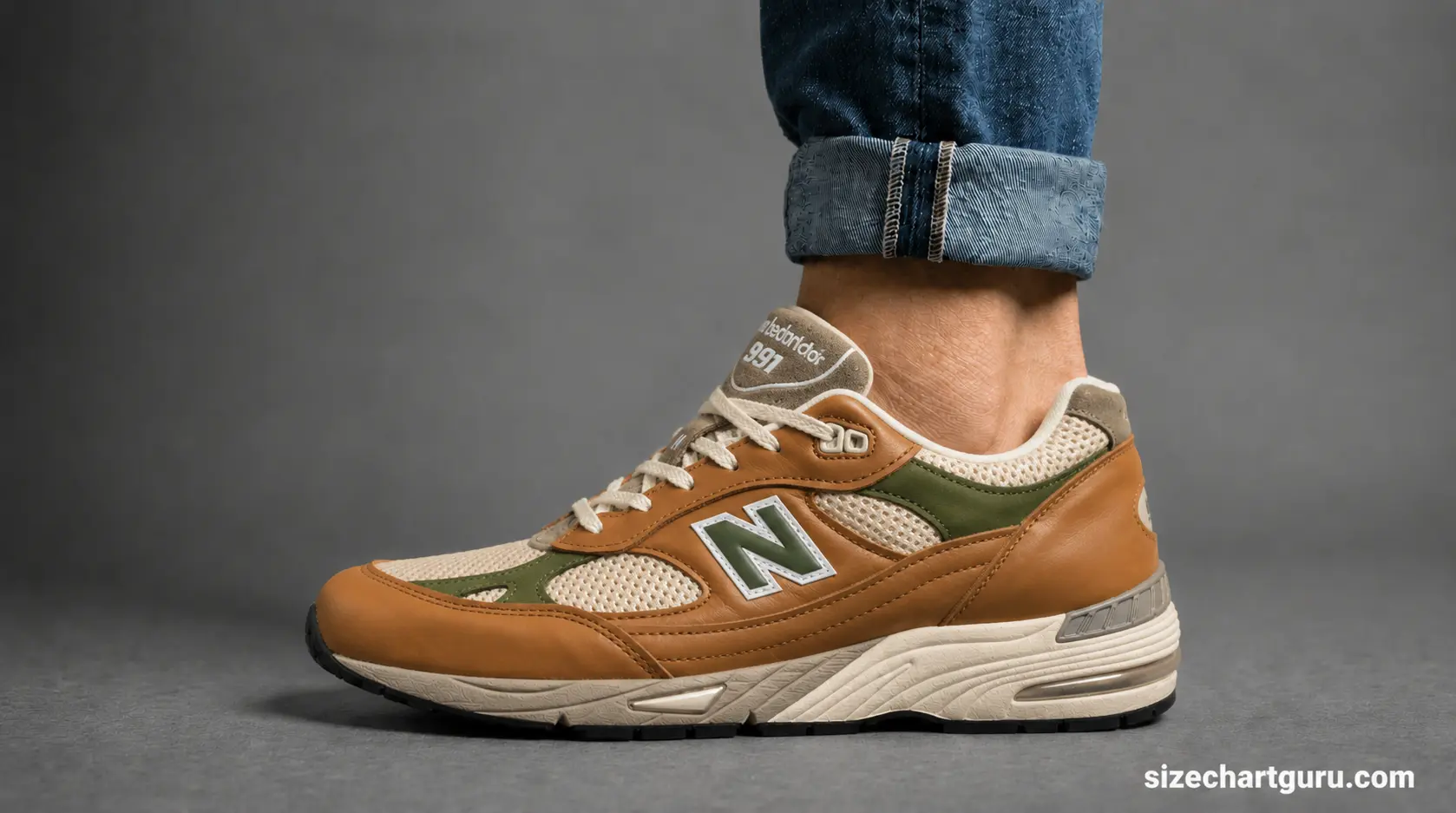
The two Aimé Leon Dore 991s I own actually fit a little differently despite sharing the same silhouette.
The Chocolate colorway felt very close to a traditional 991v1. It had the familiar snugness through the forefoot and the slight pressure around the ball of the foot that I usually associate with the model.
The Celery colorway was different.
It felt more spacious overall, particularly through the forefoot. There was less pressure during the first few wears and noticeably more breathing room around my toes.
My guess is that the different mesh and suede materials played a role in how the shoe wrapped around my foot.
Even with those differences, I stayed true to size in both pairs and never felt the need to change sizes.
Related: Compared to the New Balance 740, the 991 has a more premium, structured fit with less room around the forefoot. Read my New Balance 740 sizing guide for a full breakdown.
Sneakersnstuff x New Balance 991
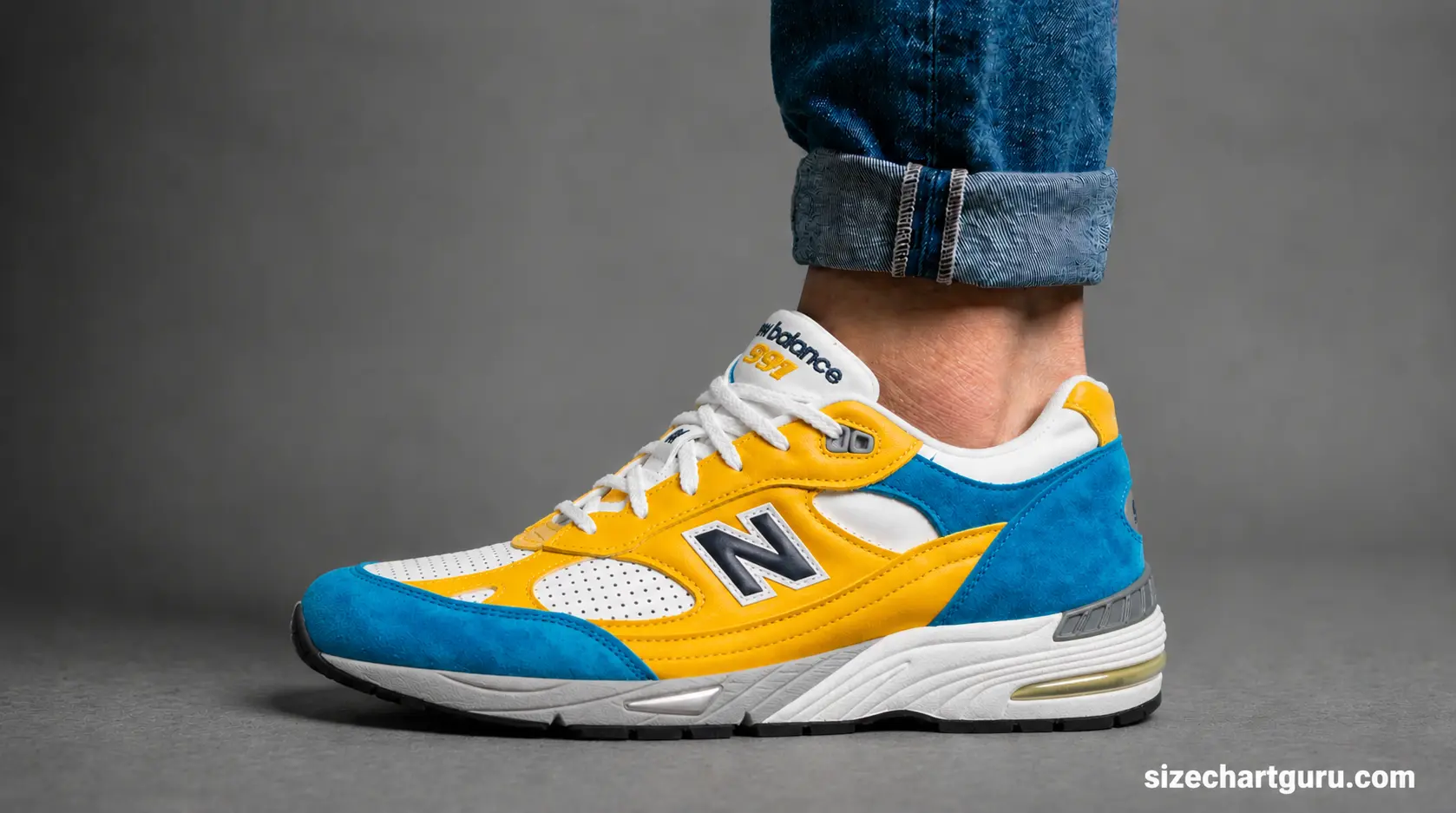
The Sneakersnstuff 991 felt slightly longer than most of my other 991s.
Width-wise, the fit felt almost identical to a standard 991v1, but I noticed a little more length in front of my toes. I had just over a finger’s width of extra space, which is more than I normally get from this model.
Even so, I never considered sizing down.
Because my feet lean slightly wide, the overall fit still felt balanced and comfortable at my usual size 9.
If you have narrow feet and prefer a very snug fit, I could see why someone might be tempted to go down half a size. For most people, though, I’d still stick with their normal 991v1 size.
Related: The New Balance 9060 generally feels roomier and more forgiving than the 991, especially around the toe box. My New Balance 9060 sizing guide covers those differences in detail.
Consistent-Fit Collaborations
Some collaborations felt virtually identical to a standard 991v1.
The following pairs fit exactly how I’d expect a regular 991v1 to fit:
- Run The Boroughs x New Balance 991
- Stray Rats x New Balance 991
If you already know your 991v1 size, I’d confidently buy these in the same size.
Now, if you’re also looking at Asics, I’ve got a full Asics GT-2160 sizing guide that breaks down how that model fits, especially if you like a slightly more structured feel.
New Balance 991v2 Sizing
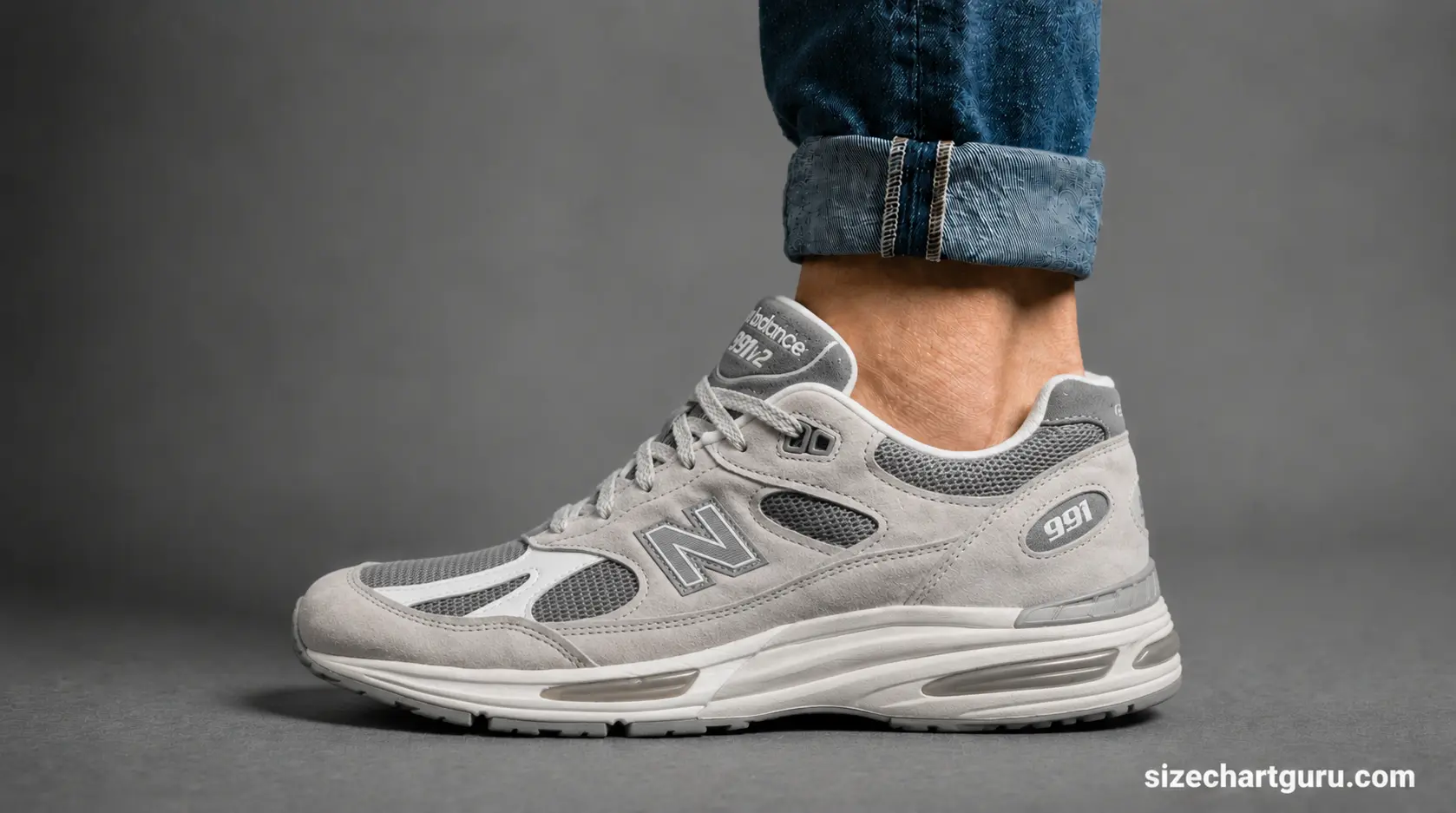
When it comes to New Balance 991v2 sizing, this is usually the section people care about most.
One of the biggest questions surrounding the 991v2 is whether it fits wider than the 991v1. After wearing multiple pairs and colorways, my answer is simple:
The 991v2 fits very similarly to the 991v1.
My feet measure a true US 9 on a Brannock device, with a width somewhere between a D and E. I wear a size 9 in the 991v1, so naturally I started with a size 9 in the 991v2 as well.
For me, that was the correct choice.
Length-wise, the 991v2 runs slightly long, which has always been part of the model’s fit. In my true size, I had a little over an index finger’s width of space in front of my toes, which is right where I like my shoes to fit.
The forefoot, however, tells a slightly different story.
Just like the 991v1, the toe box isn’t particularly wide. I could still feel some pressure around the ball of my foot, especially near the bottom lace area during the first few wears.
Fortunately, this wasn’t painful or restrictive.
The fit felt snug, structured, and secure rather than cramped. More importantly, the pressure gradually eased as the shoe broke in.
After some regular wear, the forefoot became noticeably more accommodating while still retaining the supportive feel that makes the 991v2 such a great everyday sneaker.
Because of that balance between a slightly longer fit and a snug forefoot, true to size makes the most sense for the majority of people.
Related: For anyone cross-shopping chunkier runners, my New Balance 1000 size guide explains why that model feels roomier on foot.
Who Should Stay True to Size?
I’d recommend staying true to size if you have:
- Normal-width feet
- Slightly wide feet
- Average-volume feet
- A preference for a secure, structured fit
For most people, the size you normally wear in New Balance will work perfectly in the 991v2.
What About Narrow Feet?
If you have narrow feet and prefer a very close, precise fit, you may be able to get away with going down half a size.
The 991v2 already runs a little long, so some narrow-footed wearers may appreciate the shorter length.
That said, I’d still consider true to size the safer recommendation unless you know you consistently size down in models like the 990v3, 990v4, 992, or 993.
Related: If you already wear a 530, checking out how the New Balance 530 fit compares can help you decide what size to grab in the 991.
What About Wide Feet?
This is where things become a little more complicated.
While the 991v2 isn’t as restrictive as some people make it out to be, I also wouldn’t call it a particularly wide-foot-friendly model.
The issue is that sizing up doesn’t solve everything.
Because the shoe already runs slightly long, going up half a size can quickly create more length than most people need. You gain a little width, but you also end up with a noticeably longer shoe.
For that reason, I don’t typically recommend sizing up for wide feet.
If you have genuinely wide feet, there are simply better New Balance models available, such as the 993 or certain versions of the 990 series.
How 991v2 Compares to the 991v1
One thing I noticed immediately is that the sizing between the two generations is remarkably consistent.
The 991v2 still has:
- A slightly long fit
- A structured forefoot
- A snug feel around the ball of the foot
- A break-in period that improves comfort over time
If you already know your size in the 991v1, there’s a very good chance you’ll wear exactly the same size in the 991v2.
Related: The New Balance 574 sizing article is useful if you want a reference for a more relaxed, everyday fit.
Colorway and Collaboration Differences
Most 991v2 releases fit very consistently, but a few pairs stood out during my testing.
New Balance 991v2 “Silver Blue / Turbulence”
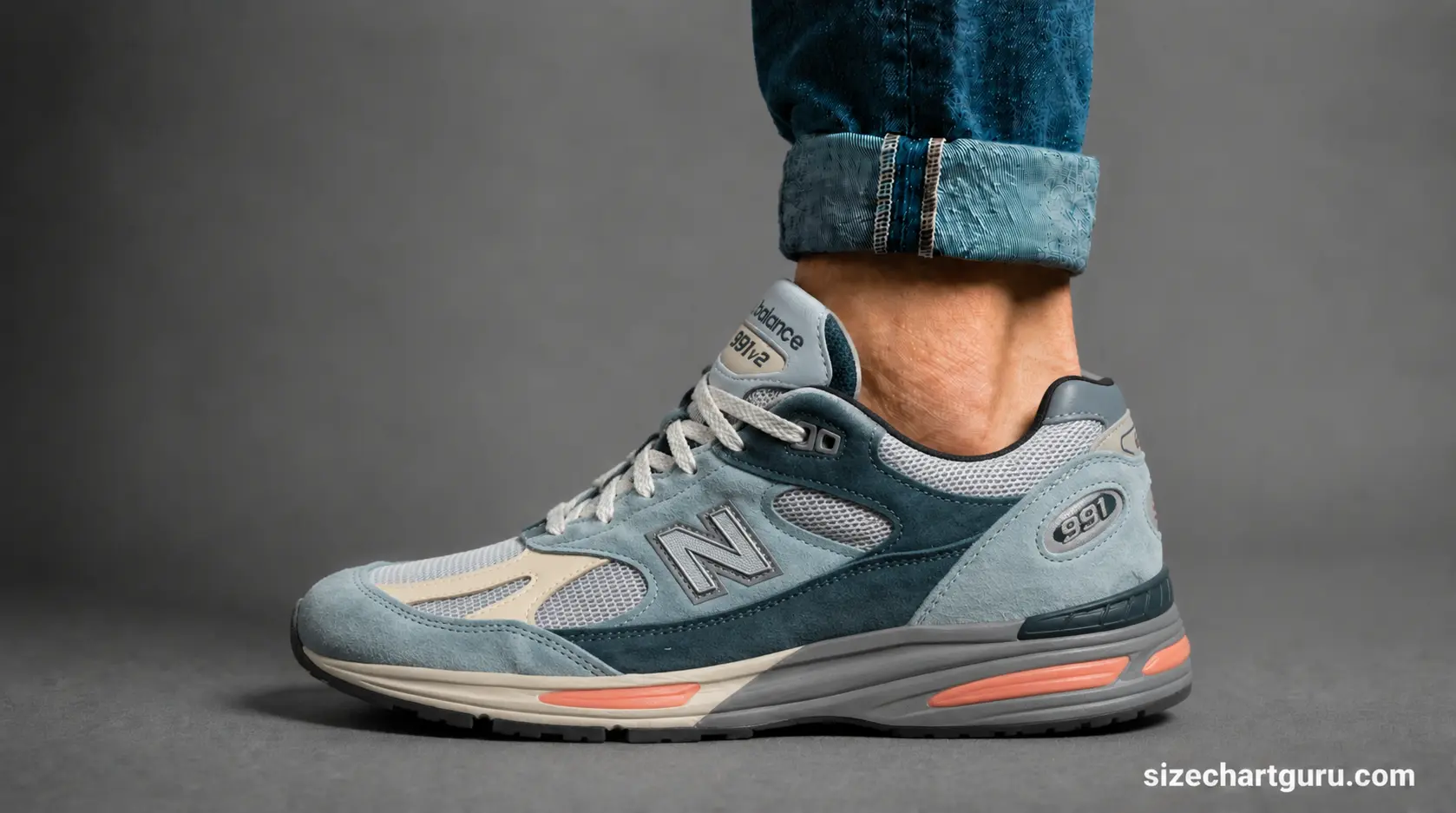
Out of all the standard 991v2 colorways I’ve worn, this was probably the most forgiving.
Length-wise, the fit was identical to my other pairs, but there was noticeably less pressure around the ball of my foot. The forefoot felt slightly more accommodating right out of the box, requiring less break-in time than usual.
From what I’ve seen, this appears to be more of a material or manufacturing variation than a true sizing difference.
Because of that, I’d still recommend staying true to size.
If anything, this is simply one of the more comfortable 991v2 colorways for slightly wider feet.
Salehe Bembury x New Balance 991v2
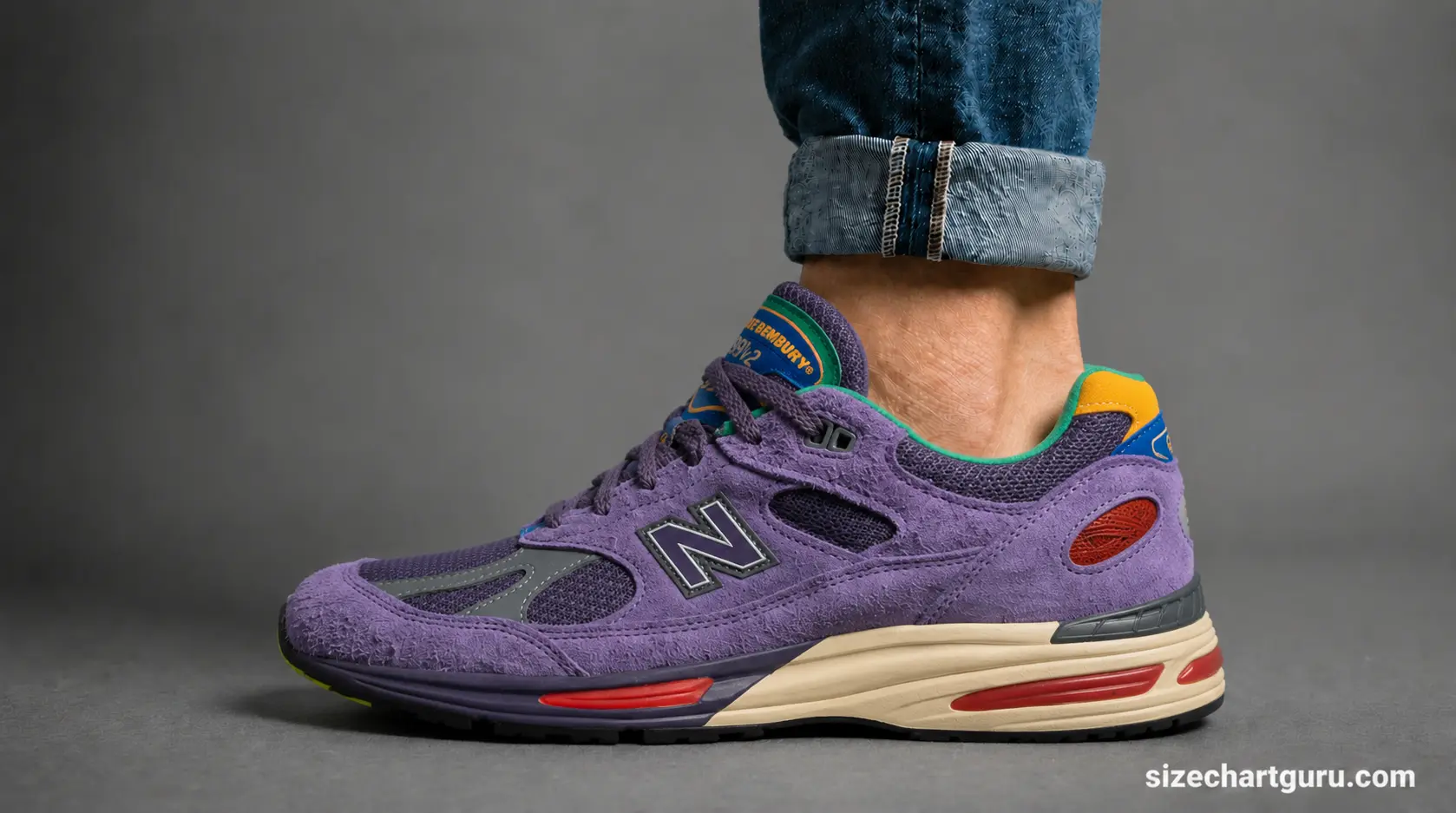
The Salehe Bembury collaboration was another pleasant surprise.
I wore my usual size 9, and the fit felt excellent from day one.
Compared to some of my other 991v2 pairs, the forefoot felt more forgiving and noticeably less restrictive. I never experienced the usual pressure around the ball of the foot, and the break-in period was practically nonexistent.
The suede construction likely contributes to that softer overall feel.
Even so, I wouldn’t change sizes. True to size remains the correct choice.
Collaborations That Fit Like a Standard 991v2
Several collaborations felt virtually identical to my regular 991v2 pairs:
- Stone Island x New Balance 991v2
- Kith x Danielle Cathari x New Balance 991v2
- Up There x New Balance 991v2
- Kith x New Balance 991v2
- thisisneverthat x New Balance 991v2
If you already know your 991v2 size, you can confidently buy these in the same size.
New Balance 991 vs 990 Sizing
If you’re trying to decide between the New Balance 991 and the New Balance 990 series, the biggest difference comes down to forefoot width and overall fit shape.
The 991 generally fits more snugly through the forefoot, while most 990 models feel roomier and more accommodating.
Both the 991v1 and 991v2 fit true to size for me, but they definitely feel more structured than the average 990.
The reason is simple.
Most versions of the 990 run slightly long, particularly the 990v3, 990v4, 990v5, and especially the 990v6. That’s why you’ll often see people recommending a half-size down in those models.
The 991 is different.
While it also runs a little long, the forefoot is noticeably more fitted, which balances out the extra length and makes true to size the better choice for most people.
New Balance 991 vs 990v1 and 990v2
The earlier 990 models tend to fit slightly narrower than the newer versions.
Because of that, the sizing comparison is fairly straightforward. Most people can wear the same size in both the 991 and the 990v1 or 990v2.
Neither model feels particularly roomy, and both reward a more precise fit.
New Balance 991 vs 990v3, 990v4, and 990v5
This is where the differences become more noticeable.
The 990v3, 990v4, and 990v5 offer more room through the forefoot and generally feel less restrictive than the 991.
Many people choose between true to size and half a size down in these models depending on their foot shape and fit preference.
The 991 doesn’t offer that same flexibility.
For most people, true to size remains the safer option because the snugger forefoot offsets the slightly longer length.
New Balance 991 vs 990v6
The 990v6 is easily the longest-fitting shoe in the 990 lineup.
In fact, it’s one of the few New Balance models where I completely understand why so many people go down half a size.
Compared to the 991v1 and 991v2, the 990v6 feels:
- Longer
- Roomier through the forefoot
- Less restrictive around the ball of the foot
- More accommodating for wider feet
If you wear a half-size down in the 990v6, don’t automatically assume you’ll do the same in the 991.
Many people who size down in the 990v6 end up preferring true to size in the 991 because of the more structured forefoot fit.
If you have very wide feet, the 990 lineup is generally the easier shoe to fit. Models like the 990v5, 990v6, and 993 tend to be much more accommodating than either version of the 991.
New Balance 991 Size Chart
Men
| US Men | US Women | UK | EU | CM |
|---|---|---|---|---|
| 4 | 5.5 | 3.5 | 36 | 22 |
| 4.5 | 6 | 4 | 37 | 22.5 |
| 5 | 6.5 | 4.5 | 37.5 | 23 |
| 5.5 | 7 | 5 | 38 | 23.5 |
| 6 | 7.5 | 5.5 | 38.5 | 24 |
| 6.5 | 8 | 6 | 39.5 | 24.5 |
| 7 | 8.5 | 6.5 | 40 | 25 |
| 7.5 | 9 | 7 | 40.5 | 25.5 |
| 8 | 9.5 | 7.5 | 41.5 | 26 |
| 8.5 | 10 | 8 | 42 | 26.5 |
| 9 | 10.5 | 8.5 | 42.5 | 27 |
| 9.5 | 11 | 9 | 43 | 27.5 |
| 10 | 11.5 | 9.5 | 44 | 28 |
| 10.5 | 12 | 10 | 44.5 | 28.5 |
| 11 | 12.5 | 10.5 | 45 | 29 |
| 11.5 | 13 | 11 | 45.5 | 29.5 |
| 12 | 13.5 | 11.5 | 46.5 | 30 |
| 12.5 | 14 | 12 | 47 | 30.5 |
| 13 | 15 | 12.5 | 47.5 | 31 |
| 14 | 13.5 | 49 | 32 | |
| 15 | 14.5 | 50 | 33 | |
| 16 | 15.5 | 51 | 34 | |
| 17 | 16.5 | 52 | 35 | |
| 18 | 17.5 | 53 | 36 | |
| 19 | 18.5 | 54 | 37 | |
| 20 | 19.5 | 55 | 38 |
Women
| US Women | US Men | UK | EU | CM |
|---|---|---|---|---|
| 4 | 2.5 | 2 | 34 | 21 |
| 4.5 | 3 | 2.5 | 34.5 | 21.5 |
| 5 | 3.5 | 3 | 35 | 22 |
| 5.5 | 4 | 3.5 | 36 | 22.5 |
| 6 | 4.5 | 4 | 36.5 | 23 |
| 6.5 | 5 | 4.5 | 37 | 23.5 |
| 7 | 5.5 | 5 | 37.5 | 24 |
| 7.5 | 6 | 5.5 | 38 | 24.5 |
| 8 | 6.5 | 6 | 39 | 25 |
| 8.5 | 7 | 6.5 | 40 | 25.5 |
| 9 | 7.5 | 7 | 40.5 | 26 |
| 9.5 | 8 | 7.5 | 41 | 26.5 |
| 10 | 8.5 | 8 | 41.5 | 27 |
| 10.5 | 9 | 8.5 | 42.5 | 27.5 |
| 11 | 9.5 | 9 | 43 | 28 |
| 11.5 | 10 | 9.5 | 43.5 | 28.5 |
| 12 | 10.5 | 10 | 44 | 29 |
| 12.5 | 11 | 10.5 | 45 | 29.5 |
| 13 | 11.5 | 11 | 45.5 | 30 |
| 13.5 | 12 | 11.5 | 46 | 30.5 |
| 14 | 12.5 | 12 | 46.5 | 31 |
| 15 | 13 | 13 | 48 | 32 |
New Balance 991 Width Chart
| Code | Men | Women's |
|---|---|---|
| 4A | — | X-Narrow |
| 2A | X-Narrow | Narrow |
| B | Narrow | Standard |
| D | Standard | Wide |
| 2E | Wide | X-Wide |
| 4E | X-Wide | XX-Wide |
| 6E | XX-Wide | — |
If the letters in the chart are confusing, my guide to what shoe width letters mean explains B, D, E, EE, 2E, 4E, and the other common width designations.
How to Measure Your Feet for the New Balance 991
Before deciding whether to stay true to size, go down half a size, or size up for width, it’s worth taking a few minutes to measure your feet the right way.
This is especially important with the New Balance 991 because both the 991v1 and 991v2 have a unique fit. They run slightly long, but they’re also fairly snug through the forefoot. That combination means length alone doesn’t tell the whole story.
The people who struggle most with 991 sizing are usually those who focus only on their shoe size and ignore their actual foot shape.
1. Try the 991 On in Person (The Best Option)
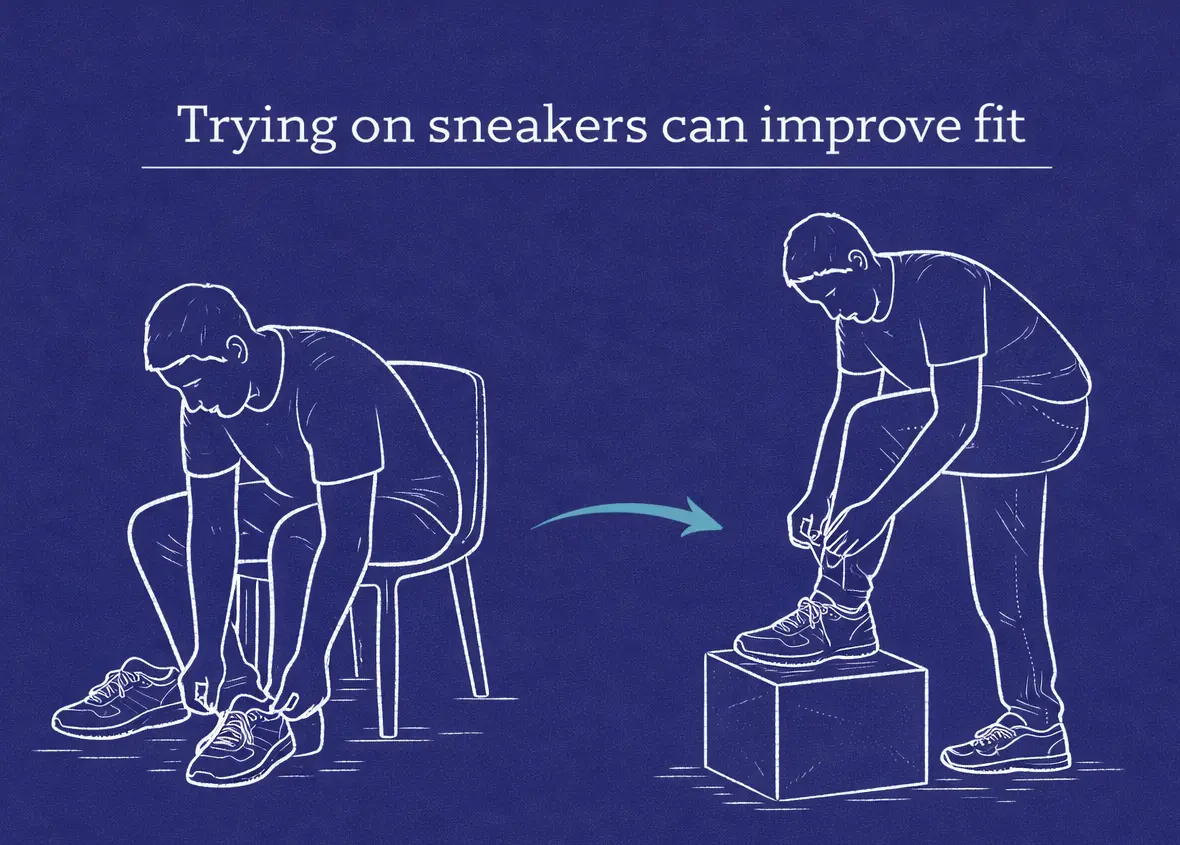
If you have access to a New Balance store or a retailer that carries the 991, this is always the most reliable method.
The reason is simple.
The 991 doesn’t fit like a typical running shoe, and it doesn’t fit like roomier New Balance models such as the 993 or 990v6.
When trying them on:
- Wear the socks you normally wear
- Stand up and walk around
- Pay attention to pressure around the ball of the foot
- Check how much room you have in front of your toes
- Make sure your heel feels secure
A little forefoot pressure is normal on a new pair of 991s. What you’re trying to determine is whether the fit feels snug or genuinely too tight.
2. Know Your Brannock Size
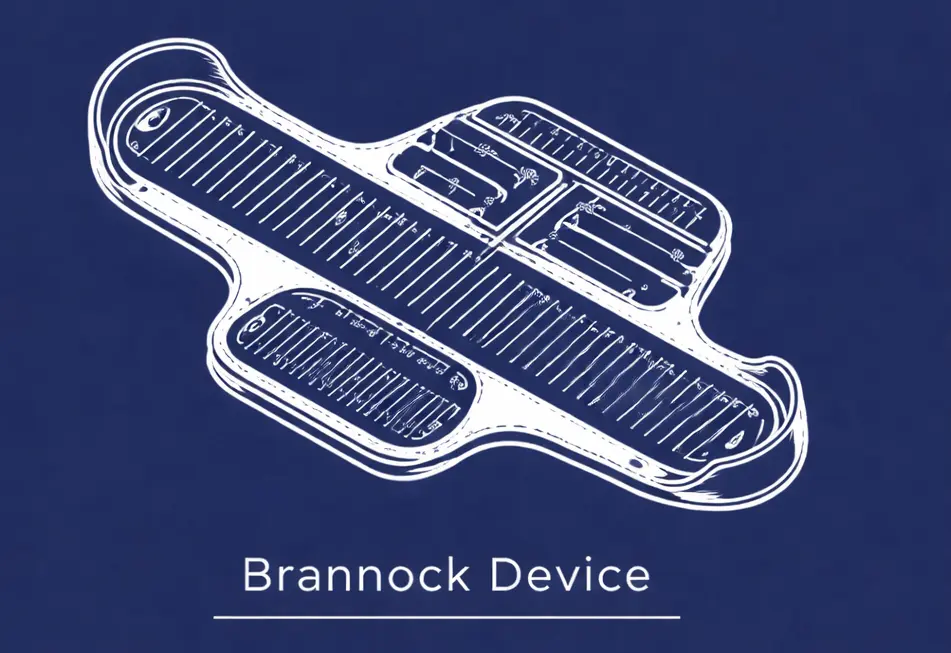
If you’ve never measured your feet on a Brannock device, you’re basically guessing.
The Brannock measurement gives you:
- Your true foot length
- Your true foot width
- A reliable starting point for sizing
Whenever possible:
- Measure both feet
- Stand while measuring
- Put full weight on your feet
- Use the larger foot as your reference
For example, my feet measure a true US 9 on a Brannock device with a width somewhere between D and E. That measurement explains why a size 9 works for me in both the 991v1 and 991v2, despite the snug forefoot.
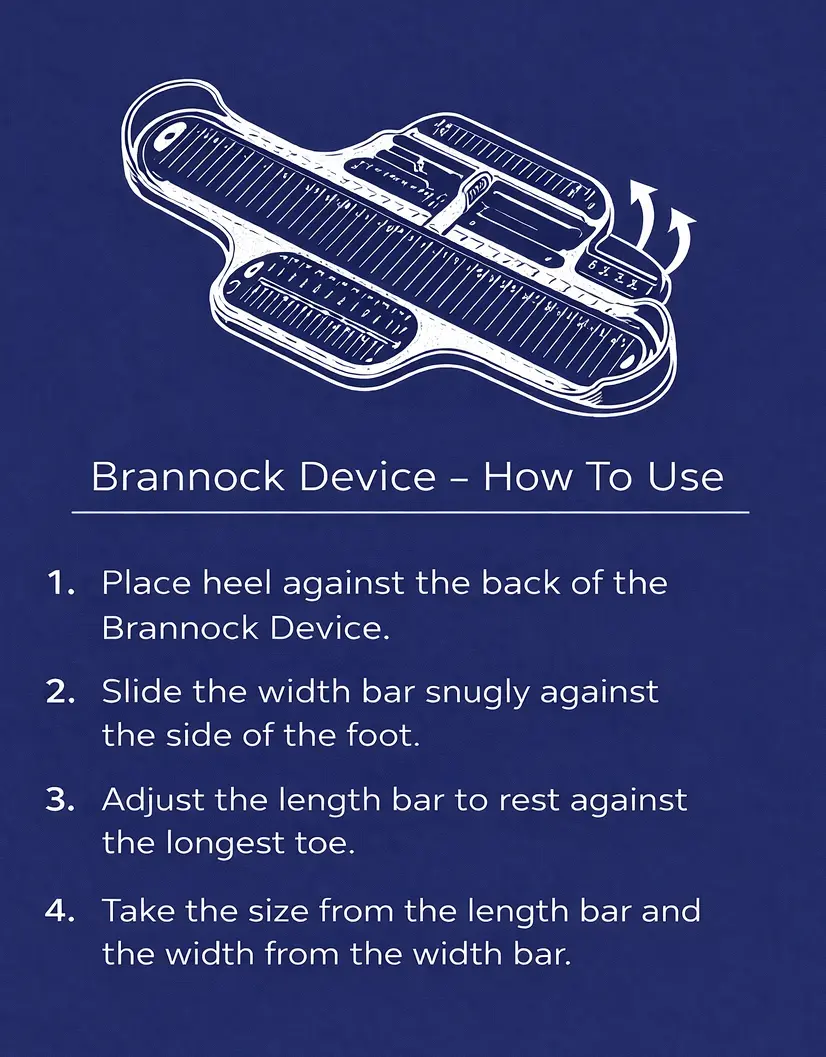
3. Measure Your Feet at Home
If you don’t have access to a Brannock device, you can still get a very accurate measurement.
You’ll need:
- A sheet of paper
- A pen or pencil
- A ruler or measuring tape
- A wall
Steps:
- Place the paper against a wall.
- Stand on it with your heel touching the wall.
- Wear the socks you normally wear with sneakers.
- Put your full weight on your foot.
- Mark the tip of your longest toe.
- Measure from the wall to the mark.
- Repeat with the other foot.
- Use the larger measurement.
Once you have your measurement, compare it with New Balance’s official size chart below:
| US Men | US Women | UK | EU | CM |
|---|---|---|---|---|
| 4 | 5.5 | 3.5 | 36 | 22 |
| 4.5 | 6 | 4 | 37 | 22.5 |
| 5 | 6.5 | 4.5 | 37.5 | 23 |
| 5.5 | 7 | 5 | 38 | 23.5 |
| 6 | 7.5 | 5.5 | 38.5 | 24 |
| 6.5 | 8 | 6 | 39.5 | 24.5 |
| 7 | 8.5 | 6.5 | 40 | 25 |
| 7.5 | 9 | 7 | 40.5 | 25.5 |
| 8 | 9.5 | 7.5 | 41.5 | 26 |
| 8.5 | 10 | 8 | 42 | 26.5 |
| 9 | 10.5 | 8.5 | 42.5 | 27 |
| 9.5 | 11 | 9 | 43 | 27.5 |
| 10 | 11.5 | 9.5 | 44 | 28 |
| 10.5 | 12 | 10 | 44.5 | 28.5 |
| 11 | 12.5 | 10.5 | 45 | 29 |
| 11.5 | 13 | 11 | 45.5 | 29.5 |
| 12 | 13.5 | 11.5 | 46.5 | 30 |
| 12.5 | 14 | 12 | 47 | 30.5 |
| 13 | 15 | 12.5 | 47.5 | 31 |
| 14 | 13.5 | 49 | 32 | |
| 15 | 14.5 | 50 | 33 | |
| 16 | 15.5 | 51 | 34 | |
| 17 | 16.5 | 52 | 35 | |
| 18 | 17.5 | 53 | 36 | |
| 19 | 18.5 | 54 | 37 | |
| 20 | 19.5 | 55 | 38 |
| US Women | US Men | UK | EU | CM |
|---|---|---|---|---|
| 4 | 2.5 | 2 | 34 | 21 |
| 4.5 | 3 | 2.5 | 34.5 | 21.5 |
| 5 | 3.5 | 3 | 35 | 22 |
| 5.5 | 4 | 3.5 | 36 | 22.5 |
| 6 | 4.5 | 4 | 36.5 | 23 |
| 6.5 | 5 | 4.5 | 37 | 23.5 |
| 7 | 5.5 | 5 | 37.5 | 24 |
| 7.5 | 6 | 5.5 | 38 | 24.5 |
| 8 | 6.5 | 6 | 39 | 25 |
| 8.5 | 7 | 6.5 | 40 | 25.5 |
| 9 | 7.5 | 7 | 40.5 | 26 |
| 9.5 | 8 | 7.5 | 41 | 26.5 |
| 10 | 8.5 | 8 | 41.5 | 27 |
| 10.5 | 9 | 8.5 | 42.5 | 27.5 |
| 11 | 9.5 | 9 | 43 | 28 |
| 11.5 | 10 | 9.5 | 43.5 | 28.5 |
| 12 | 10.5 | 10 | 44 | 29 |
| 12.5 | 11 | 10.5 | 45 | 29.5 |
| 13 | 11.5 | 11 | 45.5 | 30 |
| 13.5 | 12 | 11.5 | 46 | 30.5 |
| 14 | 12.5 | 12 | 46.5 | 31 |
| 15 | 13 | 13 | 48 | 32 |
4. Don’t Ignore Width
This is probably the most important part of sizing the 991.
Many people assume they need a different size when the real issue is width.
The 991v1 and 991v2 both have a relatively structured forefoot. If you’re slightly wide-footed, you’ll likely notice some pressure around the ball of the foot during the first few wears.
That doesn’t automatically mean you need a larger size.
In many cases, the shoe simply needs time to break in.
If you regularly buy wide-width shoes or constantly struggle with forefoot pressure, that’s when sizing decisions become more complicated.
5. Think About Your Fit Preference
Two people with identical feet can prefer completely different sizes.
Ask yourself:
- Do I like a snug fit?
- Do I like extra toe room?
- Do I wear thick socks?
- Am I buying these for all-day walking?
- Do I mind a break-in period?
For example, some narrow-footed wearers may prefer going down half a size because the 991 already runs slightly long.
Personally, I prefer a little extra room in front of my toes, which is why I stay true to size.
6. Understand How the 991 Should Feel
A lot of people mistake the normal 991 fit for a sizing issue.
The 991 is supposed to feel:
- Secure through the midfoot
- Structured through the forefoot
- Slightly long in length
- Supportive rather than overly roomy
It’s not a sloppy, wide-open sneaker like some New Balance models.
A little pressure around the ball of the foot during the first few wears is completely normal and usually improves as the shoe breaks in.
New Balance 991 Sizing FAQ
Is the New Balance 991v1 true to size?
Yes. For most people, the New Balance 991v1 fits true to size.
The shoe runs slightly long but has a snug, structured forefoot. If you have narrow, normal, or slightly wide feet, your regular size will usually provide the best balance of comfort and support.
You may notice some pressure around the ball of the foot when the shoe is new, but in my experience, this improves as the materials break in.
Is the New Balance 991v2 true to size?
Yes.
The New Balance 991v2 fits very similarly to the 991v1 and is true to size for most people. The length runs slightly long, while the forefoot remains fairly structured and secure.
If you already know your size in the 991v1, there’s a very good chance you’ll wear the exact same size in the 991v2.
Is the New Balance 991v1 good for wide feet?
It depends on how wide your feet are.
People with slightly wide feet can usually stay true to size without issues. However, if you have genuinely wide feet, the 991v1 may feel restrictive around the forefoot.
Some wide-footed wearers find that going up half a size improves comfort, although the 991 isn’t one of New Balance’s most accommodating silhouettes.
Is the New Balance 991v2 good for wide feet?
The 991v2 is slightly more forgiving than the 991v1, but I still wouldn’t consider it a particularly wide-foot-friendly shoe.
Slightly wide feet should be fine at true to size. Very wide feet may struggle with the forefoot shape, and sizing up isn’t always the best solution because the shoe already runs a little long.
If width is your biggest concern, models like the 993 may be a better option.
Do New Balance 991 run big or small?
Neither.
The New Balance 991 generally fits true to size, but the fit can be a little confusing because the shoe combines a slightly longer length with a snug forefoot.
Many people assume the shoe runs small because of the forefoot pressure, when in reality the length is usually right where it should be.
Should I size down in the New Balance 991?
Most people shouldn’t.
However, if you have narrow feet and prefer a very snug fit, you may be able to go down half a size, particularly in the 991v2.
For normal and slightly wide feet, staying true to size is usually the better choice.
Should I size up in the New Balance 991?
Only if you have very wide feet.
For most people, sizing up adds unnecessary length without solving the forefoot fit as much as you’d expect.
That’s why I generally recommend staying true to size and allowing the shoe to break in naturally.
Do New Balance 991 stretch?
A little, yes.
The shoe won’t dramatically stretch in length, but the suede, mesh, and leather panels around the forefoot do soften over time.
Most of the initial pressure around the ball of the foot gradually decreases after regular wear, which is one reason I don’t recommend sizing up too quickly.
What’s the difference between the 991v1 and 991v2 fit?
The sizing is remarkably similar.
Both fit true to size, both run slightly long, and both have a structured forefoot.
The biggest difference is comfort. The 991v2 feels slightly more forgiving underfoot and generally requires less break-in time than the 991v1.
How does the New Balance 991 compare to the 990v6?
The 990v6 is generally roomier and more accommodating than both versions of the 991.
If you’re used to the generous fit of the 990v6, the 991 may feel noticeably more structured through the forefoot.
Most people wear the same size in both models, but the 991 typically feels snugger despite the similar length.
Final Thoughts
After wearing multiple pairs of both the New Balance 991v1 and 991v2, I keep coming back to the same conclusion: both models fit true to size for most people, but they’re not the roomy, forgiving sneakers that some other New Balance models can be.
The biggest mistake I see people make is assuming the 991 runs small because of the snug forefoot. In reality, the length is usually right where it should be.
What you’re feeling is the structured fit around the ball of the foot, which is a defining characteristic of the model and something that tends to improve as the shoe breaks in.
If you have narrow, normal, or slightly wide feet, I’d confidently recommend staying true to size in both the 991v1 and 991v2.
If you have very wide feet, the decision becomes a little more complicated. While some people can make the 991 work with a half-size increase, others may simply be happier in a roomier New Balance model like the 993 or certain versions of the 990 series.
As for the differences between the two generations, they’re actually smaller than many people expect. The 991v2 feels a bit more comfortable underfoot and requires less break-in time, but from a sizing perspective, the two models are remarkably similar.
I’d love to hear about your experience with the New Balance 991 sizing.
Do you wear the 991v1 or the 991v2? Did you stay true to size, go down half a size, or try something different?
If you have wide feet, narrow feet, or own any of the collaborations mentioned in this guide, let me know how they fit compared to your other New Balance sneakers.