

The New Balance 574 is, in my opinion, the most iconic silhouette New Balance has ever made.
Year after year, New Balance keeps it in rotation with clean, standard colorways that just work. Nothing forced, nothing overdesigned, just a dependable shoe that does its job and does it well.
Now, there’s a new version in the mix that’s worth talking about. Not a wild remix or a complete overhaul, but a subtle evolution of the original: the New Balance 574 Legacy.
It keeps the DNA that made the 574 a classic, while making just enough updates to feel fresh on foot.
In this guide, I’m breaking down New Balance 574 sizing, how the Legacy version fits, whether it runs big or small, and what you should know before choosing your size, especially if you’re coming from other New Balance models.
Oh, and if you’re also looking at newer New Balance silhouettes, make sure to check out my New Balance 9060 sizing guide as well. The fit is very different from the 574, and knowing how the 9060 runs can save you a sizing headache.

Like videos? Here’s what you need to know:
New Balance 574 Sizing

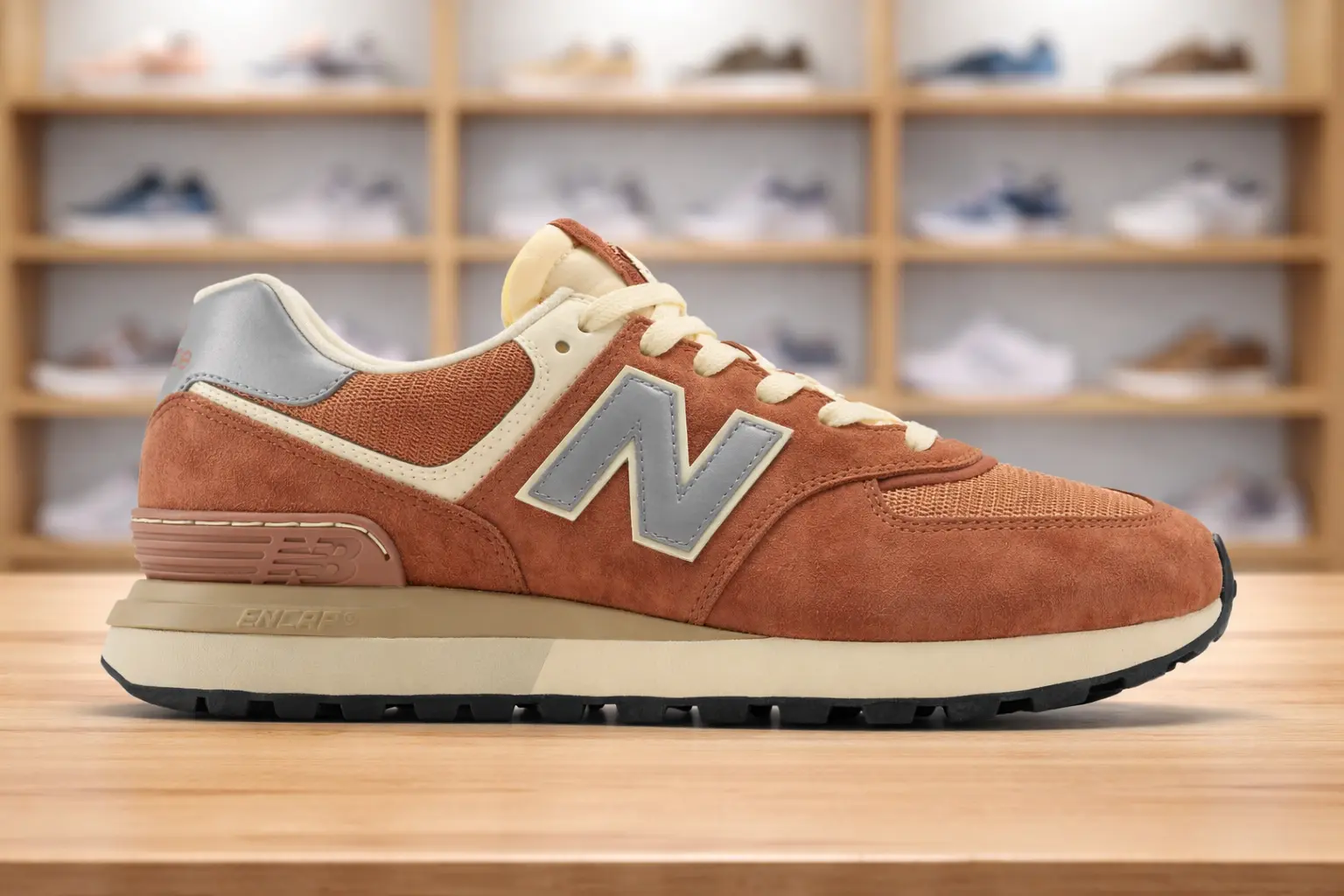
New Balance 574 Legacy Sizing (Stone Island)

Sizing on the 574 Legacy is a little trickier than it looks on paper, especially once you factor in materials and collabs.
For reference, my foot measures as a true size 9, slightly on the wider side. On a Brannock device, I land between a D and E width. That context matters a lot with this model.
I went with a size 9 in the Stone Island x New Balance 574 Legacy, which is the same size I wear in other 574 Legacy pairs like the Bodega 574 Legacy.
Length-wise and width-wise, the shoe was fine. I had about a finger’s width of space in front of my toes, which is exactly what I look for.
Where things got tricky was the toe box height…
Related: If you’re used to classic New Balance shapes, the 740 sizing guide gives a good point of reference.
The Shallow Toe Box Issue (Stone Island 574 Legacy)
The biggest thing I noticed with the Stone Island pair wasn’t length or width; it was how shallow the toe box feels from a top-down perspective.
The width felt good and the length felt correct, but the top of the toe box pressed down on my toes, especially around the toenails
That pressure created noticeable discomfort throughout the day.
Even after wearing them for a while, the feeling never fully went away. It softened slightly with wear, but by the end of the day, I could still feel that downward pressure on the top of my toes.
This reminded me a lot of how the Yeezy Boost 700 V1 (Wave Runner) fits. With that shoe, true to size works for length and width, but the toe box presses down from above.
Because of that, I personally size up half a size in Wave Runners, and honestly, I suspect a 9.5 would have worked better for me in this Stone Island 574 Legacy as well.
If you’ve ever struggled with shallow toe boxes before, this is something you’ll want to seriously consider.
If you found this guide helpful, you can add Size Chart Guru as one of your Preferred Sources on Google.
Related: If the 574 has you curious about other New Balance classics, I also put together a full New Balance 550 sizing guide.
Who Should Go True to Size vs Size Up (Stone Island 574 Legacy)
Based on how this pair fits:
- If you have a narrow or normal-width foot and you like a snug, one-to-one fit, I’d go true to size
- If you have wider feet or you prefer a more spacious toe box, I’d strongly consider going up half a size
The shoe doesn’t feel tight on the sides. It feels tight from above, which is a very specific kind of discomfort that some people tolerate better than others.
If you’ve had similar issues with shallow toe boxes in the past, sizing up makes a lot of sense here.
Related: If you’re also considering one of New Balance’s slimmer, more vintage-inspired silhouettes, the New Balance 327 sizing guide is worth a read.
Salehe Bembury x New Balance 574 Yurt Sizing
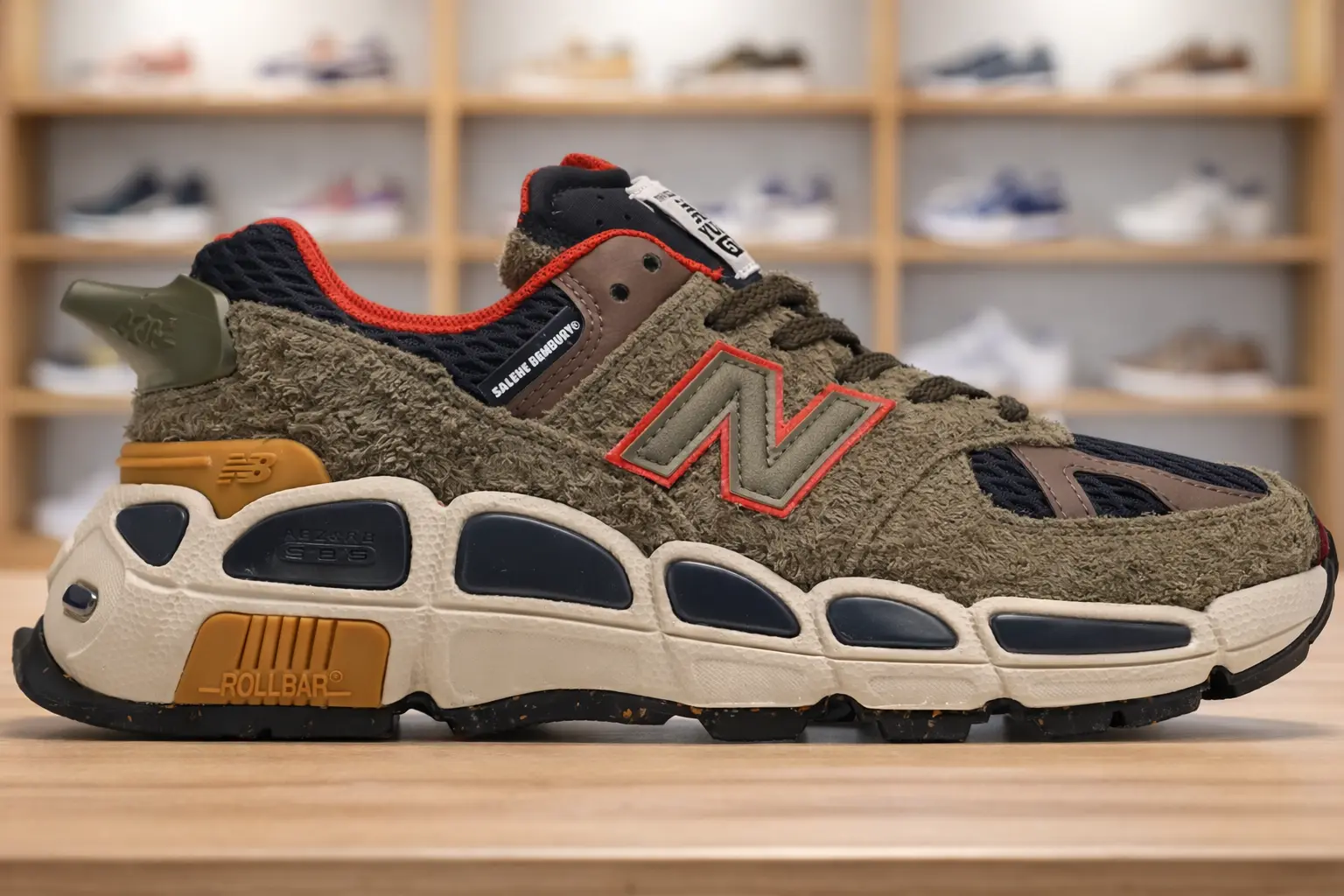
The 574 Yurt is a completely different sizing experience.
In this case, the Yurt actually runs a bit long, but the width feels tighter than expected.
I went with a size 8.5 (half size down). Length-wise, that decision made sense because going true to size would’ve felt too long for me. But width-wise, the 8.5 was a little snug.
If an 8.75 were an option, that would’ve been ideal for my foot. Since it’s not, here’s how I’d break it down:
- If you have narrow or normal-width feet, you can get away with half a size down
- If you have wider feet, sticking true to size is probably the safer choice, even if the shoe feels slightly long
The Yurt doesn’t have the same shallow toe box issue as the Stone Island pair, but the balance between length and width is harder to dial in.
Related: Curious how the 574 compares to New Balance’s latest release? My New Balance 2010 sizing guide covers fit, toe box space, and width so you can choose your perfect size.
How This Compares to Other New Balance Models (Context)
For extra context on how I normally size New Balance:
I go half a size down (8.5) in most Made in USA models like:
- 992
- 993
- 990v3, v4, v5, v6
I stick true to size (9) in models with narrower or more structured toe boxes, such as:
The 574 Legacy, especially in collab form, doesn’t behave exactly like either group, which is why sizing feels more nuanced here.
Related: If you’re curious how a more relaxed New Balance model fits, check out my New Balance 530 sizing guide.
Women’s Sizing for the New Balance 574
In the women’s range, the New Balance 574 Legacy fits true to size overall, but it’s important to understand how the shape of the shoe affects the feel on foot.
This is a chunkier silhouette, both visually and underfoot. Because of that extra bulk, the shoe naturally offers a bit more presence around the midsole and heel, which some people actually prefer for everyday wear.
For reference, a men’s 7.5 equals a women’s 9, and in that size conversion, the fit feels accurate in terms of length. There’s enough room in the toe box to avoid crowding, without feeling overly long or sloppy.
For women with narrow feet, true to size works especially well. The shoe already gives a touch of extra room in the toe box, which helps if you like a slightly more relaxed fit or prefer a bit of breathing space for your toes.
If you enjoy wearing your sneakers with a little extra room up front rather than a tight, performance-style fit, sticking true to size is the safest and most comfortable option.
If your feet are wider, sizing may feel a bit more dependent on personal preference. Some wider-footed wearers may find true to size acceptable, while others might prefer a half size up for extra toe box space, especially if they dislike any pressure across the forefoot.
As always, socks matter too. Thicker socks will naturally take up more room, while thinner socks will make the shoe feel roomier at the same size.
Overall, the 574 Legacy is fairly forgiving for women, and true to size is the best place to start for most foot shapes.
Related: I tried the Action Bronson 1890 as well, and I explain exactly how it fits in my full 1890 sizing guide, because it definitely feels narrower and slightly longer than the 574.
New Balance 574 Size Chart
Men
| US Men | US Women | UK | EU | CM |
|---|---|---|---|---|
| 4 | 5.5 | 3.5 | 36 | 22 |
| 4.5 | 6 | 4 | 37 | 22.5 |
| 5 | 6.5 | 4.5 | 37.5 | 23 |
| 5.5 | 7 | 5 | 38 | 23.5 |
| 6 | 7.5 | 5.5 | 38.5 | 24 |
| 6.5 | 8 | 6 | 39.5 | 24.5 |
| 7 | 8.5 | 6.5 | 40 | 25 |
| 7.5 | 9 | 7 | 40.5 | 25.5 |
| 8 | 9.5 | 7.5 | 41.5 | 26 |
| 8.5 | 10 | 8 | 42 | 26.5 |
| 9 | 10.5 | 8.5 | 42.5 | 27 |
| 9.5 | 11 | 9 | 43 | 27.5 |
| 10 | 11.5 | 9.5 | 44 | 28 |
| 10.5 | 12 | 10 | 44.5 | 28.5 |
| 11 | 12.5 | 10.5 | 45 | 29 |
| 11.5 | 13 | 11 | 45.5 | 29.5 |
| 12 | 13.5 | 11.5 | 46.5 | 30 |
| 12.5 | 14 | 12 | 47 | 30.5 |
| 13 | 15 | 12.5 | 47.5 | 31 |
| 14 | 13.5 | 49 | 32 | |
| 15 | 14.5 | 50 | 33 | |
| 16 | 15.5 | 51 | 34 | |
| 17 | 16.5 | 52 | 35 | |
| 18 | 17.5 | 53 | 36 | |
| 19 | 18.5 | 54 | 37 | |
| 20 | 19.5 | 55 | 38 |
Women
| US Women | US Men | UK | EU | CM |
|---|---|---|---|---|
| 4 | 2.5 | 2 | 34 | 21 |
| 4.5 | 3 | 2.5 | 34.5 | 21.5 |
| 5 | 3.5 | 3 | 35 | 22 |
| 5.5 | 4 | 3.5 | 36 | 22.5 |
| 6 | 4.5 | 4 | 36.5 | 23 |
| 6.5 | 5 | 4.5 | 37 | 23.5 |
| 7 | 5.5 | 5 | 37.5 | 24 |
| 7.5 | 6 | 5.5 | 38 | 24.5 |
| 8 | 6.5 | 6 | 39 | 25 |
| 8.5 | 7 | 6.5 | 40 | 25.5 |
| 9 | 7.5 | 7 | 40.5 | 26 |
| 9.5 | 8 | 7.5 | 41 | 26.5 |
| 10 | 8.5 | 8 | 41.5 | 27 |
| 10.5 | 9 | 8.5 | 42.5 | 27.5 |
| 11 | 9.5 | 9 | 43 | 28 |
| 11.5 | 10 | 9.5 | 43.5 | 28.5 |
| 12 | 10.5 | 10 | 44 | 29 |
| 12.5 | 11 | 10.5 | 45 | 29.5 |
| 13 | 11.5 | 11 | 45.5 | 30 |
| 13.5 | 12 | 11.5 | 46 | 30.5 |
| 14 | 12.5 | 12 | 46.5 | 31 |
| 15 | 13 | 13 | 48 | 32 |
New Balance 574 Width Chart
| Code | Men | Women's |
|---|---|---|
| 4A | — | X-Narrow |
| 2A | X-Narrow | Narrow |
| B | Narrow | Standard |
| D | Standard | Wide |
| 2E | Wide | X-Wide |
| 4E | X-Wide | XX-Wide |
| 6E | XX-Wide | — |
The chart uses width labels such as D, 2E, and 4E. If those aren’t familiar, here’s a quick guide to what D, E, EE and other shoe width letters mean.
New Balance 574 Overview
The New Balance 574 has been quietly doing everything right for decades.
Originally released in 1988, the 574 was designed as a more accessible, entry-level alternative to higher-end running models like the 575 and 576.
It was built to be a reliable, comfortable training companion, something you could lace up daily without thinking twice.
That approach ended up working a little too well.
By the 1990s, the 574 had fully stepped off the track and into everyday life. What started as a functional running shoe became a global lifestyle staple, worn everywhere from city streets to college campuses.
And unlike a lot of trends from that era, the 574 never really disappeared. It stuck around because it hit a rare balance: fair pricing, consistent comfort, and an easy-to-style design that works with almost anything.
Another big reason the 574 has stayed relevant is value. It’s typically priced lower than most “heritage” New Balance models and often gets discounted, which makes it one of the easiest entry points into the brand.
Over the years, the 574 has also inspired newer silhouettes like the 5740, and more recently, New Balance gave the original a subtle update with the 574 Legacy.
The Legacy keeps the classic DNA intact but tightens up the shape and materials just enough to feel fresh without losing what made the original special.
At this point, the 574 is one of New Balance’s true classics. A model that’s been worn across generations, revived through collaborations, and still feels relevant today for the exact same reasons it did back in the late ’80s.
How to Measure Your Feet for the New Balance 574
The New Balance 574 can feel different depending on foot shape, toe box depth, and whether you like a snug or more relaxed fit, so getting accurate measurements upfront helps avoid sizing regrets.
The best option: try them on in person
If you can, trying the 574 in-store is always the safest move. The 574 is widely available, often discounted, and easy to find at places like Foot Locker, JD Sports, Champs, or New Balance stores.
When trying them on:
- Wear the socks you actually plan to wear with the shoes
- Stand up and put full weight on your feet
- Walk around for a few minutes to check heel slip and toe room
- Pay attention to the top of the toe box, especially if you’ve had issues with shallow toe boxes in the past
This is especially helpful for the 574 Legacy, since some pairs can feel snug vertically over the toes.
Get measured by a fitting professional
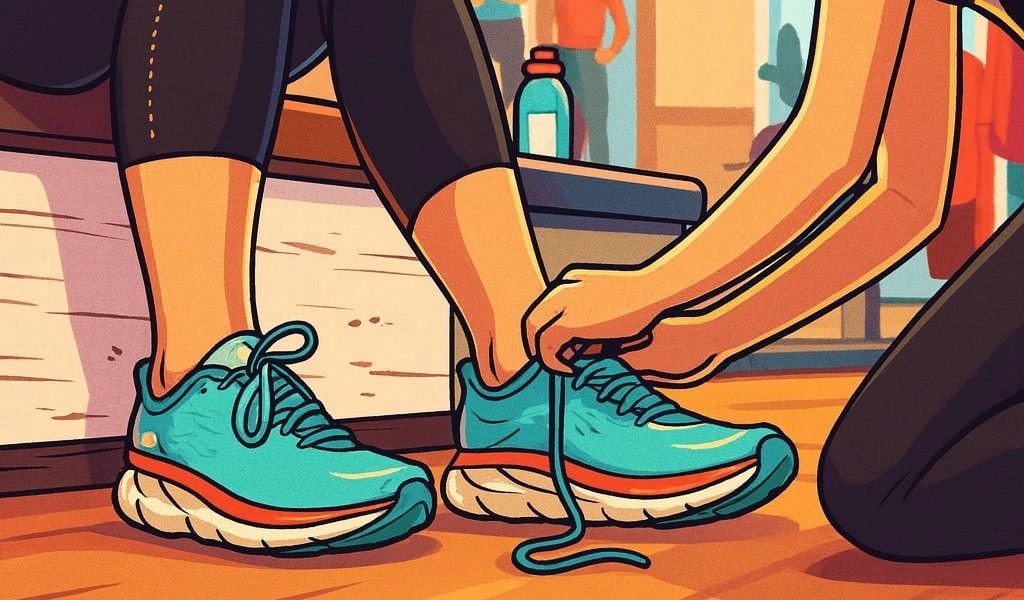
If the exact colorway isn’t available, getting measured by a trained fitter is the next best thing.
A proper fitting will:
- Confirm your true length and width on a Brannock device
- Show how your foot spreads when standing
- Help identify if you’re closer to a standard (D) or wider (E) width
This matters because the 574 fits fine lengthwise for most people, but toe box height and width can change how the shoe feels.
How to use a Brannock device correctly
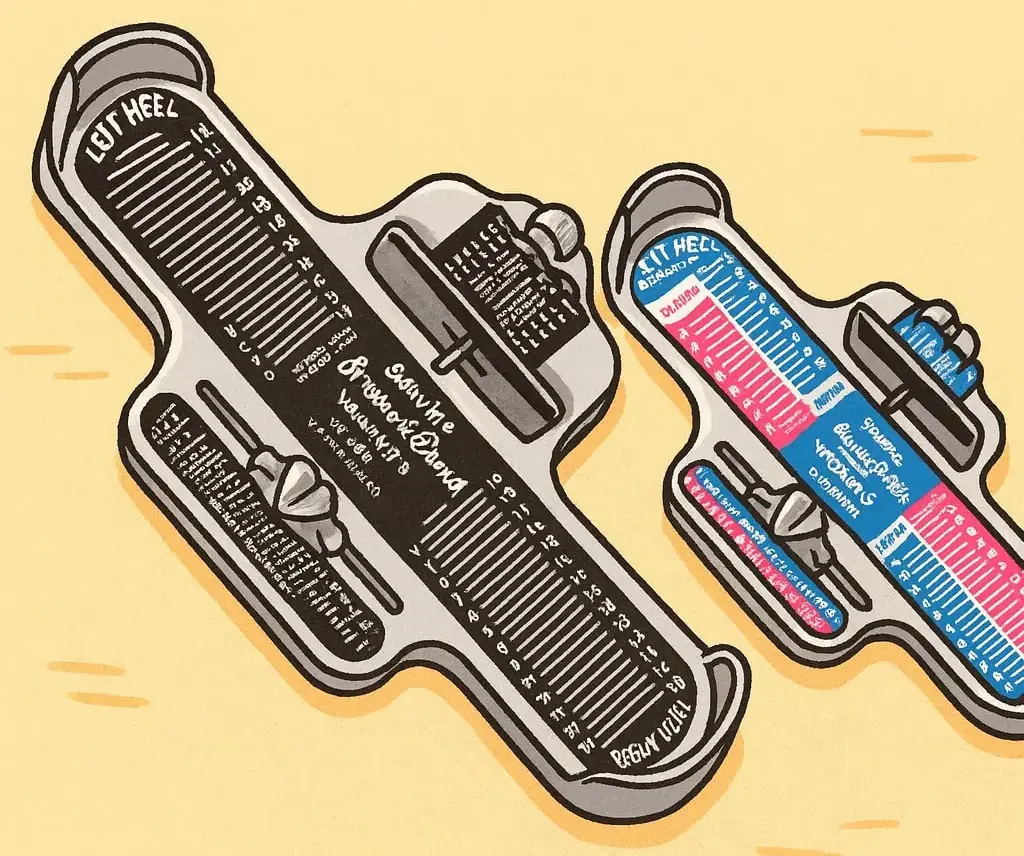
If you have access to a Brannock device, follow these steps:

- Wear the socks you plan to use with the 574
- Place your heel firmly in the back cup
- Stand up straight with full weight on your foot
- Measure the length to your longest toe (not always the big toe)
- Check the width scale at the widest part of your forefoot
- Measure both feet and use the larger measurement
How to measure your feet at home

If you’re measuring at home, here’s the simplest method:
- Place a piece of paper on the floor against a wall
- Stand on it with your heel touching the wall
- Mark the tip of your longest toe
- Measure from the wall to the mark
- Repeat for the other foot and use the larger measurement
- Compare your measurement to New Balance’s size chart and use that as your baseline.
Important tips before choosing your size
- Measure your feet later in the day when they’re slightly swollen
- Always measure while standing, not sitting
- Sock thickness matters. Thicker socks need more room
- If you’re between sizes, think about whether you prefer snug or roomy
- If you’ve had issues with shallow toe boxes before, consider how much vertical space you like
Final Thoughts
The New Balance 574 earns its reputation for a reason. It’s simple, comfortable, affordable, and easy to wear, and that’s exactly why it’s stuck around for decades.
The 574 Legacy doesn’t try to reinvent the wheel; it just refines what already worked and brings it into a more modern, lifestyle-focused space.
When it comes to the New Balance 574 sizing, the biggest thing to keep in mind is that fit isn’t just about length. For most people, true to size will feel right, but the shape of the toe box, especially how shallow it can feel on certain pairs, can make the shoe feel snug even when the length is correct.
That’s why some wearers are happier going up half a size, particularly if they like extra room or have wider feet.
If you’ve worn New Balance before, using your usual New Balance size is the safest starting point. If you’re new to the brand or sensitive to pressure on top of your toes, try them on in-store first.
Once you dial in the right size, the 574 becomes the kind of reliable sneaker you reach for without thinking.
Have you tried the New Balance 574 or the 574 Legacy yet?
Did you go true to size, size up, or size down?
And did you notice that shallow toe box feeling, or was the fit perfect for you right out of the box?
Drop your experience in the comments below.