
The New Balance 550 looks simple, but sizing it right takes a little thought.
I’ve owned and worn a lot of 550s over time, including general releases and collaborations, yet it still raises the same questions every time: how do the 550s fit, do they run big or small, and should you size up or down?
In this New Balance 550 sizing guide, I’m breaking down exactly how the 550 fits based on real wear.
I’ll explain how the length and toe box feel on foot, why heel slippage happens for some people, and how sizing changes depending on your foot shape.
If you’re trying to understand how the New Balance 550 fit and what size will actually work for you long term, this guide will walk you through it step by step.
Oh, and if you’re also looking at chunkier New Balance models, I’ve got a full breakdown on New Balance 9060 sizing that’s worth checking out. The fit is very different from the 550, so that guide can save you from ordering the wrong size.
New Balance 550 Sizing Guide

How the New Balance 550 Fits Overall
In general, the New Balance 550 runs a little long in length and a bit narrow in the forefoot. That combination is what makes sizing feel tricky for a lot of people.
My feet measure as a true size 9 on a Brannock device, and they’re slightly on the wider side. In the 550, I personally prefer going half a size down to an 8.5.
Why? Length and heel slip.
When I went true to size in past pairs, I consistently had too much extra space at the front and noticeable heel slippage when walking.
Even with thicker socks, my heel would lift more than I liked. Over time, that got annoying fast.
Going half a size down fixes that for me. The shoe feels more secure through the heel, the length makes more sense, and once the shoe breaks in, the forefoot opens up enough to stay comfortable.
That said, I know plenty of people who stay true to size in the 550, mostly because the toe box can feel a little narrow straight out of the box.
If you really hate a snug forefoot or you have very wide feet, true to size can make sense. You just have to accept the extra length and heel movement.
So here’s the simple way to think about it:
- Narrow, normal, or slightly wide feet → Half size down works well
- Very wide feet → Stick true to size and accept the extra length
- Hate heel slip → Half size down
- Hate toe box snugness → True to size
That heel looseness is real, by the way. Here’s Josh Dominic talking about heel slipping:
Related: Want to see if the 550 sizing translates to newer models? Check out my New Balance Abzorb 2010 sizing guide for details on fit, length, and width.
A Quick Comparison to Other Models
For context, I also go half a size down in:
And I stick true to size (9) in:
The 550 lines up more with the first group because of how long it runs.
For Nike:
- I go true to size in the Air Max 1 ’86, Air Max 90, Air Max 95, Air Max 97, and Air Max 720.
- I actually need to go half a size up in the Air Max Solo.
- Foamposites fit me true to size, while the Air Force 1 is a classic case where I go half a size down.
For Asics:
- The Gel 2160 fits me true to size, and the same goes for the Gel NYC.
- If you already know your size in any of these, it makes dialing in the right 550 size a lot easier.
Related: If you’re comparing this to other lifestyle pairs, I also put together a complete New Balance fit guide explaining which models run snug and which feel roomy.
A Colorway That Fits Different
One important exception is the New Balance 550 “White / Nightwatch Green.”
This pair fits more true to size than most of my other 550s. The leather feels stiffer and less forgiving out of the box, which makes the forefoot noticeably tighter.
I normally go half a size down, but with this colorway, I should have gone true to size. I bought an 8.5, and it ended up feeling uncomfortable for my slightly wide feet.
If you have narrow feet, half a size down is still fine here. But if your feet lean wide at all, true to size is the safer move for this specific colorway.
Related: If you’ve tried the 550 and want to know whether the 530 runs big or small, give it a read.
Break-In Period: What You Really Need to Know
This part matters.
The New Balance 550 does not break in quickly.
The leather around the toe box is fairly stiff, especially on pairs that use thicker or less forgiving materials. There isn’t much flexibility at the front at first, and that snug feeling can stick around for a while.
You really have to wear these in.
Over time, the forefoot does open up and mold to your foot, but it takes patience. Some people are totally fine with that. Others want comfort straight out of the box, and I get that.
If you don’t want to deal with a long break-in period, sizing true to size might feel better early on. If you’re okay putting in the wear time, half a size down ends up feeling better long term, at least for me.
Try Them On If You Can
At this point, the 550 is everywhere. That’s a big advantage.
Foot Locker, Champs, JD Sports, Finish Line. Most stores have them sitting on shelves. Take advantage of that and try them on.
A couple extra tips while you’re at it:
- The insole is removable
- Swapping to a thinner insole can help with snugness
- A thicker insole can reduce heel slip if you stay true to size
Little tweaks like that actually make a difference with this model.
Related: For a more snug, technical feel compared to the 550, I go in-depth on New Balance 1906 sizing and explain whether it runs small, big, or true to size.
How the New Balance 550 Collabs Fit
These collabs all fit best half a size down, just like my regular pairs:
- Aimé Leon Dore x New Balance 550
- Joe Freshgoods x New Balance 550
- Rich Paul x New Balance 550
- Auralee x New Balance 550
- The Auralee 550 also works well half a size down for me, similar to ALD and Rich Paul pairs.
Size? x New Balance 550
The Size? collab uses Cordura fabric, which is thicker and more water-resistant. That makes the upper feel a little more snug than standard leather, but not enough to change sizing.
I still recommend sticking with whatever size you normally wear in the 550.
- Narrow to slightly wide feet who like a snug fit → Half size down
- Wider feet → True to size and deal with extra length
Stiffer Leather Releases (UNC, Syracuse)
For some releases like the UNC and Syracuse 550s, the stiffer leather actually made true to size feel better for me. These didn’t break in as easily, and the half size down felt too tight.
That’s why material matters with this shoe.
Related: For another lifestyle option, check out how the New Balance 740 fits in real life.
Women’s Sizing for the New Balance 550
If you’re buying the New Balance 550 in women’s sizing, in general, the 550 runs about half a size big. Because of that, most women will get a better fit by going half a size down rather than sticking true to size.
Here’s a simple example.
If you normally wear a women’s 8, that usually converts to a men’s 6.5. With the 550, I’d recommend trying a men’s 6 instead. That half-size drop helps control the extra length and reduces heel slip, which is very common in this model.
If you stay true to size, your toes can end up sitting right at the front of the shoe, and over time, you may notice your foot lifting in the heel as the leather breaks in. Some people are fine with that, especially if they like a roomier fit, but most prefer a more secure feel.
A good rule of thumb is this:
If you know your Air Force 1 size, use that as your reference point. The 550 fits similarly in length, and many people end up choosing the same size or even sizing down the same way they do with AF1s.
So to keep it simple:
- If you like a snug, secure fit: size down half a size
- If you prefer extra room and looser feel: true to size can still work
It really comes down to how much space you like in the toe box and how sensitive you are to heel slip.
Final Fit Advice
The New Balance 550 is not a one-answer sizing shoe.
- It runs long.
- The heel is loose.
- The toe box starts narrow.
- The break-in takes time.
If you want the cleanest fit long term and don’t mind breaking them in, half a size down makes a lot of sense for narrow, normal, and slightly wide feet.
If you have really wide feet or want comfort right away, true to size is safer. Just expect extra length and heel movement.
And if you can try them on in store, do it. Five minutes of walking tells you more than any size chart ever will.
New Balance 550 Size Chart
Men
| US Men | US Women | UK | EU | CM |
|---|---|---|---|---|
| 4 | 5.5 | 3.5 | 36 | 22 |
| 4.5 | 6 | 4 | 37 | 22.5 |
| 5 | 6.5 | 4.5 | 37.5 | 23 |
| 5.5 | 7 | 5 | 38 | 23.5 |
| 6 | 7.5 | 5.5 | 38.5 | 24 |
| 6.5 | 8 | 6 | 39.5 | 24.5 |
| 7 | 8.5 | 6.5 | 40 | 25 |
| 7.5 | 9 | 7 | 40.5 | 25.5 |
| 8 | 9.5 | 7.5 | 41.5 | 26 |
| 8.5 | 10 | 8 | 42 | 26.5 |
| 9 | 10.5 | 8.5 | 42.5 | 27 |
| 9.5 | 11 | 9 | 43 | 27.5 |
| 10 | 11.5 | 9.5 | 44 | 28 |
| 10.5 | 12 | 10 | 44.5 | 28.5 |
| 11 | 12.5 | 10.5 | 45 | 29 |
| 11.5 | 13 | 11 | 45.5 | 29.5 |
| 12 | 13.5 | 11.5 | 46.5 | 30 |
| 12.5 | 14 | 12 | 47 | 30.5 |
| 13 | 15 | 12.5 | 47.5 | 31 |
| 14 | 13.5 | 49 | 32 | |
| 15 | 14.5 | 50 | 33 | |
| 16 | 15.5 | 51 | 34 | |
| 17 | 16.5 | 52 | 35 | |
| 18 | 17.5 | 53 | 36 | |
| 19 | 18.5 | 54 | 37 | |
| 20 | 19.5 | 55 | 38 |
Women
| US Women | US Men | UK | EU | CM |
|---|---|---|---|---|
| 4 | 2.5 | 2 | 34 | 21 |
| 4.5 | 3 | 2.5 | 34.5 | 21.5 |
| 5 | 3.5 | 3 | 35 | 22 |
| 5.5 | 4 | 3.5 | 36 | 22.5 |
| 6 | 4.5 | 4 | 36.5 | 23 |
| 6.5 | 5 | 4.5 | 37 | 23.5 |
| 7 | 5.5 | 5 | 37.5 | 24 |
| 7.5 | 6 | 5.5 | 38 | 24.5 |
| 8 | 6.5 | 6 | 39 | 25 |
| 8.5 | 7 | 6.5 | 40 | 25.5 |
| 9 | 7.5 | 7 | 40.5 | 26 |
| 9.5 | 8 | 7.5 | 41 | 26.5 |
| 10 | 8.5 | 8 | 41.5 | 27 |
| 10.5 | 9 | 8.5 | 42.5 | 27.5 |
| 11 | 9.5 | 9 | 43 | 28 |
| 11.5 | 10 | 9.5 | 43.5 | 28.5 |
| 12 | 10.5 | 10 | 44 | 29 |
| 12.5 | 11 | 10.5 | 45 | 29.5 |
| 13 | 11.5 | 11 | 45.5 | 30 |
| 13.5 | 12 | 11.5 | 46 | 30.5 |
| 14 | 12.5 | 12 | 46.5 | 31 |
| 15 | 13 | 13 | 48 | 32 |
New Balance Width Chart
| Code | Men | Women's |
|---|---|---|
| 4A | — | X-Narrow |
| 2A | X-Narrow | Narrow |
| B | Narrow | Standard |
| D | Standard | Wide |
| 2E | Wide | X-Wide |
| 4E | X-Wide | XX-Wide |
| 6E | XX-Wide | — |
How to Measure Your Feet for New Balance 550
Before you stress over whether to go true to size or half a size down, the best thing you can do is get a proper measurement. The New Balance 550 has a slightly tricky fit, so knowing your real foot size makes the decision much easier.
Try the 550 On in Person First (Best Option)
If you can, try the New Balance 550 on in-store. This model is widely available now, so it’s worth taking advantage of that.
When you try them on, pay attention to two things right away: length and heel movement. Walk around the store. Take a few longer steps.
If your heel lifts when you walk, that usually means the shoe is too long. This is very common when going true to size in the 550.
Also, try them with the socks you actually wear day to day. The fit can change a lot depending on sock thickness.
Get Measured by a Fitting Professional
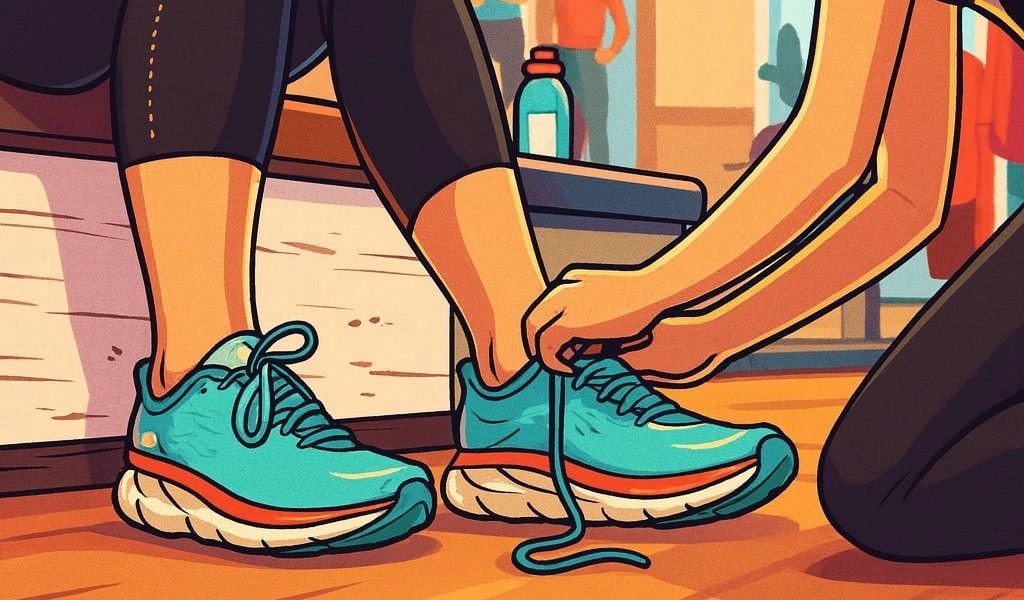
If the exact colorway you want isn’t available, ask to get measured anyway. A fitting professional can measure your length and width and tell you if your foot leans narrow, standard, or wide.
This matters for the 550 because the shoe runs long but feels narrower in the forefoot. Knowing your width helps you decide whether sizing down makes sense or if sticking true to size is safer.
Measure Your Feet Using a Brannock Device
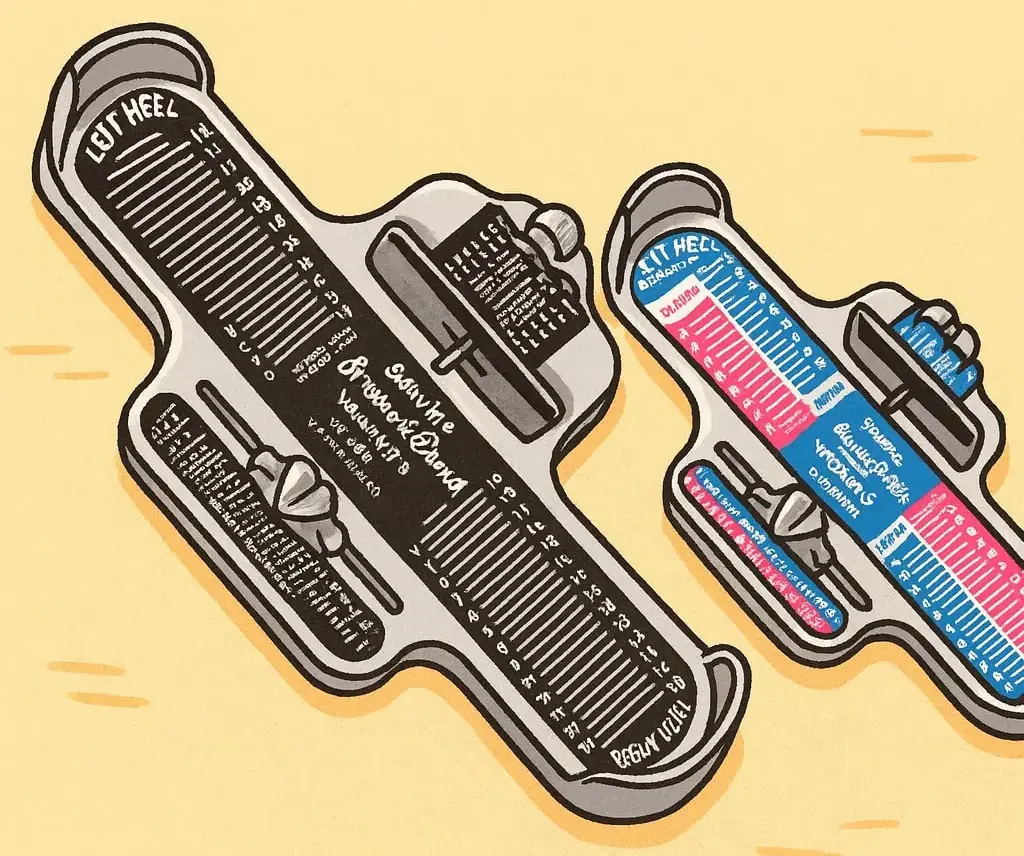
If the store has a Brannock device, use it. It’s still one of the most reliable tools out there.
Here’s how to do it correctly:

- Stand up straight with your weight evenly on both feet
- Place your heel all the way back in the cup
- Check the length at your longest toe
- Slide the width bar until it touches the widest part of your forefoot
- Measure both feet and always use the larger foot
- That number is your true size and should be your starting point when choosing 550 sizing.
How to Measure Your Feet at Home
If there’s no store nearby, you can still measure at home.

What you’ll need:
- A piece of paper
- A pen or pencil
- A ruler or measuring tape
- The socks you plan to wear with the shoes
Steps:
- Measure at the end of the day when your feet are slightly swollen
- Stand with your heel against a wall
- Trace your foot while standing, not sitting
- Measure from the heel to the longest toe
- Measure the widest part of your foot
- Repeat for the other foot and use the larger measurement
- Compare those numbers to New Balance’s size chart to find your true size.
Extra Fit Tips That Matter for the 550
- Measure your feet later in the day for a more realistic size
- Always measure both feet since one is usually bigger
- Thicker socks may push you toward true to size
- Thinner socks make half a size down more comfortable
- The insole is removable, so swapping insoles can fine-tune the fit
The New Balance 550 fits best when length and heel lockdown are dialed in. Start with your true measurement, then decide if sizing down makes sense based on how much room you like and how sensitive you are to heel slippage.
New Balance 550 Overview
It’s kind of wild to think about how fast the New Balance 550 took over. A brand that people once brushed off as only making dad shoes suddenly had one of the most talked-about sneakers of 2022, and the 550 was right at the center of it.
The story actually starts way earlier. The New Balance 550 originally released in 1989 as the low-top companion to the 650. It was designed by Steven Smith, and if that name sounds familiar, it should.
He’s the mind behind classics like the 574 and 997, worked on the Reebok Insta Pump Fury, the Nike Spiridon Cage 2, and later went on to partner with Kanye at adidas.
Back then, the 550 retailed for around $45 and mostly came in clean white colorways. That wasn’t random. It was done to fit NBA uniform rules at the time.
Even with that, the shoe never really took off on the court. Basketball players leaned toward high-tops for ankle support, and tech-heavy competitors like the Reebok Pump and Nike Air stole the spotlight.
Compared to those innovations, the 550 felt simple, and it quietly faded into the background.
Fast forward to 2018, and everything changes. Teddy Santis, the founder of Aimé Leon Dore, comes across an old image of the 550.
He saw potential where most people saw a forgotten shoe. The problem was, almost no information existed. The only references were old New Balance catalogs.
Eventually, Santis and New Balance tracked down a collector who still owned an original pair. From there, the real work started.
It took roughly ten different revisions to bring the 550 back, with a huge focus on getting the shape right. That attention to detail paid off.
On September 21, 2020, the New Balance 550 officially returned, introduced through an Aimé Leon Dore campaign featuring their AAU basketball team.
From there, everything snowballed. More collaborations followed. General releases rolled out. And at the same time, New Balance as a brand was having a bigger moment.
What started as a dad shoe trend didn’t fade. It stuck around. New Balance leaned into it by blending comfort and quality with smart collaborations and a sense of exclusivity.
The 550 became a centerpiece of that shift. Ongoing work with Aimé Leon Dore cemented it as a staple. Other collaborators like Size?, Rich Paul, Auralee, and Joe Freshgoods added their own spin without losing the shoe’s identity.
Celebrity support helped too. Jack Harlow, in particular, brought a lot of new eyes to the brand.
As the Complex Sneaker Podcast once pointed out, brands that work with New Balance tend to build long-term relationships, not quick hype moments.
That approach shows in the 550’s rise. It didn’t explode overnight. It grew steadily, and now it’s everywhere.
From a forgotten basketball shoe to a modern classic, the New Balance 550’s comeback is one of the better sneaker revival stories out there.
Final Thoughts on New Balance 550 Sizing
So after wearing a lot of 550s over the years, here’s the honest takeaway. This shoe isn’t hard to size once you understand its quirks.
The 550 runs a bit long, the heel is more forgiving than the toe box, and the leather needs time to relax. That combo is why so many people feel heel slip when they go true to size, especially after a few wears.
If you’re like me and you hate extra length or a loose heel, half a size down usually feels cleaner once the shoe breaks in.
That said, not everyone wants to deal with break-in. If you have wider feet or you hate anything snug in the forefoot, sticking true to size can make more sense, even if you give up a bit of length.
Collabs don’t really change the formula unless the materials do. Softer leather pairs tend to feel easier right away. Stiffer pairs can feel tight early on but settle with time. And if you ever feel stuck, trying them on in-store is still the easiest shortcut.
If you already own a pair, I’m curious. Did you stay true to size or size down? And how long did it take before they felt just right?