
Chelsea boots are the ultimate wardrobe MVP. If you’re even a tiny bit interested in style, you’ll be familiar with Chelsea boots, and you might already own a pair or two. But how should Chelsea boots fit, you ask?
While they’re sleek and stylish, if they don’t fit right, they’ll drive you crazy because, unlike lace-ups, Chelsea boots don’t give you the luxury of adjusting the fit with a knot or two. What you get is what you get.
If they’re too loose, your heel’s going to slide around with every step. If your Chelsea boots are too tight on top of your foot, you’ll be counting the minutes until you can yank them off.
By the end of this, you’ll know how they should hug your ankle, how much toe space feels right, and when something’s off.
I’ll also walk you through the most common issues (heel slip, tight vamps, weird break-in pain, you name it), and what to do when things don’t feel quite right.
Sounds good? Let’s get into it.
Oh, and if you’re diving deep into boot fits like I do, you might also want to check out my full Parkhurst sizing guide. It’s packed with real-world sizing advice.
How Chelsea Boots Should Fit
Getting the fit right on Chelsea boots is a bit of a balancing act.
You want them to feel comfortably snug when you first put them on, but firm enough that they don’t start feeling floppy after a week.
If they’re already loose on day one, trust me, it’s only going to get worse from there.
How Tight Should Chelsea Boots Be?
Chelsea boots should feel slightly snug when you first put them on. Not painfully tight, but firm enough that they don’t start feeling floppy after a week.
If they’re already loose on day one, they’ll only get sloppier with wear. Give them a little time to break in, and they’ll shape to your foot nicely.
No Laces Means the Fit Has to Do All the Work
Since there are no laces to tighten things up, your foot needs to be held in place by the shape of the boot alone. That’s why the fit needs to be spot-on, especially around the heel, instep, and ankle.
Related:
Oak Street claims their boots, especially the Trench boots, run true to size. But is that really the case? Here’s everything you need to know about how Oak Street boots actually fit.
Ankle: The Sweet Spot Between Secure and Suffocating
The ankle is where the elastic panels do their magic. A good Chelsea boot should fit securely from the arch up to at least the ankle bone.
If you feel like your foot is about to burst out of the boot, it’s too tight. If you can slide your foot in and out without using your hands, it’s too loose, and the whole boot will feel unstable.
And if you’re lucky enough to find a pair with pull tabs, consider it a bonus. They make getting into these taller boots a whole lot easier, especially if you’re in a hurry.
Instep: Snug Enough to Stay Put
The instep should have a bit of pressure across the top of your foot, not in a painful way, just enough that you know the boot isn’t going anywhere. If your foot feels numb or tingly after walking around for an hour, that’s a clear sign it’s too tight.
On the flip side, if the boot feels too loose in this area, your foot may start sliding forward, cramming your toes against the front.
Heel: The “Pop” Test
Your heel is the anchor of your boot, so this is where you need to pay close attention. When you step into your Chelseas, listen. If your heel makes a loud “thud” and slips around inside the boot, that’s a bad sign.
When you pull Chelsea’s on, you want to feel some resistance. You want that little “pop” as your foot slides into place. That’s a good sign the boot’s working with your foot, not flopping around it.
While a tiny bit of movement is normal (especially when they’re brand new), your heel shouldn’t feel like it’s going to lift out of the boot entirely.
Since Chelsea boots rely on the elastic side panels, they need to start snug. The leather and elastic will naturally stretch over time, so if your heel is slipping right away, it’s only going to get worse after a few months. A snug fit now means a glove-like fit tomorrow.
Related: Wolverine Boot Size Chart
Room Up Front Is Okay

Toe room is another thing to think about. A bit of wiggle space in the toe box is perfectly fine. You want comfort up there, especially if you’re wearing them all day.
Just make sure the rest of the boot (heel, midfoot, and waist) needs to feel dialed in. That’s what gives Chelsea boots their sleek look and stable feel.
If your toes feel jammed right up against the front, it’s a no-go. Over time, the leather will stretch width-wise, but it won’t magically grow longer, so a cramped toe box won’t get better.
The shape of the toe box matters, too:
- Almond-toe Chelseas (like RM Williams) give a bit more space without looking bulky.
- Square-toe styles have a roomier feel but can sometimes look chunky.
- Pointed toes are sleek but often run tighter, so you may need to size up slightly.
Fit Can’t Be Faked
Some people don’t realize how tricky Chelsea boots are to design.
Without a tall shaft like a cowboy boot to keep your foot locked in, the fit has to come from the last itself. If the shape isn’t right for your foot, they’ll slip, they’ll sag, or they’ll just fly off when you start walking fast.
Bottom line: A great-fitting Chelsea boot should feel like it was made for your foot: snug in the right places, a little roomy where it counts, and never loose where it shouldn’t be.
It should gently hug your midfoot without pinching, while the elastic panels should stretch just enough to let you slide them on, but not so much that your foot feels like it’s swimming inside.
Now that we’ve covered what makes Chelsea boots unique in fit, let’s dive into the sizing details of some of the best Chelsea boots out there to help you find the perfect pair.
Related:
If you want to get even more detailed on sizing, especially for brands like Crockett & Jones, check out my full Crockett & Jones sizing guide.
Chelsea Boot Sizing
Thursday Legend Sizing

In general, Thursday Chelsea boots run a little big, like most Goodyear welted boots do. So, if you wear a 10.5 in sneakers (which is usually close to your Brannock size too), you’ll want a 10 in the Legend.
Unlike some other Thursday models, the Legedn doesn’t come in wide widths. If you need an EE or EEE fit, the Legend won’t work for you.
If you’ve got a low instep, the Legend (and the Duke, for that matter) might feel loose up top or struggle to stay snug. These boots are better suited for average to slightly higher insteps.
That said, Thursday does offer free exchanges, so there’s some wiggle room if you miss the mark.
Overall, if you’ve got standard-width feet and a regular instep, just go down half a size from your sneakers and you’ll be fine. But if your feet are on the wider or lower-volume side, you might want to think twice before getting these.
Now, check out the full Thursday Boot sizing guide for a deeper dive into how their different models fit, including the Captain, President, and more.
Thursday Duke vs. Cavalier Sizing
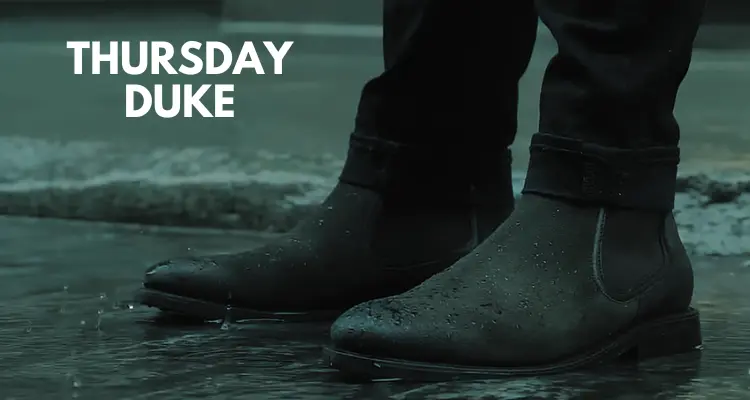
These two Thursday Chelseas might look similar at first glance, but the fit is a whole different story. If you’re stuck choosing between the Duke and the Cavalier, here’s what you need to know:
The Duke has got a rounded toe box and a bit more room overall, which makes it a solid choice if you’ve got average to slightly wider feet.
It fits a lot like Thursday’s Captain boot, meaning it’s structured enough to look clean, but not so narrow that it feels restrictive.
If you’re between sizes, just stick with your true Brannock size here. Most guys don’t have any real break-in issues, and even if you grab one of the leather versions (instead of the Honey Suede), you probably won’t notice much stiffness.
Just keep in mind that wide sizes are only available in the Honey Suede version. If you need EE or EEE and want another leather, you’re out of luck.
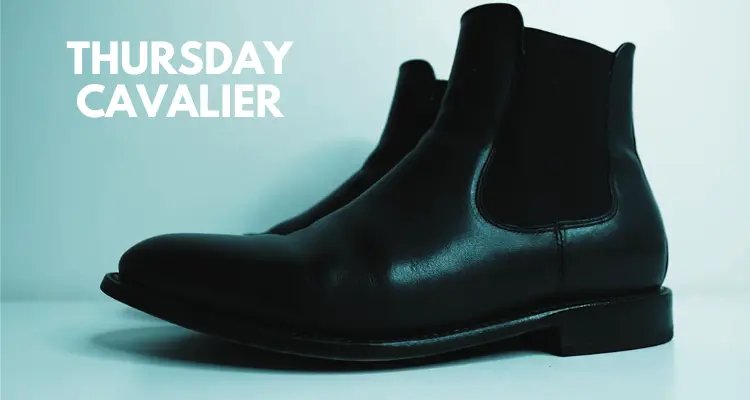
The Cavalier, on the other hand, fits slimmer and longer. It’s built on Thursday’s dress shoe last, so the shape feels more like an oxford than a boot. It’s a sleeker Chelsea overall, designed to fit more like a glove than a hiking boot.
That means if you’ve got narrow or standard feet, you’ll want to go half a size down from your Brannock size. But if your feet run wide (E, EE, or EEE), sizing down might feel too tight in the toe box and instep, so going true to size could be the better move.
The break-in is also super minimal with the Cavalier. It’s built to feel soft and sock-like right out of the box, so it molds to your foot with less effort than the Duke. Some people even say the flexible structure makes the sizing feel a bit more forgiving.
TL;DR?
Duke: True to size for most people. Best for standard to slightly wide feet. Feels like a casual boot with a bit more room in the toes.
Cavalier: Half size down if you have standard or narrow feet. True to size if your feet are on the wider side. Slim, dressy, and low on structure.
Make sure to check the official Thursday size chart. It’s a quick way to double-check your pick before you order.
Red Wing Weekender vs. Classic Chelsea Sizing

Red Wing sizing can be confusing if you’re new to the brand, but the good news is, once you’ve figured it out, it stays pretty consistent.
Both the Weekender and the Classic Chelsea follow the same basic rule:
- Go down half a size from your true Brannock size.
So, if you’re an 11.5 on the Brannock and usually wear a 12 in sneakers, you’ll want a size 11 in either boot. If you already own Red Wings like the Iron Ranger or Blacksmith, just grab the same size you wear in those. Both Chelseas are built on the same No. 8 last.
The Weekender Chelsea is definitely the more laid-back option. The leather’s tough but softens up fast, and there’s basically no break-in to speak of, especially compared to heavier-duty Red Wings.
It’s lightweight, more flexible, and perfect if you want something that doesn’t feel overbuilt but still has that rugged Red Wing vibe.

The Classic Chelsea leans more heritage and structured. It’s got a roomy bump toe, which gives your toes extra space to move; something you almost never get in a Chelsea boot.
That extra toe room makes it surprisingly comfortable, especially if your feet run a little wide. Just note that wide widths are only available in Amber Harness and Black Harness. If you’re an E width and not super wide, you might still get away with the D width thanks to the generous toe box.
Quick Recap:
- Sizing: Half size down from your Brannock.
- Weekender: Super easy break-in, casual feel.
- Classic: Roomy toe box, bump toe, a bit more structure.
- Wide feet: Only a couple of wide options in the Classic; the Weekender doesn’t offer any, but the shape might still work for slightly wide feet.
Here’s the Red Wing boot size chart if you want to double-check your size before pulling the trigger. It helps take the guesswork out, especially if you’re between sizes.
Dr. Martens vs. Blundstone Sizing
Let’s say you’re a US 12 in sneakers. That usually means you’re around an 11.5 on the Brannock device (your true size), and in most boots, you’d go with an 11. So what happens when you try to grab a pair of Docs or Blundstones?
Here’s how it plays out:

Dr. Martens only comes in full sizes. If you’re between sizes, go down. So if you’re an 11.5 Brannock or a 12 in sneakers, you’d likely be fine in a US 11 (UK 10).
That said, if you’re planning to wear thick socks (or just want them for winter), you might feel your toes bumping up against the end of the boot from time to time.
If that’s you, staying closer to your sneaker size could make more sense. It’s a tradeoff: snug and secure, or roomy and winter-ready.

Now, Blundstone uses UK sizing, but if you’re buying from a US site, they convert it for you, so just order your regular US size and let them do the math.
For example, if your Brannock size is 11.5, just order an 11.5 from Blundstone’s US site. When the boots arrive, the bottom will say UK 10.5. Don’t panic, that’s normal. Ignore whatever is stamped on the sole.
And while you’re at it, make sure to check the Blundstone size chart. It clears up a lot of the UK vs US confusion and helps confirm you’re ordering the right size.
If you’re a thick sock person or want extra winter space, you can bump it up half a size from your Brannock, which ends up being closer to your sneaker size anyway.
Quick Recap:
- Docs: No half sizes. Size down if you’re in between. Size true if you wear thick socks.
- Blundstone: Just order your true US size from their website. Size up only if you want extra sock room.
Bottom line, Docs fit shorter and firmer; Blundstones give you a little more wiggle room. It all depends on how snug you like your boots and whether thick socks are part of the plan.
Check out the complete guide on how Blundstones should fit. It covers sizing, break-in tips, and model differences so you don’t get stuck with the wrong pair.
Grant Stone Chelsea Sizing
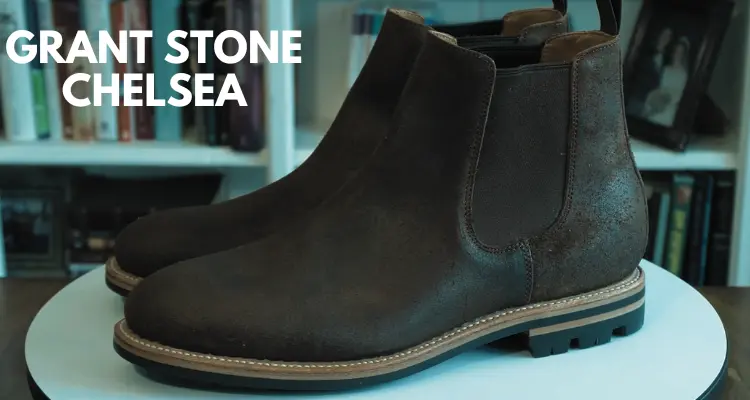
Grant Stone’s Chelseas are built to fit well, as long as you size down. These boots run large, so if you’re usually a 9.5, you’ll want to go with a 9.
The leather and cork midsole really start to shape around your foot after a few wears, so even if they feel a bit stiff at first, give it time. They break in beautifully.
Now, on widths: they go from 6 to 13, and they offer EE widths, which is great. The founder, Wyatt Gilmore, actually said the boots are designed to work for both D and E width feet, but here’s the thing: they’re still a bit snug around the toes.
Not Carmina-level narrow, but snug enough that if you’ve got a true E width, you’re probably better off getting the EE version. Don’t try to squeeze into a D unless you’re more of a borderline case.
Quick take?
- Size down half a size from your Brannock.
- D width fits most average feet, but if you’re E or EE, play it safe and grab the wide version.
- Break-in is solid. Firm at first, then molds to your foot like a glove.
Now, if you want a deeper dive, check out the full guide on how Grant Stone boots should fit.
R.M. Williams Comfort Craftsman Sizing
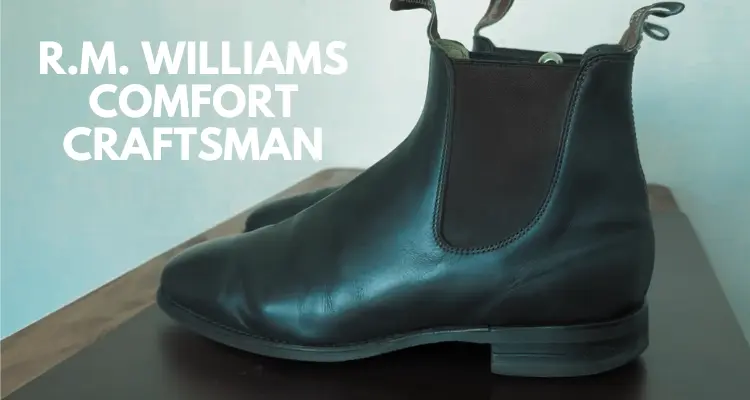
R.M. Williams boots are kind of magical in how well they fit around the ankle if you get the right size. That’s a big if, though, because the sizing system can trip you up if you’re not paying attention.
First off, they use UK sizing, which runs one full size down from US sizing. So if you’re a US 9.5, you’ll want a UK 8.5 in these. Easy enough, but don’t forget it when you’re ordering, especially if you’re bouncing between US and international sites.
For reference, here are the RM Williams size & width charts to double-check before you order.
Now, the last is slim. If your feet are a bit on the wider side, or even just average with a high instep, you might want to go up half a size from your Brannock. Otherwise, your toes could feel pretty crammed in there, especially in the beginning.
That said, the break-in is a breeze. The leather’s soft, the rubber sole is flexible, and there’s no thick leather midsole to slow you down. Other than the snug toe box, you’re not going to be limping around trying to soften these up. They feel good fast.
Quick take:
- UK sizing: go down one full size from US
- Consider going half a size up from Brannock if the ball of your foot is wide or your instep is high
- Super easy break-in (the leather’s soft and the sole’s comfy)
- Just watch out for that narrow toe box
Want more details? Read the full breakdown on how RM Williams sizing works.
Astorflex Bitflex Sizing

The sizing on the Bitflex is pretty straightforward, but there are a couple of quirks you should know before pulling the trigger.
Like most Chelsea boots, the Bitflex runs a little big. If you’re used to sneaker sizing, you’ll probably want to go down a full size.
If you know your boot size already, say you’re a 9 in Red Wing, Grant Stone, Wolverine, or Thursday, you’ll likely be a 9 here too.
Astorflex shoes don’t offer half sizes (except some models like the Patnoflex), which isn’t ideal, but most guys do just fine sizing down to the nearest whole number. If you’re already a whole size, just stick with it.
However, even without wide width options, these boots work well for guys with wider feet. The toebox is generous, much roomier than most Chelseas, and you can feel it right away. If you’re an E width, don’t stress. There’s a good chance these will still fit you comfortably.
For some reason, the Chestnut Nubuck color uses European sizing, while the rest list US sizes. No idea why. But don’t worry, it’s not a big deal. A size EU 43 is a US 10, for example, and the fit is dead-on. If you’re not sure, just check our US to EU conversion chart before ordering.
Overall, go with your boot size, not your sneaker size. Size down if you’re in between, and expect a nice, roomy toe box even if you’ve got wider feet. As long as you’re not a half size, the fit’s honestly pretty forgiving.
Koio Fermo & Trento Sizing

Both the Fermo and Trento are Koio’s take on the dressier side of Chelsea boots, and that shows up in how they fit. They’ve got that sleek, narrow shape that looks great on foot, but if yours are on the wider side, these might not be the best match.
The biggest issue with Koio is that it doesn’t offer half sizes. Koio only makes full sizes, which limits your options a bit.
If you’re a true whole size, like a 10 or 11, you’re in luck. Just order your regular size. But if you’re in between, you’ll want to size down to the nearest whole number.
The leather does stretch a bit with wear, so a slightly snug fit at first is normal, especially in the toe box. Unless they’re painfully tight, give them a little time and they’ll soften up and mold to your foot nicely.

That said, Koio doesn’t make wide widths either. If you’ve got E or EE feet, you might be okay. But if you’re an EEE or just generally need a lot of forefoot room, these are going to feel tight, especially around the ball of the foot and instep.
One thing Koio does get right is the overall shape. Both models have a clean almond toe that’s just the right balance; not too pointy, not too round. It makes the boots look refined without going full dress shoe.
If you go with the Trento, one thing to note is that the break-in is a bit more noticeable in the heel. As you walk, the heat and movement help soften the back of the boot and reduce the Chelsea boot heel slip over time. You’ll just need a bit of patience in the beginning.
Carmina Sizing
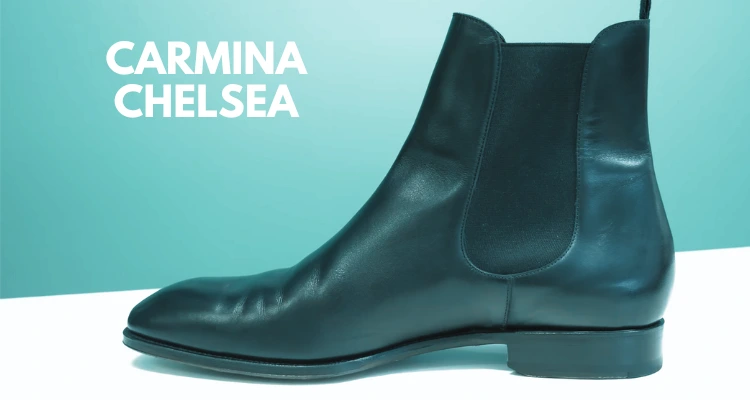
Carmina’s a Spanish brand, which means they use European sizing. If you’re an American, this might throw you off. The general rule is to go down one full size from your Brannock.
So, if you’re a 10.5 on the Brannock device, you’d usually be a 9.5 in Carmina. That’s pretty standard for European-made boots, and the same thing goes for brands like Tricker’s or RM Williams (even though they’re Australian, they use Euro sizing too).
That said, double-check the sizing chart on their site just to be safe.
Sometimes, depending on your exact foot length or width, you might only need to go down half a size instead of a full one. It’s not a perfect science, especially if you’re in between.
Now, the Simpson last, which is what many of Carmina’s Chelseas are built on, is narrow. Like, very narrow. If your feet lean wide at all, even just the wider side of a standard D width, you might feel squeezed.
And unfortunately, Carmina doesn’t offer wide sizes, so you can’t size up or switch widths to fix it.
Overall:
- Stick to one full size down from Brannock as a starting point.
- If your feet are on the wider side, even slightly, you might want to skip the Simpson last.
- No wide widths available, so what you see is what you get.
Meermin Chelsea Sizing

Meermin’s Chelseas are built on the Sena last, which gives you that clean, almond-shaped toe. It’s tapered, but not overly pointy, so you get a sharp silhouette without looking like you’re heading to a costume party.
Length-wise, the sizing is pretty standard. Most folks can stick with their Brannock size, or maybe go down half a size, depending on foot shape and how snug you like your boots.
In terms of width, if you’ve got slightly wider feet, especially around the toes, the taper in the Sena last might feel a bit tight at first.
It’s not unbearable, but it can take longer to break in. So if you’re used to roomier toe boxes, you’ll notice the squeeze early on.
Also, the boot opening is a little tighter than most Chelseas. It’s not uncomfortable once you’re walking around, but it might feel snug when you’re pulling them on.
One more thing: if you wear orthotics, this might not be the best boot for you. The fit is a little low-profile inside, so adding inserts could throw things off.
Bottom line?
- Stick close to your Brannock size
- Expect a snug fit in the toe if your feet run wide
- Break-in might take a bit longer than usual
- Probably not ideal if you rely on orthotics
Christian Daniel Fernando Sizing
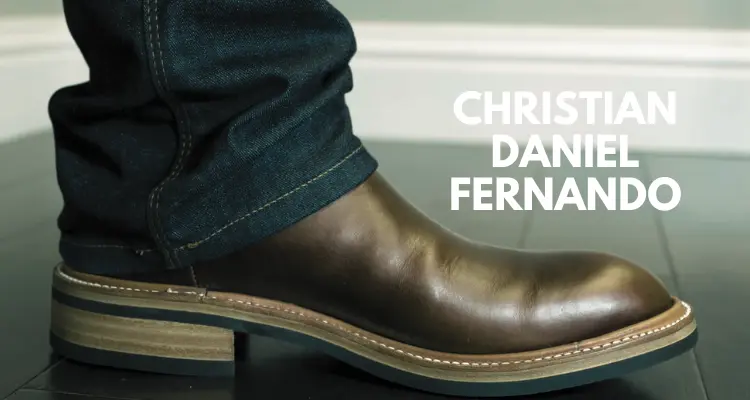
If you’re wondering about sizing with Christian Daniel’s Fernando Chelseas, here’s the quick answer: go true to your Brannock size. That’s what the brand recommends, and after testing them, I’m on board with that advice.
I usually wear a 9D in most Goodyear welted boots, but with these, I went with a 9.5D, which is my actual Brannock size, and I’m glad I did. If I had gone with my usual size-down routine, they would’ve been way too tight.
These are built on the 199 last, which runs true to size. It has a roomy toe box, a snug (but not tight) waist, and a slightly tapered heel, which gives you that secure, locked-in feel without feeling constrictive.
One thing that caught me off guard: they’re tough to get on at first. Like, really tight when you try to slide your foot in. But put them on and take them off a few times.
After two or three wears, the leather loosens up at the opening, and the boots become way easier to slip into. I was surprised at how quickly that part broke in.
The overall fit is very balanced. Heel-to-ball placement feels just right, which you don’t always get even with pricier boots.
Compared to something like the Parkhurst Elmwood, which I wear in 8.5D, the Fernando fits exactly the same in a 9D. So if you wear 8.5D in Parkhurst, go with 9D in Christian Daniel and you’ll be spot on.
As for break-in, yeah, it takes a little time. They feel snug out of the box, especially around the ball of the foot and the outer edges, but not painfully so.
They’re not the kind of boots that make you desperate to yank them off at the end of the day, but they will need a few wears before they feel fully broken in.
One last thing, Christian Daniel used to have this awesome sizing comparison chart where Christian listed all the shoes he wore in other brands (sneakers, boots, dress shoes) and compared them to his own.
It made figuring out your size so much easier. I can’t seem to find it anymore, which is a shame, but if it ever comes back, it’s well worth checking out.
Bottom line?
- Go true to your Brannock size
- Expect a little break-in, especially in the toe box and ball of the foot
- Uppers will stretch and sole gets more flexible with wear
- No half-size guessing games. Just take your actual size and give them a chance to break in
Bordon Isidro Sizing

The Bordon Isidro isn’t pretending to be some sleek, dressy Chelsea boot. If you’re looking for something closer to the R.M. Williams Comfort Craftsman or a Grant Stone in terms of shape and silhouette, this isn’t it, and that’s kind of the point. This boot is about comfort and volume.
The last on the Isidro is rounded and roomy, especially in the toe box. It has what I’d call a bulbous toe shape, which gives it a slightly chunkier look.
This extra volume works really well if you have high-volume feet, or you just hate when your toes feel cramped. Your toes have plenty of space to spread out and wiggle. That’s rare in a Chelsea boot.
At the same time, the fit doesn’t feel sloppy. The heel is snug, the waist hugs the midfoot, and the boot does a good job of keeping your foot centered without squeezing the life out of it.
Yes, like most Chelseas, you’ll get a bit of heel slip when they’re brand new. But once your foot settles in, that movement levels out. It’s minimal and not annoying.
Compared to other Chelseas, the Bordon has a noticeably different feel:
The Grant Stone Chelsea on the Euro last is much sleeker. It’s also slightly longer overall, but the Bordon wins out in volume, especially up front. If you’ve got high arches or a wide forefoot, the Bordon will likely feel more forgiving.
The J.Crew Chelsea is maybe a hair longer than the Bordon, but not enough to justify going up or down a size. The J.Crew’s toe is also nicely rounded, but the overall shape is still sleeker than the Bordon, which leans more into that relaxed, heritage-inspired aesthetic.
So, if you’re coming from American boots, the sizing can throw you off a little. Christian Bordon uses European sizing, and they run a little generous, but not enough to size down a full number.
I’m a 9D Brannock, and the European size 42 was the sweet spot. It gave me that roomy toe box without feeling too long or loose in the heel. If you’re a D width or slightly wider, just go true to size in your Brannock and match it to the European equivalent.
If you normally size down in Goodyear welted boots, don’t do that here. Bordon’s fit is already generous. Sizing down would ruin what makes this boot comfortable in the first place.
Bottom line:
- Snug in the heel and waist, roomy in the toes
- Round toe box gives comfort without looking clunky
- Go down half a size from your true size
- Some heel slip, but not the kind that makes you want to take them off
Taylor Stitch Ranch Sizing
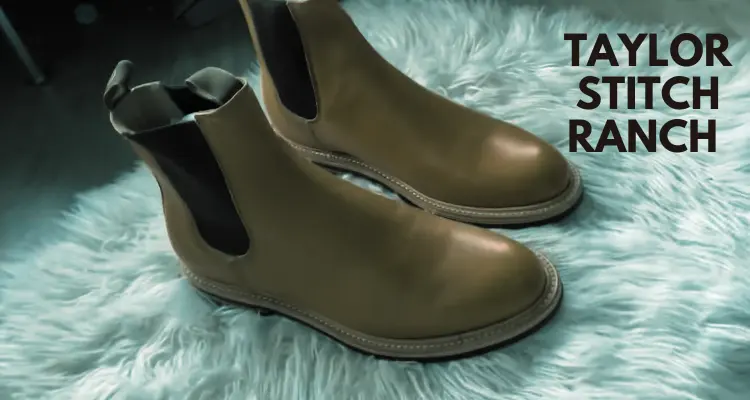
The Taylor Stitch Ranch boots are seriously comfortable, but there’s a catch, and it’s right up front.
These run a bit narrow in the toe box. Not painfully so, but just enough that you’ll feel it, especially during the first couple of wears.
It’s a sleek, tapered design, which is great for style, but if your feet are on the wider side, you might notice a squeeze early on.
That said, the leather does stretch. After a couple of weeks, it starts to mold to your foot, and that tight feeling around your toes usually eases up.
The rest of the fit is pretty spot on. It hugs your foot in a way that feels secure without being stiff, and the comfort just gets better over time.
Bottom line:
- Fits true to size for most people
- Expect it to feel tight in the toes at first
- Leather stretches and molds nicely over time
- Great if you want a sleek look without the bulk
Helm’s Holt Sizing
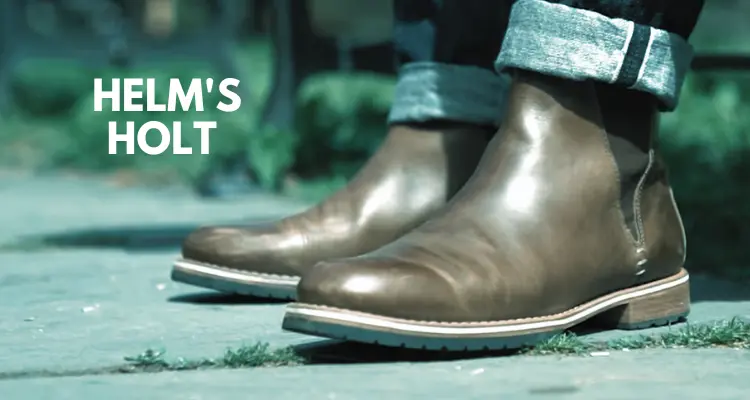
Helm really came through for the big-foot crowd, not Bigfoot himself, but guys with larger or wider feet. The size range goes from 6 to 16, and they actually offer EE widths, which is rare and super appreciated if you’ve ever struggled to find boots that don’t crush your toes.
Fit-wise, they run true to size. If you’re an 11.5 on the Brannock, then go with an 11.5 in the Holt, and you’ll be good.
Now, the break-in is another story. Like with most Helms, the first few wears can be rough. I’m not going to sugarcoat it because you’ll probably want to bring sneakers as backup the first couple of days.
The leather’s stiff, the sole takes a while to soften up, and your feet might not love you at first.
But stick with it. Once they do break in, they get really comfortable, like all-day-on-your-feet comfortable. It just takes a little patience (and maybe a blister bandage or two) to get there.
Quick recap:
- True to size, even if you’ve got big or wide feet
- EE widths available
- Break-in is tough, but worth it
- Bring sneakers the first few times, just in case
Rhodes Boone Sizing
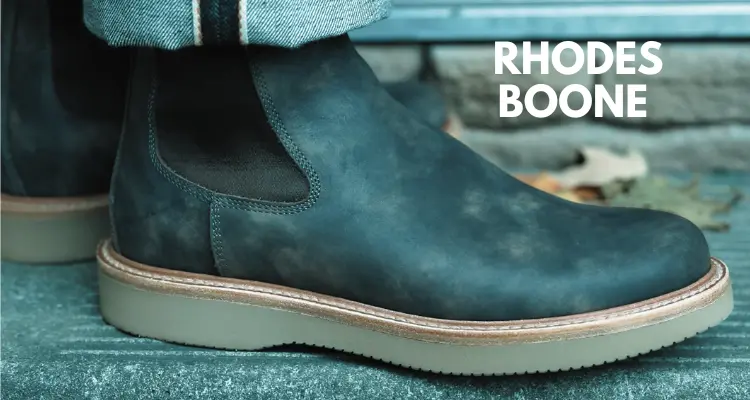
With the Boone Chelsea, you’ll want to go up half a size from your usual boot size. That seems to be the case with most Rhodes boots I’ve tried, and this one’s no different. If you usually size down in your Goodyear welted boots, skip that here and go up instead.
Once you’ve got the right size, the fit feels solid. It’s got that sturdy, slightly chunky workwear feel, but without being stiff or uncomfortable. Definitely more rugged than sleek, so if you’re into a heavier, recraftable Chelsea, this one hits the mark.
What Makes Chelsea Boots Different When It Comes to Fit?
Chelsea boots have that timeless, pull-on-and-go charm, which is sleek, minimal, and versatile enough to dress up or down. But when it comes to fit, they play by their own rules.
No laces. No buckles. No zippers. Just a slip-on design with elastic panels. That means there’s zero adjustability once they’re on your feet. If they don’t fit well right out of the box, there’s not much you can do to tighten (or loosen) things up.
Unlike lace-up boots, where you can tweak the fit across the ankle, midfoot, or toe, Chelsea boots depend entirely on those stretchy side panels to keep your foot in place.
That’s part of the appeal that makes them easy to throw on, but it also means you need to nail the sizing from the start.

And that’s where things get tricky.
If you’ve got low-volume feet or skinny ankles, expect some heel slip and movement, especially when walking on hard surfaces.
On the other hand, if you have a high instep, you might struggle to get your foot in at all, and once it’s in, you could feel pressure across the top of your foot.
Pull tabs help, but not all Chelsea boots have them. Some brands include one or two (like Blundstone or Redback) to make the process easier, especially with taller shafts. But once your foot is in, that’s the fit you’re stuck with.
Related:
Unlike Chelsea boots, which rely on elastic panels for flexibility, Danner boots have a more structured fit. Find out how they compare so you get the right size.
How Chelsea Boots Should Fit When Walking

Once you’ve got your Chelsea boots on, the next big test is how they feel when you walk. A boot that fits well standing still can feel completely different once you start moving.
They Should Feel Like Part of Your Foot
When you’re walking in Chelsea boots, they should feel like an extension of your foot. They should bend naturally with every step. If they’re fitting right, you shouldn’t feel any excessive sliding, pinching, or pressure points. It’s all about smooth, effortless movement.
If the leather feels stiff at first, that’s normal. High-quality leather needs a little break-in time. But if you feel like you’re fighting against the boot with every step, it might be too rigid or improperly fitted.
A Little Heel Movement Is Fine. A Lot Isn’t
It’s okay if your heel lifts slightly when they’re brand new. But if it feels like your foot’s sliding all over the place, that’s a no. Too much heel lift can lead to blisters, and if your toes are constantly jamming forward, you’ll be feeling it by the end of the day.
Watch Out for Hot Spots
As you walk, tune into how your feet feel. Any pressure points? Tingling? Pinching? That’s your boot telling you it’s too tight somewhere, usually around the instep or the ball of your foot.
Don’t ignore those early warning signs. If it feels wrong now, it’s probably not going to magically fix itself later.
Test Them in the Real World
Don’t just walk around on a smooth floor. Take them for a spin on different surfaces. Walk on carpet, hardwood, and even outside if possible.
Harder surfaces will reveal any uncomfortable pressure points, while softer surfaces will help you feel if there’s too much movement inside the boot.
If you notice your heel slipping, your toes jamming, or any uncomfortable rubbing, it’s a sign the fit isn’t quite right.
Overall, a great-fitting pair of Chelsea boots will make you forget you’re even wearing them. If you’re adjusting your step because the fit feels off, something isn’t right.
But if everything feels smooth and easy, that’s a solid sign you nailed it.
Quick take:
- Go up half a size from your usual boot size
- Fits well once sized right
- Leans into the chunkier workwear vibe, but still easy on the feet
Chelsea Fit Issues & How to Fix Them
You bought the boots. They look amazing. But something’s off. They’re too tight, too loose, your heel’s flopping, or your ankles feel chewed up. Don’t worry. You can fix most of this at home.
Problem: They’re Too Tight
A snug fit is good, but pain is not okay.
- Break-In with Thick Socks
Wear them indoors with heavy socks for short sessions. That helps stretch the leather without doing any damage.
- Shoe Stretcher = Instant Relief

Target those hot spots like the instep or toe box. If you hate the idea of suffering through the break-in period, this tool is a must.
- Cobbler Option
A cobbler can stretch the leather professionally, which is especially good if the boots are pricey and worth saving.
Problem: Are Chelsea Boots Supposed to be Loose?
Your foot shouldn’t slosh around. If it does:
- Avoid Toe Fillers

They don’t fix anything. Chelsea boots need a snug instep, not toe padding.
- Use Tongue Pads
Stick one under the front elastic. It fills the instep gap so your foot stops shifting.
- Add an Extra Insole
This boosts your foot up a bit and reduces interior space without wrecking the boot shape.
- Problem: Chelsea Boot Heel Slip
Normal: A little heel slip when new.
Not Normal: Heel lifting with every step.
Fix: Add adhesive heel grips and wear thicker socks. If that doesn’t help, your Chelsea boot is probably too big.
Problem: Ankle Discomfort
If it’s rubbing, pinching, or digging in:
- Try Cushioned Socks
That’s often all you need. If not, look into soft ankle pads while the boot breaks in.
Chelsea Boot Fit Guide by Foot Type
Chelsea boots look simple, but the wrong fit can ruin them fast. Whether you’ve got wide feet, narrow heels, or high arches, here’s what to look for.
Chelsea Boots for Wide Feet
A sleek Chelsea might look cool, but if it crushes your forefoot, it’s a no-go. Look for boots that come in EE or EEE widths. Thursday offers wide sizes in some styles. Red Wing, Blundstone (Classics, not Originals), and Thorogood also work well for wider feet.
- Roomy Toe Boxes
Choose round or square toes over pointy ones. Almond toes usually run narrow.
- Flexible Side Panels
Elastic that actually stretches will help the boot adapt to your foot.
Chelsea Boots for Narrow Feet
If your feet slide around in most boots, you need a snugger shape.
- Slim-Profile Brands
Try brands like Grenson, Saint Laurent, or Thursday’s Cavalier. These tend to run narrow.
- Snug Instep Fit
Since Chelseas don’t have laces, the instep is what holds your foot in place. If it’s loose, your foot will float.
- Tapered Toes
An almond or slightly pointed toe can help your foot stay centered and supported.
Chelsea Boots for High Arches
The top of your foot takes the hit with slip-on boots. If it feels too tight or hard to pull on, arch height might be the issue.
- Arch Support Built In
Some brands use molded footbeds with good arch support. They’re rare, but a huge help.
- Roomy Instep Fit
RM Williams and select Thursday models tend to offer more space across the top of the foot.
- Stretchy Side Panels
Look for soft, flexible elastic that actually gives when you step in.
- Soft Leather Uppers
Softer leathers (like calfskin or suede) stretch and adapt faster than stiff, full-grain leather.
Bonus Tip:
Add your own orthotic insoles if the stock footbed isn’t cutting it.
Chelsea Boot Fit Checklist
Don’t just try your boots on and stand there. Walk, wiggle, bend, and really test them. Here’s how to know if your Chelsea boots actually fit the way they should:
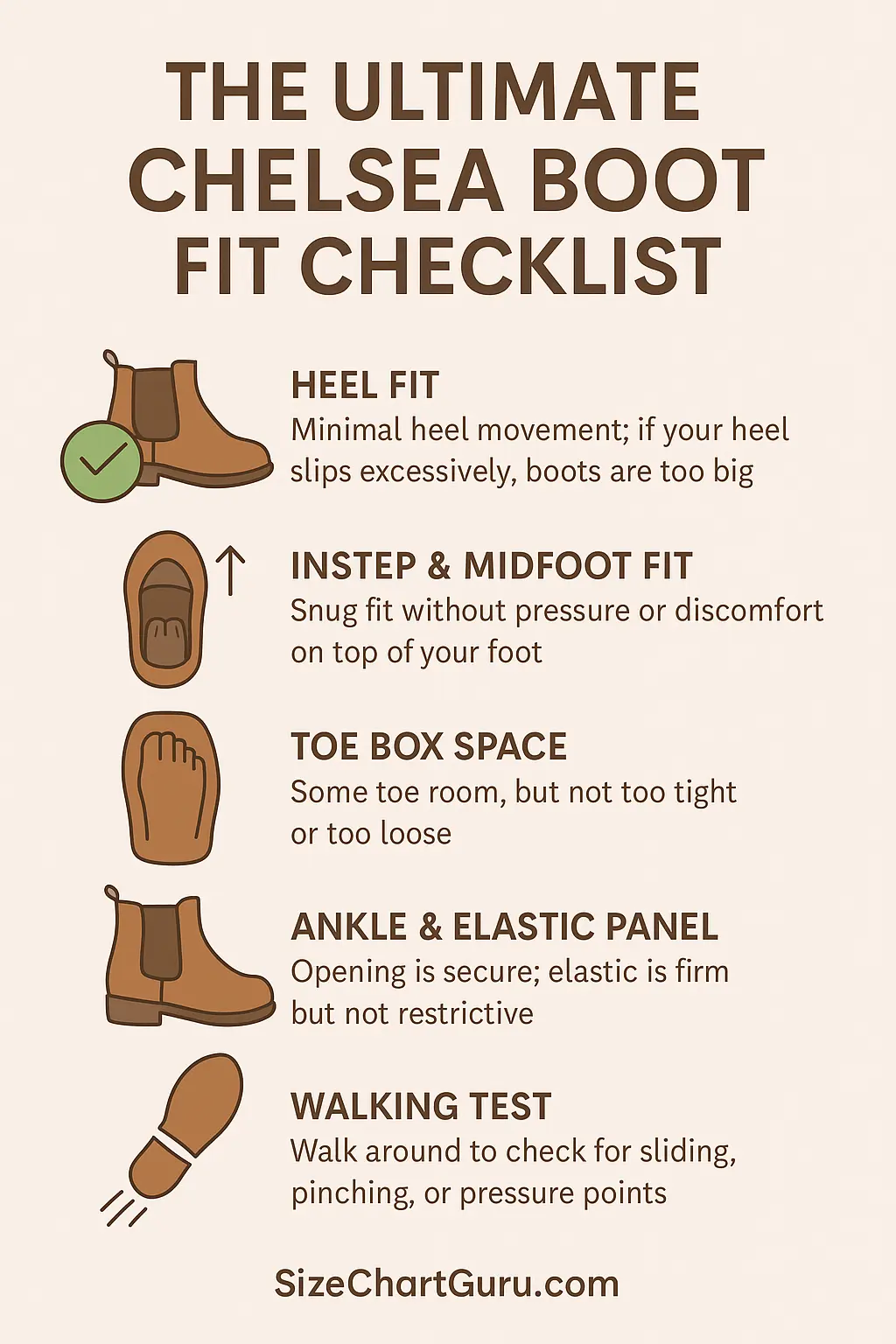
✅ Heel Lock

- Your heel should not lift more than ¼ inch when you walk.
- A little heel slip is normal when brand new, but it should improve after 2–3 wears.
- If your heel is moving like a flip-flop, the boot is too big, or the instep is too loose.
Fixes to try: Tongue pads (like Pedag Supras) or heel grips.

✅ Instep Fit
- The boot should feel snug over the top of your foot (the instep).
- No laces means this is what keeps your foot in place.
- If there’s any pressure or tingling, it’s probably too tight and won’t break in comfortably.
Red flag: Pressure across the instep rarely stretches enough over time. Size up or try a roomier last.
✅ Midfoot & Arch
- Your foot should feel secure through the arch, not floating or sliding.
- If it feels too loose here, your foot will move with every step, creating friction.
Tip: Add an insole to raise your foot slightly and reduce internal volume if needed.
✅ Toe Box Room
- You should be able to wiggle your toes, just a little.
- If your toes touch the front or sides, it’s too tight.
- If they’re swimming with a full finger of space, they’re too big.
Ideal fit: Your longest toe should sit about a thumb’s width away from the front inside the boot.
✅ Ankle & Elastic
- The elastic panels should feel firm and supportive, not loose or flimsy.
- If the top of the boot digs into your ankle bone, that’s a problem.
- The collar should feel snug but not restrictive, and it should hold your foot down without discomfort.
✅ Walking Test (Real World Check)
- Try walking on carpet, tile, and hardwood (different surfaces tell different stories).
- Do you feel sliding, pinching, rubbing, or heel lift? Any of these = sizing issue.
- Pay attention to how the boot flexes at the forefoot. It should bend where your foot bends.
✅ Sock Compatibility
- Try your usual socks, not thin dress socks if that’s not what you’ll wear daily.
- If you’re planning to wear thicker socks in winter, try those on too. You might need to size accordingly.
✅ Insole Room (Optional)
- Is there room to add an extra insole without making the boot too tight?
- If you need custom orthotics or arch support, make sure there’s volume inside the boot to accommodate that.
Once your Chelsea boots pass all these checks, they should feel like an extension of your foot: secure, flexible, and pain-free. If you’re compensating or adjusting how you walk, that’s your signal that something’s off. Don’t ignore it.
How to Break in Chelsea Boots
Let’s be honest, brand-new Chelsea boots rarely feel amazing on day one, especially if they’re made with serious leather. That snug fit is totally normal, but there’s a fine line between “they’ll break in” and “why do my toes hate me?”
So let’s talk about how to break them in the right way without wrecking your boots or your feet.
1. Let the Leather Loosen Up (Naturally)
Leather naturally takes time to soften, mold to your foot, and loosen up in all the right places, but patience is key.
According to Red Wing’s leather care guide, their leather stretches and softens within the first few weeks as your body weight, warmth, and sweat help mold the boots to your feet, creating a custom fit.
What works:
Wear them around the house with thick socks, or maybe even two pairs, just 20–30 minutes at a time. Let your foot heat up the leather and start the process.

Stuff ‘em: Throw in a shoe tree or just roll up some socks and pack them in. It’s not magic, but it gently helps the leather open up between wears.
This is the slow but safe route. The leather starts molding, your foot gets used to the shape, and you don’t ruin a good pair of boots by rushing it.
2. Want to Speed Things Up?
If you’re the “I want to wear them now” type, here are a few tricks that can help:
Shoe stretchers: These are lifesavers if certain spots feel way too tight. They apply even pressure and stretch the boot without messing up the shape. They’re worth it if you’re breaking in stiff leather.
Heel cups: If you’re trying to make it through the day without blisters, these inserts cushion your heel and buy you time while the boots soften.
Conditioner: Rubbing in a bit of leather conditioner can help the leather relax and soften faster. Just don’t overdo it or soak the boot.
But again, don’t rush it too hard. Leather can crack or overstretch if you get aggressive.
3. Leather vs. Suede: Totally Different Game

Not all Chelseas break in the same way. The material matters.
Full-Grain Leather: This stuff is tough. If you’re wearing something like RM Williams or Blundstones, it’s going to take a while. But once it breaks in, it feels like a second skin.
Suede: So much softer. Break-in is way easier and faster. Some suede Chelseas feel great right out of the box. Just know they don’t stretch much, so the size you buy is pretty much what you’re stuck with.
Quick Recap:
- Don’t panic if they feel snug as long as they’re just not crushingly tight.
- Wear them in short bursts before going all day.
- Use stretchers, heel cups, or conditioner if needed.
- Leather stretches. Suede molds faster but doesn’t stretch much.
- Be patient. It’s worth it.
How to Measure Your Feet for Chelsea Boots
Chelsea boots only look good when they fit right. They should feel snug but not tight or sloppy. But to get that dialed-in fit, you’ve got to start with accurate sizing. And for most people, that starts with unlearning what they think their size is.
If you’ve been wearing sneakers for years without thinking twice about sizing, chances are they’re bigger than your true foot size. And your true size is usually still bigger than your ideal boot size.
So, before you buy any Chelseas, here’s what to do.
1. Start With a Brannock Device

Your best move is to walk into a real shoe store and get measured by someone who knows what they’re doing. They’ll use a Brannock Device to measure:
- Length (and yes, measure both feet as one’s probably bigger)
- Width (this is huge for Chelsea fit)
- Arch length (tells you where your foot naturally bends)
A trained fitter will also spot things like a low instep or wide forefoot, which can make a big difference in how Chelsea boots feel, especially since you don’t have laces to adjust the fit later.

And here’s a pro tip: many brands tweak their lasts over time, which means sizing advice isn’t always evergreen. The best brands are always trying to improve fit, but it also means a size 10 from last year might not feel the same this year.
That’s why it’s smart to double-check with the brand if you’re on the edge between sizes.

2. Or Measure at Home (If You Have To)
You can get a decent ballpark at home with some paper, a pen, and a ruler.
- Put the paper against a wall and step on it, heel touching the wall.
- Trace your foot and mark the tip of your longest toe.
- Measure from the wall to that mark.
- Then measure across the widest part of your foot.
- Repeat for both feet and size to the bigger one.
Once you’ve got your numbers, compare them to the brand’s sizing chart. Different brands fit differently, so don’t assume your sneaker size will translate directly.
Here’s a quick visual guide to measuring your feet at home

3. Don’t Assume One Brand = All Brands
Sizing with Chelsea boots is not one-size-fits-all. What’s a 10 in one brand could feel like a 9.5 or 10.5 in another, depending on the shape of the last and how the boot is constructed.
Here’s a quick cheat sheet:
- True-to-size brands: RM Williams, Church’s
Stick with your Brannock or dress shoe size. - Size-down brands: Red Wing, Blundstone, Thursday
These usually run big, so go down half a size. - Size-up brands: Common Projects, Koio
Narrow lasts or tighter toe boxes may need a bit more room.
Some brands offer wide widths, others don’t. If you’ve got wider feet, that’s going to matter a lot. And if you’re in between sizes and the brand doesn’t do half sizes, you’ll need to decide whether to go up for comfort or down for a snugger break-in.
4. Test Fit at Home, Even If You’re Sure
Even if you measured everything perfectly, always test your boots at home first.
- Try them indoors on carpet to avoid scuffs.
- Wear them for at least 30 minutes.
- Walk around, go upstairs, crouch, pivot.
If your heel slips like crazy, your toes are jamming, or you feel pins and needles, send them back. Fit issues don’t get better over time unless it’s just a little snugness in the right spots (like the toe box or instep). That’s the stuff that breaks in.
Good brands offer free returns or exchanges. Use that to your advantage.
Finally, compare your measurements to the brand’s specific size chart, not just a generic shoe size guide. Different brands fit differently, so relying on your usual size alone can be risky.
Final Thoughts
Getting the right fit in a pair of Chelsea boots is half the battle, and honestly, it makes all the difference.
These aren’t the kind of boots you can “make work” if the sizing’s off. There are no laces to adjust, no straps to tweak, and no zipper to save you.
When they fit right, though, they’re unbeatable. Clean look, easy wear, and a surprisingly versatile addition to just about any outfit.
And don’t ignore how the last is shaped or what kind of leather they use. Those details matter more with Chelseas than with any other kind of boot.
If you’re on the fence about sizing, start with your Brannock size and work from there. Read how others with similar feet found their fit. And always buy from a place with a good return policy, just in case they don’t feel right.
Now, got a pair of Chelseas that fit like a glove, or a horror story you wish you knew before buying? Let me know in the comments.
Now that you know how Chelsea boots should fit, I’d love to hear what worked (or didn’t) for your feet, especially if you’ve tried any of the brands mentioned here.