Fun fact, the Samba originally dropped back in 1949, which makes it one of the longest-running silhouettes in sneaker history that’s still trending today.
But as iconic as it is, figuring out Adidas Samba sizing can be a little tricky.
The shape is narrow. The build is flat and low to the ground. The materials vary depending on the version you buy.
All of that affects how the shoe fits on foot.
So even though it looks simple, the sizing experience isn’t always straightforward.
In this guide, I’m going to break down how the Samba really fits, whether it runs big or small, how different materials change the feel, and what size you should consider based on your foot shape.
If you’re unsure about the fit or debating between sizes, this will help you make the right call.
Adidas Samba Sizing

Samba Sizing Quick Take
If you want the quick answer: Adidas Sambas generally run true to size, but they’re on the narrow side.
If you have narrow or normal-width feet, go true to size.
If you have slightly wide feet, going half a size up will probably feel more comfortable.
If you have really wide feet, this might not be the best silhouette for you unless you’re okay with sizing up and dealing with a bit of extra length.
Leather pairs need a short break-in period. Nylon versions are easier to wear right out of the box. And if you can, try them on in-store because small sizing differences really matter with this shoe.
Narrow vs Wide Feet
If you have narrow feet and you go true to size in the Adidas Samba, I honestly think you’re going to love the way these fit.
The shape of this shoe works in your favor because it hugs the foot closely and sits very low to the ground. You feel connected to the ground when you walk, which some people really like because it gives that classic, grounded feel.
Where I start to see problems is with wider feet or higher arches…
The Samba is a very flat shoe, and I mean that in the most literal sense. There isn’t much arch support, and there’s no thick, modern foam underfoot.
You feel the sidewalk. You feel the concrete. If you’re used to running shoes with tall cushioning setups, this can feel uncomfortable at first.
And if you have really wide feet, I’m just going to be straight with you, this might not be the best silhouette for your foot shape.
It’s narrow through the forefoot, narrow through the midfoot, and even the heel feels slim. Some wide-footed people can make it work by adjusting size, but for others, it just never feels quite right because the overall shape of the shoe doesn’t match their foot.
Related:
If you’re still unsure about Adidas Samba sizing, especially from a width perspective, it might help to compare them to other brands you’ve worn before.
I’ve written a full breakdown on How Do Asics Sneakers Fit, where I go into detail about how different Asics models feel in terms of width, cushioning, and overall sizing consistency.
That guide is especially helpful if you’re coming from more structured or cushioned sneakers.
Do Adidas Sambas Run True to Size?
In general, Sambas run true to size, but they can feel snug straight out of the box because of the leather upper.
When you first put them on, they wrap pretty tightly around your foot, especially around the toe box and midfoot. The good news is that the leather does soften and stretch over time, so the break-in period makes a noticeable difference.
If you have narrow or standard-width feet, I’d say go true to size and let the leather mold to you. That’s usually the best experience.
If you have wider feet, I would seriously consider going up half a size. They are a narrow shoe, and that extra bit of length can help accommodate the width without completely throwing off the fit.
The break-in period will still help, but giving yourself that extra room from the start makes the process more comfortable.
You should also think about socks. If you wear thicker socks, you might want the extra space. If you prefer thin socks, you have more flexibility to stay true to size.
And don’t underestimate lacing either. Loose lacing gives you a more relaxed fit across the top of the foot, while tighter lacing locks you in more securely.
Now, if width is your biggest concern, I highly recommend taking a look at my sneaker width guide.
What I Wear in Sambas
My foot measures as a true size 9, slightly on the wider side. In most sneakers, I go with a size 9. With the Samba, I go up half a size to a 9.5.
When I tried them in a size 9, the length was technically fine, but they felt cramped across the toe box and midfoot. Everything just felt compressed.
It wasn’t that my toes were slamming into the front, it was more that the overall width felt tight. At times, it almost felt like my midfoot was sitting right on the edge of the midsole instead of comfortably inside the platform of the shoe.
When I went up to a 9.5, the fit improved for me…
The length is a little longer, yes, but the extra room gives my toes space to breathe and reduces that pressure across the top of my foot.
They’re still a bit snug in the toe box even in the 9.5, which tells you how narrow this model really is, but it’s much more comfortable than my true size. I feel like in a perfect world, a 9.75, if that existed, would have been ideal.
Because the leather is soft, I’m confident they continue to break in and adapt to my foot over time. For me, going half a size up strikes the right balance between length and width comfort.
Related:
You can also check out my How Do Vans Fit article, because Vans have that same flat, low-to-the-ground feel that Sambas are known for.
If you’ve ever found Vans snug through the toe box, that experience will probably feel familiar here.
How Sambas Compare to Other Adidas Models
Adidas sizing can be inconsistent across models, and the Samba is a perfect example of that.
In Sambas, I go half a size up to a 9.5. In Gazelles and Spezials, I actually go half a size down to an 8.5. In other Adidas classics like the BW Army or even the Superstars, I stick with my true size 9.
That should tell you right away that you can’t treat all Adidas sneakers the same.
The Samba runs noticeably narrower than models like the Gazelle Indoor or Superstar. So if you already own other Adidas pairs, don’t assume you’ll wear the exact same size in Sambas without considering the shape difference.
If You’re New to the Adidas Samba
If you’ve worn Sambas before and you consistently go true to size with no issues, then there’s no reason to change what works for you.
But if you’re new to the silhouette and your foot leans even slightly wide, I think going half a size up from your measured size will likely feel more comfortable.
Insole Swaps and How They Affect Fit
One last thing that people don’t always think about is the insole. If you plan to use Adidas’ All Day Insole, just know that it’s thicker than the standard insole that comes with the shoe.
That added thickness makes the toe box feel more snug and slightly lifts your heel. Some people like that added support, but it definitely reduces internal space.
If you’re planning to swap insoles, I would seriously think about going half a size up, because otherwise the shoe can start to feel cramped pretty quickly.
How the Adidas Samba Collabs Fit
I’ve tried pairs like the JJJJound x Adidas Samba White, the BAPE x Adidas Samba, the Wales Bonner x Adidas Samba Nylon, and the Ronnie Fieg x Clarks x Adidas Samba, and there are definitely some small but important differences in how they feel on foot.
Let me break down the ones where sstood out the most to me…
JJJJound x Adidas Samba “Tobacco” – More Forgiving Than Usual
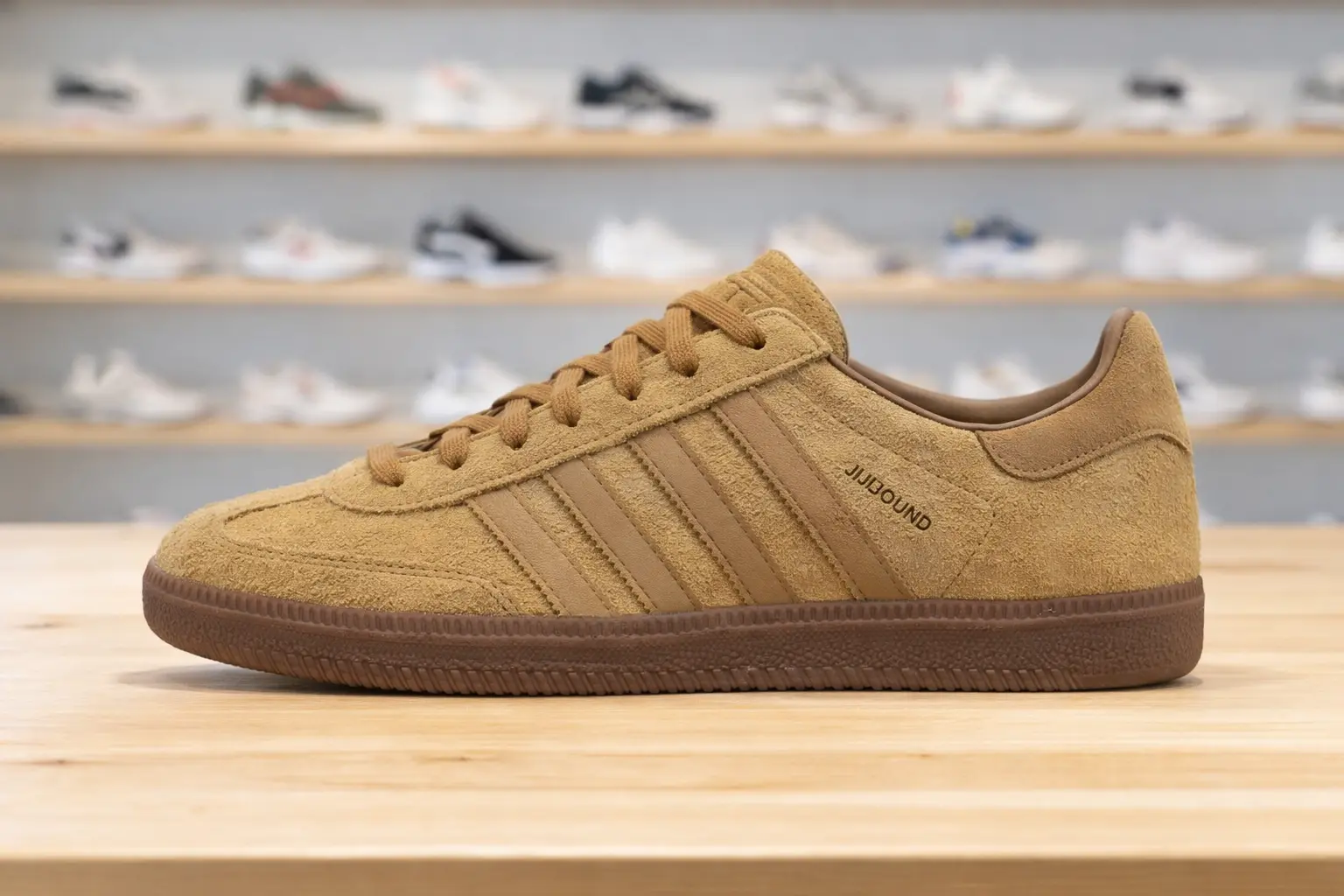
The JJJJound x Adidas Samba “Tobacco” felt noticeably different from a standard GR Samba.
This pair ran a little more roomy and a little more generous overall. It still fits fine at half a size up, but I didn’t feel that same tight, compressed sensation around the toe box that I usually associate with Sambas.
The pressure across the forefoot just wasn’t as intense.
I think a big part of that comes down to the suede upper. The suede on this pair is very soft and forgiving, and that changes everything.
Instead of feeling stiff and structured out of the box, it felt cozy almost immediately.
And I don’t usually use the words “comfortable” and “Samba” in the same sentence right out of the box, but with this collab, it actually applies.
The upper has a relaxed feel that makes it much easier to wear from day one.
Ronnie Fieg x Clarks x Adidas Samba (8th Street)
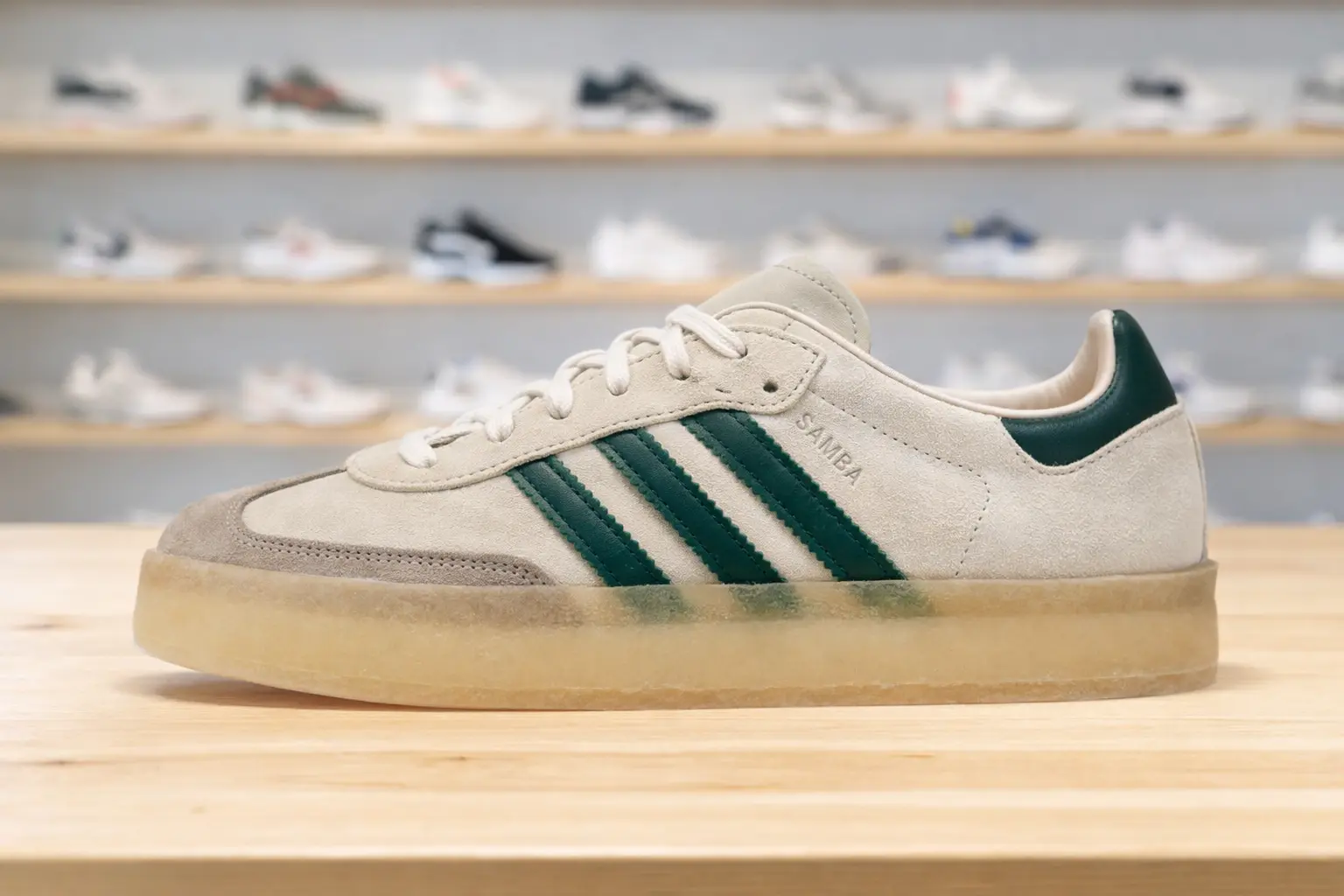
This one really made me second guess myself when ordering.
As you know, in regular Sambas I go up half a size because they run narrow for me. So naturally, I was leaning toward doing the same here.
But then Ronnie Fieg himself posted that these fit true to size, and that made me pause.
I kept going back and forth in my head. Do I trust my experience with Sambas, or do I trust Ronnie saying they fit true to size?
Eventually, I decided to trust him. And honestly, I’m glad I did.
These are entirely different from standard Sambas. Different materials. Different factory. Different overall construction. They may share the name, but they don’t fit the same.
I ordered my true size 9, and they fit perfectly. They really do feel like a glove. Snug in a good way, secure, but not cramped like my true size feels in a regular Samba.
So for the Ronnie Fieg x Clarks x Adidas Samba, I would strongly recommend going true to size. Don’t automatically use your “Samba half-size-up rule” here. In this case, true to size is the better move.
Quick Take on Other Collabs
With pairs like the BAPE x Adidas Samba or the Wales Bonner x Adidas Samba Nylon, the fit tends to stay closer to the traditional narrow Samba shape, especially when leather is involved.
You still get that slim forefoot and close fit through the midfoot.
But the main takeaway here is this: not all Samba collaborations fit identically. Materials matter. Suede tends to feel softer and more forgiving.
Premium builds sometimes change the internal feel slightly. And special projects like the Clarks collab can fit completely differently from GR pairs.
So if you’re buying a collab, don’t just assume it will fit exactly like your standard Samba. Look at the materials, pay attention to what the designer says about sizing, and if possible, try them on in store.
Adidas Samba Women’s Sizing
The Adidas Samba is technically a unisex sneaker, which means you can buy it in either men’s or women’s sizing.
The shape of the shoe stays the same, so it really comes down to how you convert the size properly and how the narrow fit works with your foot.
When converting from women’s to men’s sizing, the general rule is to go down about one to one and a half sizes, depending on the region.
For example, if you’re a US women’s 7, you’d typically look at a men’s 6 or 5.5, depending on the exact conversion chart Adidas provides for your market.
Always double-check the chart, but that’s the rough idea.
Now here’s where it gets more important than just the numbers.
The Samba is a narrow and flat shoe. It doesn’t have much give width-wise, and it sits very low to the ground. Because of that, I usually recommend going up half a size from your measured size, especially if you don’t have narrow feet.
If you have average width feet, that half size up usually creates a much more comfortable experience, particularly in the toe box.
If you have wide feet, you might even consider going up a full size, but you need to understand what comes with that. You’ll gain width comfort, but you’ll also add noticeable length.
For some people, that trade-off is worth it. For others, the extra length feels awkward.
If you’re unsure about your size, I think the safest starting point for most people is ordering half a size up from your true measured size and seeing how that feels.
In my experience, that’s the sweet spot for a lot of feet, especially since the Samba doesn’t offer much forgiveness in width.
At the end of the day, the most important thing to remember is that this silhouette runs slim. So when converting between men’s and women’s sizing, don’t just focus on the number.
Think about your foot width, the socks you plan to wear, and how much room you typically like in the toe box.
Break-In Period
One thing people don’t always talk about with the Adidas Samba is the break-in period, and it really depends on which version you’re buying.
If you go with a model that has a nylon upper, like some of the Wales Bonner variations or other textile-based releases, the experience is completely different from the traditional leather pairs.
The nylon versions feel lighter, more flexible, and easier to wear right out of the box.
There’s less stiffness across the forefoot, less pressure on the top of your toes, and overall, the shoe adapts to your foot much faster.
You can usually throw them on day one and wear them for a full day without thinking too much about it.
Leather Sambas are another story.
The classic leather upper feels structured and firm when it’s brand new. The toe box can feel tight, especially if you’re between sizes or slightly wide.
The midfoot can feel rigid. It’s not painful, but it’s noticeable. You’re aware that you’re wearing a narrow, structured shoe.
The good news is that leather stretches and molds over time. After a few wears, the upper softens and starts shaping itself to your foot.
The pressure across the toe box eases up, and the overall fit feels more natural. But you do have to get through that initial period, and I’ll be honest, it can be a little annoying if you’re expecting instant comfort.
If you want the easiest out-of-the-box experience, go nylon. If you’re buying a leather pair, just understand that a short break-in period is part of the deal.
Once they soften up, they become much more wearable, but they rarely feel as forgiving on day one as the nylon versions do.
How to Measure Your Feet for Adidas Samba (The Right Way)
Before you even think about whether the Adidas Samba runs big or small, you need to know your true foot measurement. And I don’t mean the size you’ve been buying for years. I mean your actual, measured size.
Because with a narrow silhouette like the Samba, even being slightly off can completely change how the shoe feels.
Here’s exactly how I recommend measuring your feet if you want to get your Adidas Samba sizing right.
The Best Way to Ensure Proper Fit: Try Them On In-Store
As much as measuring your feet at home helps, the absolute best way to get sizing right is to try the exact model on in-store.
And here’s why that matters…
Even if you know your true size down to the millimeter, the way the upper wraps your foot, the way the toe box tapers, and how the midsole sits under your arch can feel completely different once it’s actually on your foot.
Trying them on in-store lets you:
- Feel the width pressure immediately
- Compare true to size vs half size up side by side
- Walk around and notice heel slip (if any)
- Test them with the socks you actually wear
If possible, try both your measured size and half a size up. Walk around for at least 5–10 minutes. Pay attention to pressure across the top of your toes and along the sides of your forefoot. That’s usually where fit issues show up first with this silhouette.
If you’re someone with wider feet especially, trying them on in person can save you from ordering multiple pairs and guessing.
How to Measure Your Feet Using a Brannock Device
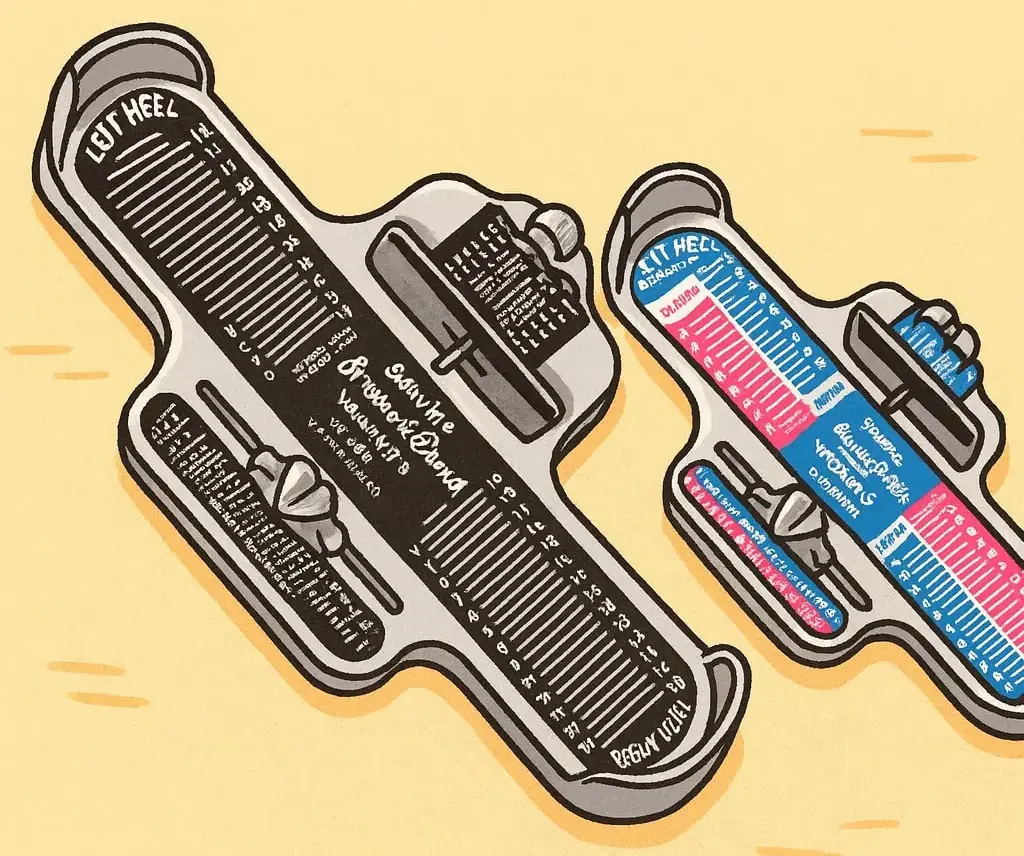
If you want the most accurate measurement possible, use a Brannock device. This is the metal measuring tool you’ll see in most shoe stores, and it’s still the gold standard for determining proper shoe size.
Here’s how to use it correctly:
1. Stand, Don’t Sit
Always measure while standing. Your foot spreads under body weight, and that gives you your true functional size.
2. Heel All the Way Back
Place your heel firmly against the back cup of the device. Make sure it’s fully touching the end, because even a small gap can throw off the reading.
3. Measure Length
Look at where your longest toe lands on the sliding scale. It’s not always your big toe, sometimes it’s the second toe. Take note of that number.
4. Measure Width
The Brannock also measures width. There’s a sliding bar that presses lightly against the side of your foot. This is especially important for the Samba because width plays such a big role in comfort.
If your width measurement falls into a wider category for your size, that’s a strong indicator you may need to size up, or at least be cautious with a narrow silhouette like this.
5. Measure Both Feet
Just like at-home measuring, always measure both feet and go with the larger one.

Why Brannock + Samba Matters
The Brannock gives you three critical pieces of information:
- True length
- True width
- Arch length (heel-to-ball measurement)
That last one is underrated. The Samba has a very defined flex point because it’s such a flat, structured shoe. If your arch length doesn’t align properly with the shoe’s flex point, it can feel awkward or tight in the midfoot.
Measure at the End of the Day
Your feet naturally swell throughout the day. If you measure first thing in the morning, you’ll probably get a slightly smaller number.
Since most people wear their Sambas during the day, walking around on concrete, running errands, or being on their feet for hours, you want to measure when your feet are at their largest. That gives you a more realistic fit.
Use the Wall Method (Most Accurate at Home)
This is the simplest and most reliable way to measure at home.
What you’ll need:
- A piece of paper
- A pen or pencil
- A ruler or measuring tape
- A wall
- The socks you plan to wear with your Sambas
Now do this:
- Place the paper flat against a wall.
- Put your heel firmly against the wall.
- Stand naturally, with your weight evenly distributed.
- Mark the longest point of your foot (usually your big toe, but sometimes your second toe).
- Measure from the edge of the paper (where your heel touched the wall) to the mark you made.
- Write that number down in centimeters.
- Then repeat the process for your other foot.
And this part is important: always go with the measurement of your larger foot. Almost everyone has one foot slightly bigger than the other.

Measure Width (Very Important for Sambas)
Length is only half the equation, especially with a narrow shoe like the Samba.
To measure width:
- Wrap a measuring tape around the widest part of your foot (usually across the ball of your foot).
- Make sure you’re standing when you do this, not sitting.
- Don’t pull the tape too tight. Let it rest naturally around your foot.
If you notice your width measurement is on the higher end for your size, that’s your signal that the Samba may feel snug. That’s when you start thinking about going half a size up.
Why Measuring Matters So Much for Sambas
The Samba is:
- Narrow through the forefoot
- Slim through the midfoot
- Flat underfoot
- Low to the ground
- There’s not a lot of extra space inside the shoe. Unlike modern chunky sneakers, you don’t get a ton of wiggle room.
- If you’re even slightly between sizes, that narrow shape will expose it immediately.
That’s why I always recommend measuring first, especially if:
- You’re new to the silhouette
- You think you might have wide feet
- You’re converting between men’s and women’s sizing
- You’re unsure whether to size up
Converting Your Measurement to Adidas Sizing
Once you have your measurement in centimeters, compare it directly to Adidas’ official size chart for your region.
Adidas typically lists sizes in centimeters (CM), which makes things easier. Instead of guessing whether the shoe runs big or small, you can match your foot length to the corresponding size.
Now here’s where your foot shape comes into play:
- Narrow foot → you can usually stick exactly to the chart.
- Normal width → true to size should work in most cases.
- Slightly wide → consider going half a size up.
- Very wide → the Samba may simply feel too narrow overall.
Don’t Forget Socks and Insoles
When measuring, wear the type of socks you actually plan to wear with the Sambas.
Thin no-shows will give you a different fit than thicker crew socks.
And if you plan to swap in a thicker insole, like Adidas’ All Day Insole, remember that it reduces internal space. That can make the toe box feel tighter and slightly lift your heel. In that case, going up half a size can make a big difference.
Final Thoughts on Adidas Samba Sizing
For me, because my feet are slightly on the wider side, going half a size up has always been the sweet spot.
True to size feels too compressed through the forefoot and midfoot, and half a size up gives me breathing room. Yes, there’s a little extra length, but I’ll take that over constant pressure across my toes any day.
That said, I’ve also learned that not every Samba fits exactly the same. Materials matter. Collabs can fit differently. And your foot shape plays a huge role in how this shoe feels.
If you have narrow feet, you’re probably going to love the way these hug your foot at true to size. If you’re wider, you may have to experiment a little.
Now I’m curious about your experience.
If you own a pair of Adidas Sambas and you have wider feet, what did you end up doing to make them comfortable?
Did you go half a size up? A full size up? Did you stick to true to size and just break them in? Or did you decide they just weren’t the right silhouette for your foot?
Drop a comment and let me know. Your experience might help someone else figure out their perfect fit.